
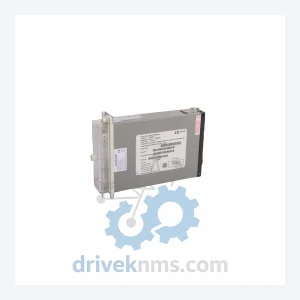
ALSTOM MVAJ105RA0802A Protection Relay – MiCOM Series
ALSTOM MVAJ105RA0802A Protection Relay: Supply Continuity Strategy for a Discontinued Critical Component The ALSTOM MVAJ105RA0802A is a numerical protection relay…
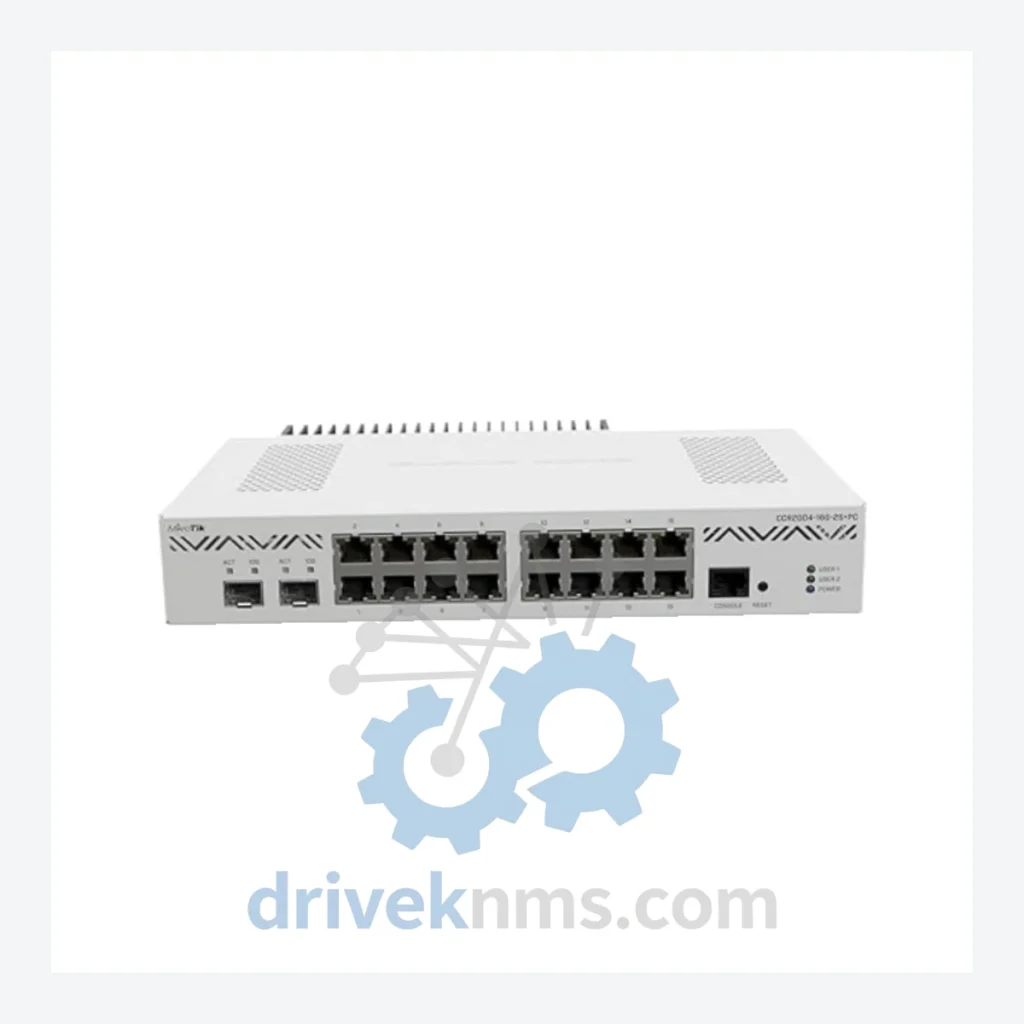
Model: CCR2004-16G-2S+
Product Overview
Commercial availability is handled through direct RFQ, model verification and export-oriented follow-up rather than public cart checkout.
Datasheet Preview
Use attached product manuals when available. If the manual is not public yet, request the full file directly through RFQ.
Commercial Path
Product pages on DRIVEKNMS are designed to verify model, brand and series first, then move the buyer into one clean quotation path.
Technical Dossier
The MikroTik CCR2004 series represents a purpose-built line of Cloud Core Routers deployed across high-demand network infrastructure environments including industrial automation backbones, energy sector SCADA networks, petrochemical plant communications, and carrier-grade ISP edge routing. Built on the Annapurna Labs Alpine v2 AL21400 quad-core ARM Cortex-A57 platform running at 1.7 GHz, the CCR2004 family delivers deterministic packet forwarding performance at line rate across all Gigabit Ethernet ports. Its deployment footprint spans chemical processing facilities, offshore oil platforms, nuclear plant control network perimeters, and refinery SCADA segmentation layers — environments where router uptime is a process-critical requirement, not a preference.
MikroTik's Cloud Core Router lineage began with the CCR1000 series (2013), based on Tilera TILE-Gx multi-core MIPS processors. The CCR1036, CCR1072, and CCR1016 established the platform's reputation in ISP and enterprise core routing. The transition to the CCR2000 generation (2020–present) marked a fundamental architectural shift: from MIPS to ARM Cortex-A57, from RouterOS v6 to full RouterOS v7 compatibility, and from legacy SFP to SFP+ 10G uplink interfaces.
The CCR2004 sub-family specifically targets the 1U rackmount segment with a fixed-port, fanless or active-cooled design philosophy. Unlike the modular CCR2216 or CCR2116 platforms, the CCR2004 uses a fixed hardware configuration optimized for deterministic throughput rather than slot-based expansion. This makes it particularly suitable for environments where configuration stability over a 10–15 year operational lifecycle is required — a common constraint in industrial control network design.
Compatibility note: CCR2004 units run RouterOS v7 exclusively. Configurations migrated from CCR1000-series devices running v6 require manual policy re-validation, particularly for BGP, MPLS, and firewall filter chains. Hardware encryption offload (IPsec) is supported natively on the AL21400 SoC, a capability absent from the CCR1000 generation.
The following SKUs represent the verified CCR2004 production range. Each unit is a fixed-configuration router; there are no field-replaceable I/O modules within this series. Differentiation is by port count, uplink type, and enclosure format.
CCR2004-16G-2S+: 16x GbE RJ45, 2x 10G SFP+, 1U rackmount, RouterOS L6, 4GB RAM, 128MB NAND.
CCR2004-16G-2S+PC: Identical to CCR2004-16G-2S+ with passive cooling (fanless), suited for noise-sensitive or dusty industrial enclosures.
CCR2004-1G-12S+2XS: 1x GbE RJ45 management, 12x 10G SFP+, 2x 25G SFP28, high-density 10G/25G aggregation platform.
CCR2004-1G-12S+2XS-EM: Extended memory variant of CCR2004-1G-12S+2XS, 16GB RAM, optimized for large BGP table retention and full-table routing.
CCR2004-16G-2S+R: Redundant power supply variant of CCR2004-16G-2S+, dual PSU bays for N+1 power redundancy in critical infrastructure deployments.
CCR2004-16G-2S+PC-R: Passive cooling + redundant PSU configuration, combining fanless operation with dual power input for maximum availability.
CCR2004-1G-12S+2XS-R: Redundant PSU variant of the 12x SFP+ / 2x SFP28 platform, targeting carrier PoP and data center edge roles.
CCR2004-16G-2S+OUT: Outdoor-rated enclosure variant, IP-rated housing for direct outdoor or harsh environment installation without additional cabinet.
CCR2004-16G-2S+PC-OUT: Passive cooling outdoor variant, combining fanless thermal design with weatherproof enclosure for remote industrial sites.
CCR2004-1G-12S+2XS-PC: Passive cooling variant of the 12-port SFP+ platform, for high-density 10G aggregation in thermally controlled but noise-sensitive environments.
CCR2004-16G-2S+-EM: Extended memory (16GB RAM) variant of the standard 16-port GbE model, for full BGP table + large routing policy sets.
CCR2004-16G-2S+PC-EM: Passive cooling + extended memory, combining fanless operation with 16GB RAM for long-lifecycle industrial deployments.
CCR2004-1G-12S+2XS-PC-EM: Full-spec variant: passive cooling, 16GB RAM, 12x SFP+, 2x SFP28 — maximum configuration for dense 10G/25G environments.
CCR2004-16G-2S+R-EM: Redundant PSU + extended memory, 16-port GbE platform with dual power and 16GB RAM for mission-critical edge routing.
CCR2004-1G-12S+2XS-R-EM: Redundant PSU + extended memory on the 12x SFP+ / 2x SFP28 platform — the highest-availability configuration in the CCR2004 family.
The CCR2004 series entered production in 2020 and remains in active manufacture as of 2026. However, specific configuration variants — particularly passive cooling (PC), outdoor (OUT), and extended memory (EM) combinations — are subject to regional allocation constraints and extended lead times from distribution channels. DriveKNMS maintains a dedicated inventory position for low-volume CCR2004 variants and can source units outside standard distributor allocation windows.
For end-of-life adjacent products — including CCR1036-8G-2S+, CCR1072-1G-8S+, and CCR1016-12G — DriveKNMS provides lifecycle extension sourcing: tested pull units, refurbished stock with 90-day functional warranty, and configuration-matched replacements. Customers operating CCR1000-series hardware in process control network roles who require a like-for-like replacement path can contact DriveKNMS for a compatibility assessment and migration unit supply.
All sourced units are cross-referenced against MikroTik's serial number database where accessible, and firmware version is verified prior to dispatch to ensure RouterOS license level matches the original specification.
Each CCR2004 unit processed through DriveKNMS undergoes a structured functional verification protocol prior to dispatch. The test sequence covers: power-on self-test (POST) completion verification, RouterOS boot integrity check, all RJ45 port link negotiation at 10/100/1000 Mbps, SFP+ cage optical transceiver detection and link establishment at 10G, RAM capacity and ECC status verification (where applicable), NAND flash read/write integrity, and hardware encryption (IPsec) offload functional test.
For units sourced as pull stock or refurbished inventory, additional steps include thermal cycling under load (traffic generation across all ports at >80% utilization for 2 hours), fan RPM verification on active-cooled variants, and PSU output voltage measurement on dual-PSU configurations. Test records are retained per serial number and available on request for quality audit purposes.
© 2026 DriveKNMS. All trademarks belong to their respective owners. Specifications are for reference only and subject to change without notice. Verify all parameters against official documentation before installation.
Related Paths
ALSTOM MVAJ105RA0802A Protection Relay: Supply Continuity Strategy for a Discontinued Critical Component The ALSTOM MVAJ105RA0802A is a numerical protection relay…
MOORE 16137 Series: Comprehensive Module Range and Technical Overview The MOORE 16137 Series represents a core component family within Moore…
FUJI EP-3364B-CA-Z2 Inverter Control Board: Supply Continuity Strategy for a Discontinued Critical Spare The FUJI EP-3364B-CA-Z2 is a control board…