
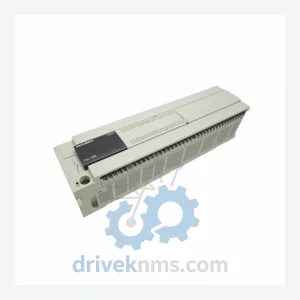
Mitsubishi FX3U Series Modules FX3U-128MR/ESS
Mitsubishi Electric FX3U-128MR/ESS is listed for FX3U Series RFQ review. Confirm quantity, condition and destination before quotation.
RFQ-ready industrial model
Model: IFALM11
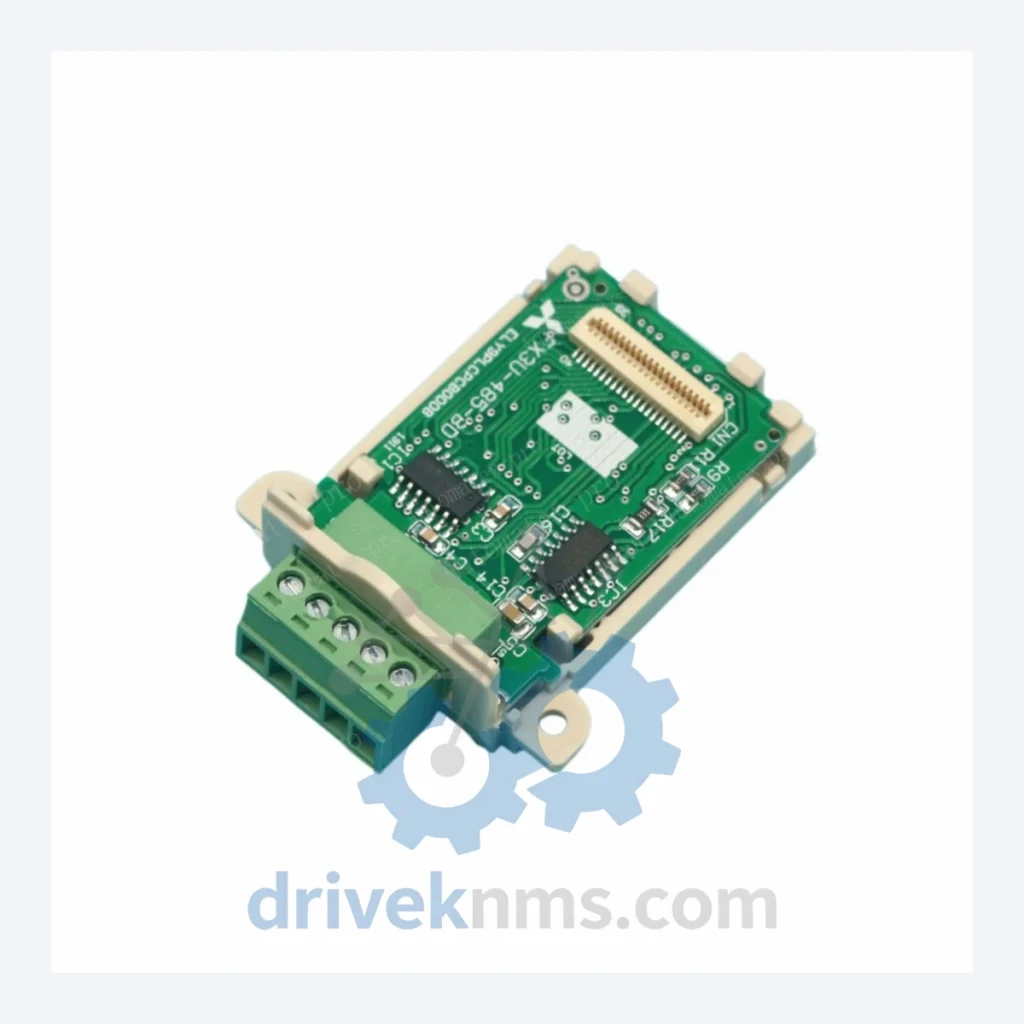
Product Overview
Commercial availability is handled through direct RFQ, model verification and export-oriented follow-up rather than public cart checkout.
Datasheet Preview
Use attached product manuals when available. If the manual is not public yet, request the full file directly through RFQ.
Commercial Path
Product pages on DRIVEKNMS are designed to verify model, brand and series first, then move the buyer into one clean quotation path.
Technical Dossier
The Mitsubishi Electric IF Series represents a critical layer of interface and alarm management hardware deployed across global heavy industry installations, including petrochemical complexes, nuclear power auxiliary systems, steel rolling mills, and offshore refinery platforms. The IFALM11 alarm board is a representative component of this series, providing structured fault detection and alarm relay output functions within Mitsubishi's broader motion and process control architecture. IF Series boards are integrated into MELSERVO and MELFA robotic controller backplanes, as well as legacy MELSEC programmable controller racks, making them a long-cycle spare parts requirement for facilities with 10–25 year equipment lifespans.
The IF Series interface and alarm board family was introduced alongside Mitsubishi Electric's second-generation servo amplifier and robot controller platforms in the late 1980s and early 1990s. Early variants such as the IFALM11 and IFALM21 were designed for parallel backplane communication using proprietary Mitsubishi bus protocols, with alarm signal routing handled via discrete relay contacts and optocoupler isolation stages. These boards interfaced directly with the CR1/CR2-series robot controllers and the A-series MELSEC PLC racks.
As Mitsubishi transitioned to the CR2D, CR3D, and CR750/CR800 controller generations through the 2000s and 2010s, the IF Series underwent architectural revisions to support higher-density I/O mapping, improved EMI shielding, and compatibility with CC-Link and SSCNET III/H fiber communication buses. Legacy IF Series boards retained backward-compatible connector pinouts in many cases, but firmware-level alarm code tables diverged between generations, requiring careful cross-referencing during replacement. Facilities operating mixed-generation Mitsubishi robot or servo systems must verify board revision codes before substitution.
As of 2026, the original IFALM11 and related first-generation IF boards are classified as end-of-life (EOL) by Mitsubishi Electric. No new production runs are scheduled. Long-term maintenance support for these components is exclusively available through authorized aftermarket distributors and certified spare parts suppliers.
The following SKUs represent verified components within the Mitsubishi Electric IF Series and associated interface/alarm board families used in MELSERVO, MELFA, and MELSEC system architectures:
IFALM11: Alarm relay output board, first-generation CR1/CR2 robot controller interface, parallel bus.
IFALM21: Alarm board variant with extended relay contact count for multi-axis configurations.
IFALM31: Revised alarm board with optocoupler isolation upgrade, CR2D controller compatible.
IFIO11: General-purpose I/O interface board, 16 DI / 16 DO, parallel backplane mount.
IFIO21: Expanded I/O interface board, 32 DI / 32 DO, for high-density robot cell applications.
IFIO31: I/O board with sink/source selectable input logic, MELSEC A-series rack compatible.
IFCPU11: Interface CPU sub-board for alarm processing and watchdog timer functions.
IFCPU21: Enhanced CPU interface board with dual-port RAM for real-time alarm logging.
IFCOM11: Serial communication adapter board, RS-232C, for teach pendant and HMI interfacing.
IFCOM21: RS-422/RS-485 multi-drop communication interface board.
IFCOM31: CC-Link slave communication board for IF Series rack integration.
IFPWR11: Internal power distribution board, 24VDC regulated output for IF Series backplane.
IFPWR21: Dual-output power board with overcurrent protection, CR3D controller series.
IFENC11: Encoder feedback interface board, incremental encoder input, 4-axis.
IFENC21: Absolute encoder interface board, battery-backed position retention, SSCNET compatible.
IFDRV11: Servo drive interface board, analog ±10V command output, legacy amplifier series.
IFDRV21: Digital servo command interface board, SSCNET III protocol, MR-J4 amplifier series.
IFBAT11: Battery backup board for SRAM data retention in CPU and encoder interface modules.
IF Series boards present specific test challenges due to their multi-layer PCB construction, proprietary backplane bus connectors, and mixed analog/digital signal paths. DriveKNMS applies the following verification procedures to all IF Series inventory:
Visual inspection covers solder joint integrity, capacitor condition (ESR measurement for electrolytic types), relay contact resistance, and connector pin alignment. Functional testing is performed using Mitsubishi-compatible backplane test fixtures that simulate CR1/CR2/CR2D controller rack environments. Alarm output relay contacts are cycled under rated load conditions. Optocoupler isolation is verified using high-potential (hipot) testing at 500VDC. Communication interface boards (IFCOM series) are tested for signal integrity across full baud rate ranges. All boards are returned to anti-static packaging with individual test records attached.
Continue The Model Path
Move from this exact model into the matching system hub, brand archive, model-family archive or lifecycle sourcing route before sending a final RFQ list.
Related Paths
Mitsubishi Electric FX3U-128MR/ESS is listed for FX3U Series RFQ review. Confirm quantity, condition and destination before quotation.
Mitsubishi Electric TH-N12TP is listed for MSO Series RFQ review. Confirm quantity, condition and destination before quotation.
Mitsubishi Electric MTCL12 is listed for MELSEC Series RFQ review. Confirm quantity, condition and destination before quotation.