Products / Moland / 512B PC Board
Moland 512B PC Board

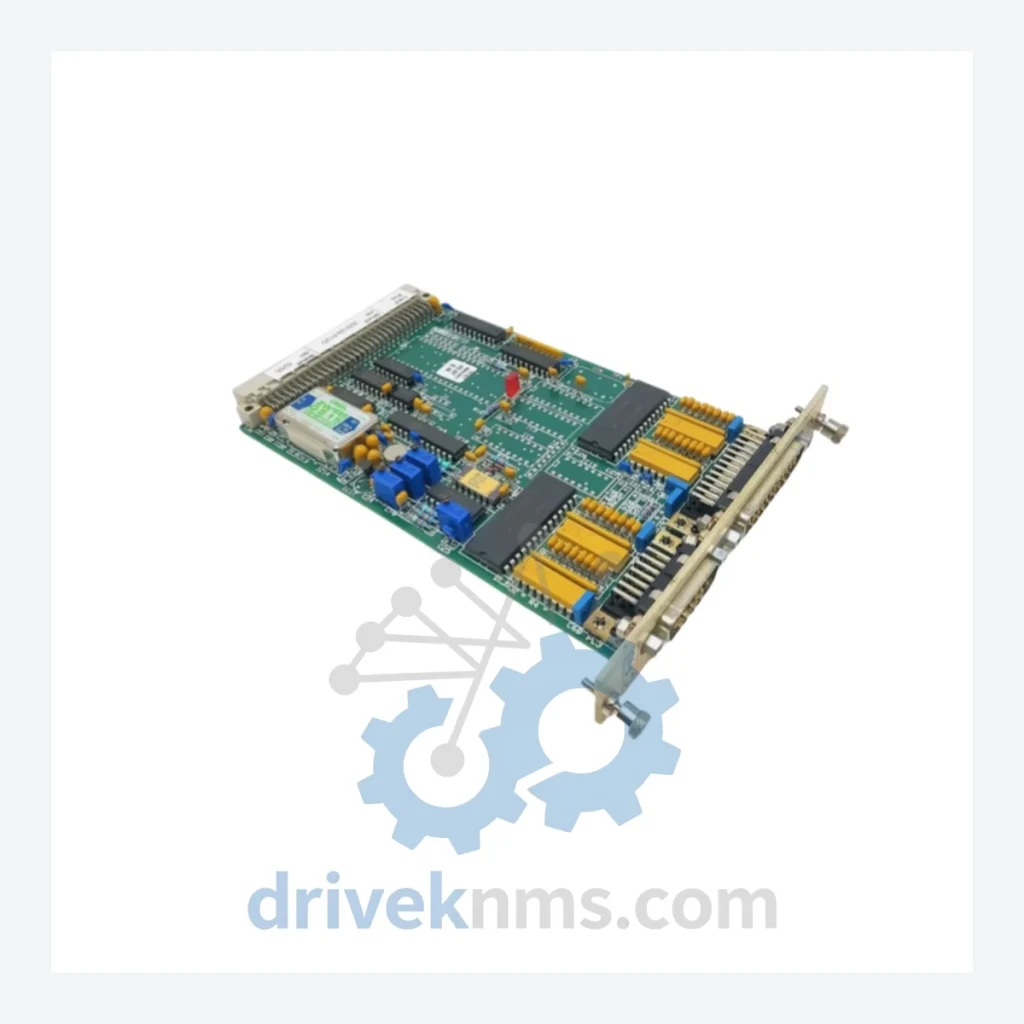
MOLAND 203133-512B PC Board – Obsolete MOLAND Series Spare Part

Model: 203133-512B

Brand Moland
Series 512B PC Board
Model 203133-512B
RFQ-ready model route Obsolete and surplus sourcing Export follow-up by model list

Product Overview

Commercial availability is handled through direct RFQ, model verification and export-oriented follow-up rather than public cart checkout.

Datasheet Preview

Datasheet Preview

Use attached product manuals when available. If the manual is not public yet, request the full file directly through RFQ.

Request Full Manual

Commercial Path

Use This Page To Confirm The Model, Then Move To RFQ

Product pages on DRIVEKNMS are designed to verify model, brand and series first, then move the buyer into one clean quotation path.

Technical Dossier

Product Details And Specifications

MOLAND 203133-512B PC Board – Obsolete MOLAND Series Spare Part

When a PC board fails inside a legacy control system, the financial exposure is rarely limited to the cost of the component itself. A single unplanned shutdown on a continuous-process line can generate losses measured in tens of thousands of dollars per hour. When the failed module is discontinued and no replacement exists on the open market, plant management faces a far more damaging decision: a forced, unbudgeted system migration that can run into the millions. The MOLAND 203133-512B PC Board is a discontinued module with a shrinking pool of available units worldwide. DriveKNMS maintains verified stock of this board specifically to serve facilities that cannot afford — operationally or financially — to abandon their existing infrastructure on a compressed timeline.

Technical Specifications

Parameter Detail
Part Number 203133-512B
Manufacturer MOLAND
Product Type PC Board / Printed Circuit Board
Discontinuation Status Obsolete – No longer in production
Typical Application Industrial control systems, legacy automation panels
Country of Origin United States
Condition Available New Old Stock (NOS) / Professionally Refurbished

Note: Electrical parameters (voltage ratings, I/O specifications, bus interface details) are confirmed only against verified documentation. No parameters are published here without source verification. Contact us for a full datasheet or application-specific confirmation.

Solving the Discontinued Hardware Crisis

The MOLAND 203133-512B was designed for integration into industrial control architectures that were engineered for decades of service life. The control philosophy embedded in these systems — deterministic scan cycles, hardwired I/O logic, proprietary backplane communication — cannot be replicated by a modern PLC or DCS without a full re-engineering project. That project carries a price tag: new hardware, new software licenses, re-validation of all process interlocks, operator retraining, and a commissioning window that requires a planned production outage.

For a facility running three shifts, the total cost of a forced migration triggered by a single unavailable board routinely exceeds USD 500,000 when all direct and indirect costs are accounted for. The 203133-512B is the type of module that sits at the center of that risk — a board-level component whose failure cascades into system-level consequences. Facilities that have identified this board as a single point of failure and have not yet secured a spare are operating with an unquantified liability on their balance sheet.

DriveKNMS sources these boards through a global network of decommissioned equipment, authorized surplus channels, and long-term storage facilities. Each unit passes through a documented inspection process before it is offered for sale.

Extending Automation Asset Life by 5–10 Years: A Maintenance Strategy for Plant Management

The economic case for extending the service life of a legacy automation system is straightforward when the numbers are examined without bias. A modern DCS or PLC migration for a mid-size process unit typically costs between USD 1.5 million and USD 8 million, depending on I/O count, process complexity, and required downtime. Amortized over a 10-year extension of the existing system's life, the annual cost of a proactive spare parts program — including boards like the 203133-512B — is a fraction of that figure.

The following maintenance disciplines have been demonstrated to extend legacy system service life by 5 to 10 years in documented industrial settings:

  • Critical spare identification: Map every board and module in the system against current market availability. Any item with fewer than three known sources on the open market is a critical spare. The 203133-512B qualifies under this definition.
  • Electrolytic capacitor management: Boards manufactured in the 1990s and early 2000s contain electrolytic capacitors with a design life of 10–15 years. Proactive recapping of boards before failure — rather than after — eliminates the most common cause of legacy board failure.
  • Environmental controls: Legacy boards are sensitive to humidity cycling and particulate contamination. Sealed enclosures with desiccant packs and annual inspection cycles extend board life measurably.
  • Firmware version control: Document the firmware revision on every installed board. When a replacement board is sourced, firmware version matching is mandatory. A version mismatch on a process-critical board can introduce subtle control errors that are difficult to diagnose.
  • Staged spare acquisition: Prices for obsolete boards increase as supply contracts. Acquiring spares now, at current market prices, is consistently less expensive than emergency sourcing after a failure event.

Condition & Reliability Assurance

Every MOLAND 203133-512B board offered by DriveKNMS passes through a five-stage quality process before shipment:

  • Stage 1 – Visual and mechanical inspection: Full examination of the PCB substrate, solder joints, connector pins, and component seating. Boards with evidence of arc damage, physical impact, or corrosion beyond recoverable limits are rejected at this stage.
  • Stage 2 – Electrolytic capacitor assessment: Capacitors are tested for ESR (equivalent series resistance) and capacitance retention. Units showing degradation beyond manufacturer tolerance are replaced with equivalent-specification components.
  • Stage 3 – Firmware version verification: Where firmware is embedded, the revision is read and documented. This information is provided to the buyer to confirm compatibility with the installed system.
  • Stage 4 – Pin and connector integrity check: All edge connectors and pin headers are inspected for oxidation, bending, and contact resistance. Affected contacts are cleaned or replaced as required.
  • Stage 5 – Functional burn-in (where test fixture is available): Boards are powered and exercised under controlled conditions to confirm basic operational integrity prior to packaging.

Key Features for System Maintenance

  • Drop-in replacement: The 203133-512B is a direct form-fit-function replacement for the original installed board. No modifications to the backplane, wiring, or system configuration are required.
  • No reprogramming required: The board retains its original hardware architecture. Provided firmware versions are matched, the replacement board operates identically to the original without any software changes.
  • Avoids engineering reconstruction costs: Using an original-specification replacement board eliminates the need for I/O remapping, loop re-tuning, or interlock re-validation — activities that consume significant engineering hours and require production downtime.
  • Preserves system certification: In regulated industries, replacing a board with an original-specification part maintains the existing system qualification. Substituting a non-equivalent component may trigger a revalidation requirement.

FAQ

What warranty applies to an obsolete board like the 203133-512B?
DriveKNMS provides a 90-day warranty covering functional defects identified under normal operating conditions. Extended warranty arrangements are available for volume purchases — contact us to discuss terms.

How do I confirm whether the board is new old stock or refurbished?
Each unit is shipped with a condition report that documents its classification (NOS or refurbished), the inspection stages completed, and any components replaced during the QA process. This documentation is provided as part of the shipment package.

Should I purchase more than one unit?
For any board classified as obsolete with no active production, purchasing a minimum of two units is a defensible risk management decision. The cost of a second board is predictable; the cost of an unplanned outage while sourcing a replacement on an emergency basis is not. For facilities with multiple identical systems, a ratio of one spare per two installed units is a reasonable starting point.

Can you source other MOLAND boards or related legacy components?
Yes. DriveKNMS maintains sourcing relationships across a broad range of discontinued industrial control hardware. Submit your full bill of materials for a consolidated availability and pricing response.

WhatsApp Prefilled Inquiry Email [email protected] Phone +86 18359293191 Top Back To Top