
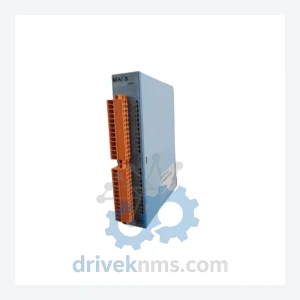
MOOG IMI220-411A001 Total Machine Controller – TMC400 Series
MOOG IMI220-411A001 Total Machine Controller: Global Sourcing Strategy & Asset Return Value in a Constrained Supply Environment The MOOG IMI220-411A001…
Model: G392-006-020-001
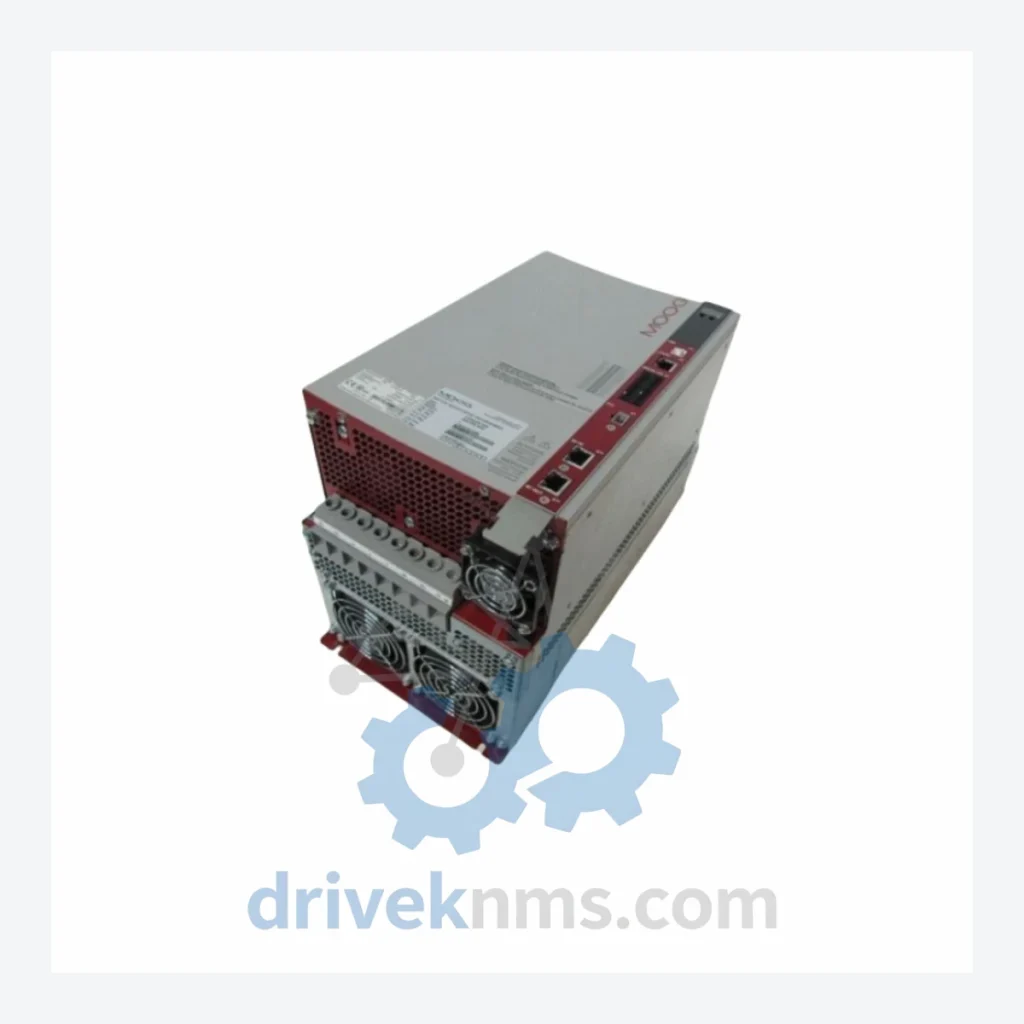
Product Overview
Commercial availability is handled through direct RFQ, model verification and export-oriented follow-up rather than public cart checkout.
Datasheet Preview
Use attached product manuals when available. If the manual is not public yet, request the full file directly through RFQ.
Commercial Path
Product pages on DRIVEKNMS are designed to verify model, brand and series first, then move the buyer into one clean quotation path.
Technical Dossier
The Moog G392 series represents a family of analog and digital servo drives engineered for precision motion control in continuous-duty industrial environments. Deployed extensively across chemical processing plants, nuclear power facilities, oil refineries, steel mills, and aerospace ground support equipment, the G392 platform has accumulated a substantial installed base in applications where axis positioning accuracy and torque repeatability are non-negotiable. The series interfaces with Moog's broader motion control ecosystem — including D136, D137, and D662 series controllers — and is designed to drive permanent magnet brushless and DC brush servo motors in closed-loop configurations. Its ruggedized construction and wide input voltage tolerance have made it a default specification in long-lifecycle capital equipment where replacement cycles span decades rather than years.
The G392 series originated as an analog servo amplifier platform, with early variants providing ±10 V command input, tachometer feedback, and current-mode or velocity-mode operation selectable via internal DIP switches. These first-generation units were characterized by through-hole PCB construction, discrete power transistor output stages, and manual potentiometer tuning for gain, offset, and bandwidth parameters.
Mid-generation revisions introduced hybrid analog-digital architectures: the command interface remained analog while inner current loops were digitized, improving thermal stability and reducing tuning sensitivity. Fault detection logic was expanded to cover overcurrent, overvoltage, undervoltage, and motor thermal protection, with status outputs routed to machine PLC I/O.
Later G392 variants incorporated RS-232 or RS-485 serial interfaces for parameter upload/download, eliminating manual potentiometer adjustment and enabling configuration archiving. These units are compatible with Moog's drive configuration software and support non-volatile parameter storage. The G392 series has now entered the mature/end-of-life phase of its product lifecycle. Moog has transitioned current motion control offerings to the Moog Axis Controller (MAC) and Moog SSD (Smart Servo Drive) platforms. Consequently, G392 units are no longer manufactured to order; availability is limited to new-old-stock (NOS), refurbished, and repaired units sourced through specialist distributors. Long-term maintenance support — including PCB-level repair, parameter cloning, and functional testing — is the primary service model for this series.
The following SKUs represent verified, commonly referenced part numbers within the Moog G392 servo drive series. Each unit is a standalone servo amplifier module. Functional classification is based on continuous output current rating and feedback configuration:
G392-006-020-001: 6 A continuous, ±10 V analog command, velocity/torque mode, brushless servo amplifier
G392-006-020-002: 6 A continuous, encoder feedback variant, digital current loop, brushless motor drive
G392-006-020-003: 6 A continuous, tachometer feedback, DC brush motor compatible servo amplifier
G392-010-020-001: 10 A continuous output, analog command input, standard velocity mode drive
G392-010-020-002: 10 A continuous, dual feedback input (encoder + tach), enhanced stability variant
G392-015-020-001: 15 A continuous, high-torque axis drive, brushless permanent magnet motor
G392-015-020-002: 15 A continuous, extended temperature range, industrial cabinet mount
G392-020-020-001: 20 A continuous, high-power servo amplifier, single-axis panel mount
G392-020-020-002: 20 A continuous, RS-232 serial interface, parameter storage, digital tuning
G392-030-020-001: 30 A continuous, heavy-duty axis drive, three-phase brushless motor output
G392-030-020-002: 30 A continuous, regenerative braking circuit, energy recovery capable
G392-040-020-001: 40 A continuous, high-current servo amplifier, large-frame motor applications
G392-006-040-001: 6 A continuous, 400 V AC input variant, European market specification
G392-010-040-001: 10 A continuous, 400 V AC input, CE-marked, IEC terminal configuration
G392-015-040-001: 15 A continuous, 400 V AC input, high-voltage bus, brushless drive
G392-020-040-001: 20 A continuous, 400 V AC input, regenerative, RS-485 interface
G392-006-020-004: 6 A, extended I/O variant, additional enable/inhibit logic inputs
G392-010-020-003: 10 A, position loop closure variant, quadrature encoder command input
DriveKNMS maintains a dedicated inventory program for end-of-life Moog servo drive components, including the G392 series. As Moog has discontinued active production of G392 units, the sourcing pipeline relies on three channels: decommissioned equipment recovery, authorized surplus stock from OEM integrators, and factory-refurbished units returned through service exchange programs.
For G392 units confirmed as obsolete with no direct Moog replacement, DriveKNMS provides lifecycle extension services including: PCB-level component replacement using original-specification parts, parameter extraction and re-flashing for units with corrupted non-volatile memory, mechanical refurbishment of connector housings and mounting hardware, and cross-reference analysis to identify compatible substitute drives where a form-fit-function replacement exists within the Moog or third-party catalog. Lead times for rare G392 variants are quoted on a per-inquiry basis. Customers operating facilities with G392 drives embedded in safety-critical control loops are advised to maintain a minimum buffer stock of two units per axis.
Each G392 unit processed by DriveKNMS undergoes a structured test protocol prior to dispatch. The procedure addresses the specific failure modes documented in the G392 field service history: power stage IGBT or transistor degradation, analog command input drift, feedback signal conditioning circuit failure, and parameter memory corruption.
Test stages include: incoming visual inspection for PCB corrosion, capacitor bulge, and connector damage; powered bench test at rated input voltage with resistive load on the motor output terminals; closed-loop functional test using a reference servo motor and encoder to verify velocity regulation accuracy within ±0.1% of command; current limit verification at 100%, 125%, and 150% of rated continuous current; fault injection testing to confirm overcurrent, overvoltage, and thermal shutdown responses; and final parameter verification against factory default or customer-supplied configuration file. Units that do not pass all stages are either repaired to specification or quarantined and documented. Test records are retained and available upon request for traceability in regulated industries.
Related Paths
MOOG IMI220-411A001 Total Machine Controller: Global Sourcing Strategy & Asset Return Value in a Constrained Supply Environment The MOOG IMI220-411A001…
MOOG IMI220 Series: Comprehensive Module Range and Technical Overview The MOOG IMI220 series represents a class of industrial interface modules…
MOOG IMI220-418A001 Input Module – Obsolete MARS Microset Spare Part When a MOOG IMI220-418A001 Microset Input Module fails in a…