
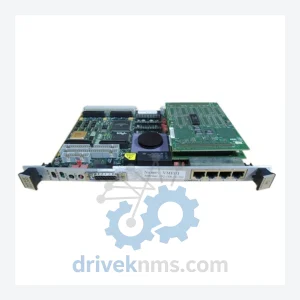
Motorola MVME162-262 Embedded Controller – MVME162 Series
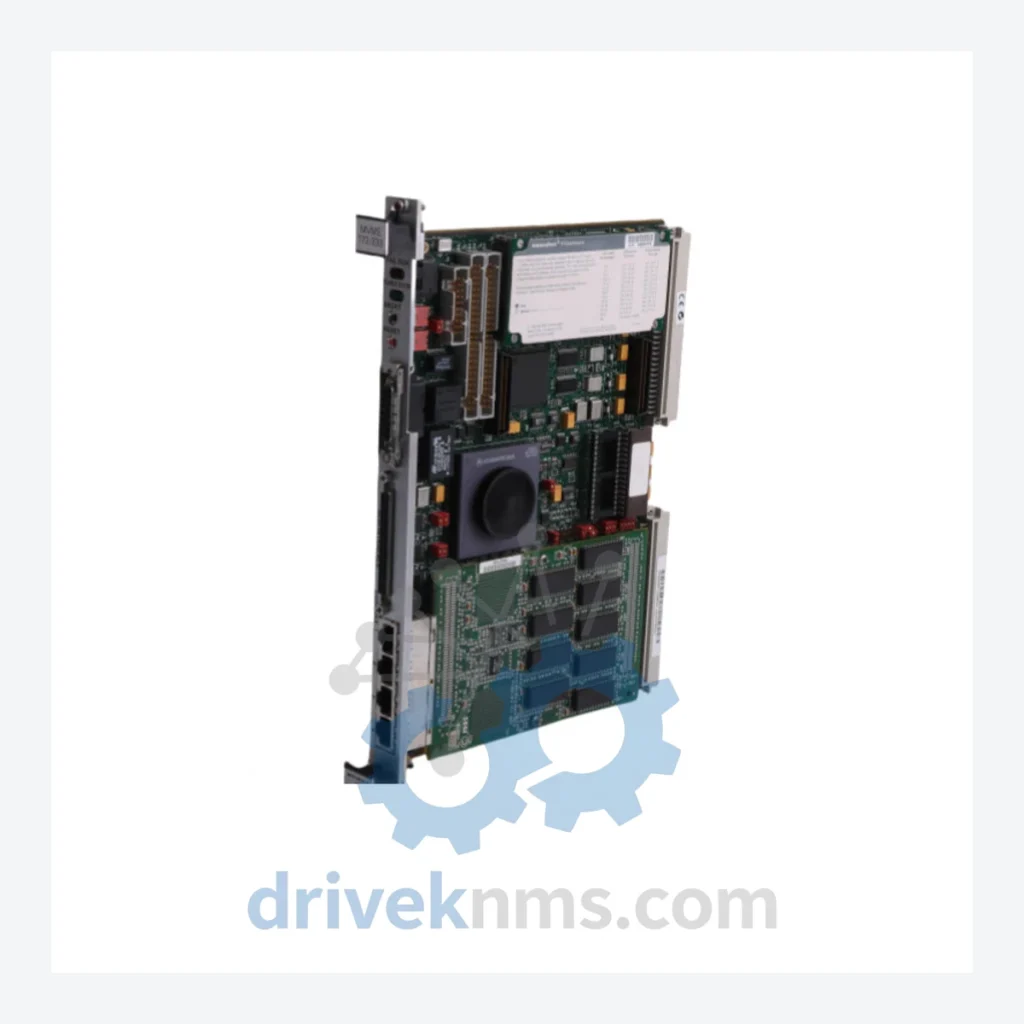
Motorola MVME 162-262 is listed for MVME162 Series RFQ review. Confirm quantity, condition and destination before quotation.
RFQ-ready industrial model
Model: MVME 172-333
Product Overview
Commercial availability is handled through direct RFQ, model verification and export-oriented follow-up rather than public cart checkout.
Datasheet Preview
Use attached product manuals when available. If the manual is not public yet, request the full file directly through RFQ.
Commercial Path
Product pages on DRIVEKNMS are designed to verify model, brand and series first, then move the buyer into one clean quotation path.
Technical Dossier
The MVME 172 series succeeded the earlier MVME 167 and MVME 162 families, inheriting the VME64 bus standard while upgrading the processor from the 68030 to the full 68040 at clock speeds ranging from 25 MHz to 40 MHz depending on variant. Early production units (circa 1993–1996) shipped with EPROM-based firmware and limited onboard Flash. Mid-cycle revisions introduced expanded DRAM configurations (up to 32 MB), enhanced SCSI-2 interfaces, and Ethernet (10BASE-T) via the IP (Industry Pack) mezzanine slot standard. Late-production variants incorporated revised PMC (PCI Mezzanine Card) compatibility layers to ease migration toward the subsequent MVME 5100 and MVME 6100 PowerPC-based platforms.
Compatibility considerations are significant for maintenance engineers: MVME 172 boards require VME64 backplanes and are not directly interchangeable with MVME 162 units without firmware and address-map reconfiguration. VxWorks BSP (Board Support Package) versions are revision-specific; substituting a -333 variant for a -323 or -343 requires BSP validation. Transition to modern replacements (MVME 5500, MVME 7100) involves OS migration from VxWorks 5.x to VxWorks 6.x or Linux, which constitutes a full engineering change order in most regulated facilities.
The following SKUs represent verified members of the Motorola MVME 172 product family, classified by functional configuration:
Embedded Controller Variants (68040 CPU Board)
MVME 172-333: 68040 @ 33 MHz, 4 MB Flash, 4 MB DRAM, dual RS-232, SCSI-2, Ethernet, single IP slot.
MVME 172-323: 68040 @ 32 MHz, 2 MB Flash, 4 MB DRAM, reduced I/O configuration, single IP slot.
MVME 172-343: 68040 @ 33 MHz, 4 MB Flash, 8 MB DRAM, dual IP slots, enhanced memory bus.
MVME 172-353: 68040 @ 33 MHz, 4 MB Flash, 16 MB DRAM, dual IP slots, extended DRAM configuration.
MVME 172-363: 68040 @ 33 MHz, 8 MB Flash, 16 MB DRAM, dual IP slots, high-density memory variant.
MVME 172-513: 68040 @ 25 MHz, 4 MB Flash, 4 MB DRAM, single IP slot, early-production clock variant.
MVME 172-523: 68040 @ 25 MHz, 4 MB Flash, 8 MB DRAM, single IP slot.
MVME 172-533: 68040 @ 25 MHz, 8 MB Flash, 16 MB DRAM, dual IP slots.
MVME 172-543: 68040 @ 25 MHz, 4 MB Flash, 32 MB DRAM, maximum DRAM configuration for 25 MHz class.
MVME 172-733: 68040 @ 40 MHz, 4 MB Flash, 4 MB DRAM, highest clock-speed variant, single IP slot.
MVME 172-743: 68040 @ 40 MHz, 4 MB Flash, 16 MB DRAM, dual IP slots, high-performance configuration.
MVME 172-753: 68040 @ 40 MHz, 8 MB Flash, 32 MB DRAM, dual IP slots, maximum performance configuration.
MVME 172-763: 68040 @ 40 MHz, 16 MB Flash, 32 MB DRAM, extended Flash for large firmware images.
MVME 172-013: Base configuration, no onboard Ethernet, single IP slot, OEM-stripped variant.
MVME 172-023: Base configuration with Ethernet, no SCSI, single IP slot, communications-focused OEM variant.
MVME 172-043: Dual IP slot, no Ethernet, SCSI-2 only, process I/O expansion configuration.
Motorola formally discontinued the MVME 172 series as part of its embedded computing portfolio divestiture to Emerson Network Power (subsequently Artesyn Embedded Technologies, then Abaco Systems). No new production units have been manufactured since approximately 2008. The series is fully end-of-life (EOL) with no manufacturer support, no firmware updates, and no OEM spare parts availability through standard distribution channels.
MVME 172 boards present specific test challenges due to their integrated VMEbus arbitration logic, onboard DRAM refresh circuits, and IP slot bus interface. DriveKNMS applies a structured test protocol to each unit prior to shipment. Power-on self-test (POST) completion and diagnostic LED sequence verification are performed first. DRAM is tested at full capacity using pattern-write/read cycles to detect cell degradation common in aged DRAM arrays. The SCSI-2 controller is exercised against a known-good target device. Ethernet (10BASE-T) transceiver function is verified via loopback. Each IP slot interface is tested with a compatible IP module to confirm bus arbitration and interrupt routing integrity. Serial port UART function is verified at standard baud rates. Units that fail any sub-test are quarantined, documented, and not offered for sale. Boards that pass full protocol are issued a DriveKNMS test certificate with date, technician ID, and test results summary.
Continue The Model Path
Move from this exact model into the matching system hub, brand archive, model-family archive or lifecycle sourcing route before sending a final RFQ list.
Related Paths
Motorola MVME 162-262 is listed for MVME162 Series RFQ review. Confirm quantity, condition and destination before quotation.
Motorola 147S-1 is listed for PLC Modules RFQ review. Confirm quantity, condition and destination before quotation.
Motorola MVME2304 64-W5206C01B is listed for VMEbus Series RFQ review. Confirm quantity, condition and destination before quotation.