ALSTOM MVAJ105RA0802A Protection Relay – MiCOM Series
ALSTOM MVAJ105RA0802A Protection Relay: Supply Continuity Strategy for a Discontinued Critical Component The ALSTOM MVAJ105RA0802A is a numerical protection relay…
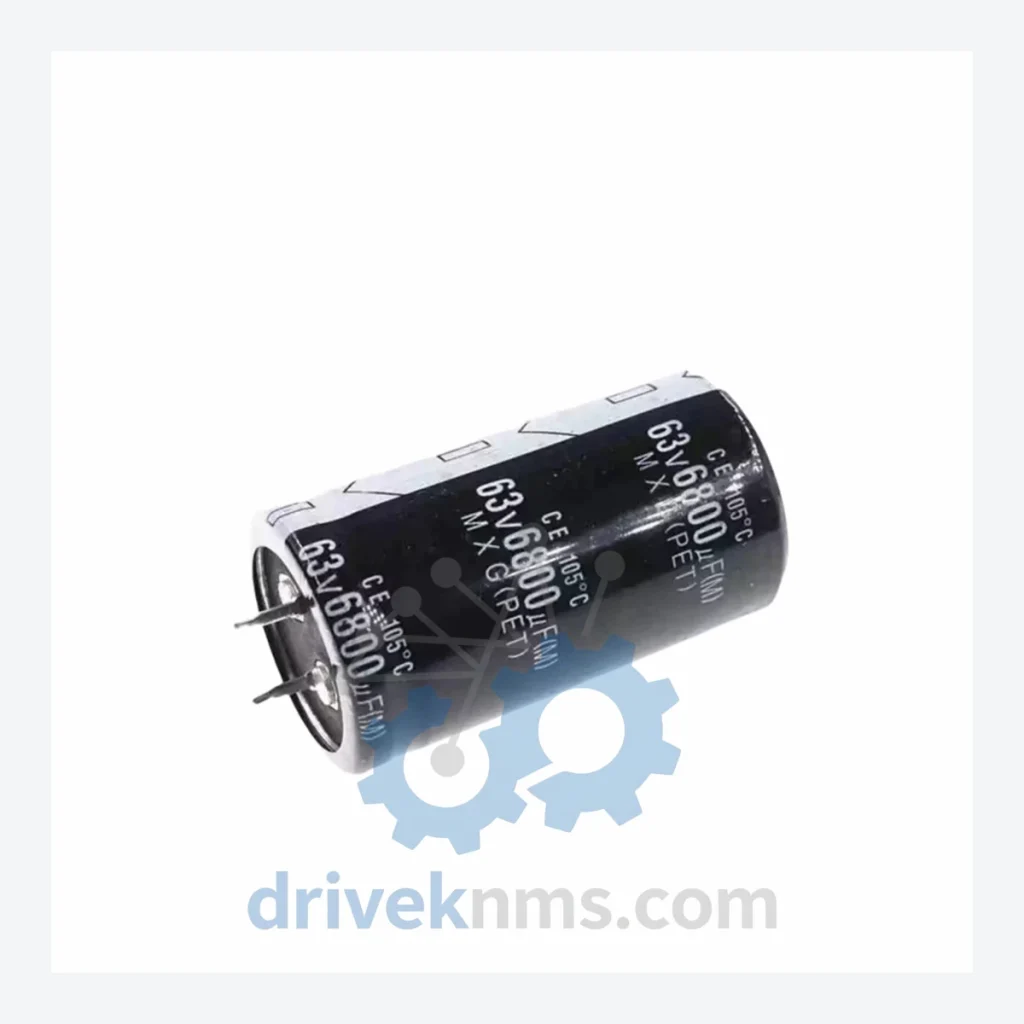
Model: 6800MFD400WV
Product Overview
Commercial availability is handled through direct RFQ, model verification and export-oriented follow-up rather than public cart checkout.
Datasheet Preview
Use attached product manuals when available. If the manual is not public yet, request the full file directly through RFQ.
Commercial Path
Product pages on DRIVEKNMS are designed to verify model, brand and series first, then move the buyer into one clean quotation path.
Technical Dossier
When a DC bus capacitor fails inside a servo drive or motor controller, the consequences extend far beyond a single component. In facilities running legacy automation infrastructure — systems that have been in continuous operation for 15 to 25 years — a single capacitor failure can trigger a cascade: drive shutdown, production line halt, and, in the worst case, a forced system-wide upgrade that carries a price tag measured in hundreds of thousands to millions of dollars. Engineering hours, new PLC programming, re-commissioning, and retraining are costs that rarely appear in the initial upgrade quote but always appear on the final invoice.
The Nichicon 6800MFD400WV is a large-format aluminum electrolytic capacitor rated at 6800µF and 400V DC, commonly used as a DC bus filter or energy storage element in industrial servo drives and motor control units. Nichicon has long been a preferred supplier for Japanese and international drive manufacturers due to the component's high ripple current tolerance and long operational life under thermal stress. As production of this specific series has been discontinued or significantly curtailed, sourcing replacement units through standard distribution channels is no longer reliable.
DriveKNMS maintains verified stock of this component for facilities that cannot afford to wait on lead times measured in months — or components that no longer exist in active production.
| Parameter | Value |
|---|---|
| Part Number | 6800MFD400WV |
| Brand | Nichicon |
| Capacitance | 6800µF |
| Voltage Rating | 400V DC |
| Component Type | Aluminum Electrolytic Capacitor |
| Primary Application | DC Bus Filter / Motor Servo Drive Energy Storage |
| Country of Origin | Japan |
| Production Status | Discontinued / End-of-Life (EOL) |
| Availability | Limited – Spot Stock Only |
Note: Electrical parameters listed above are based on the part number designation. DriveKNMS does not fabricate specifications. If you require datasheet confirmation prior to purchase, contact us directly.
Large-format electrolytic capacitors of this voltage and capacitance class are integral to the DC bus architecture of industrial servo drives. In systems such as Yaskawa SGDH/SGDS series drives, Mitsubishi MR-J2/MR-J3 series servo amplifiers, Fanuc Alpha series servo units, and comparable platforms from Siemens and Parker, the DC bus capacitor bank absorbs regenerative energy, smooths rectified voltage, and protects downstream IGBT modules from voltage spikes. When this capacitor degrades — typically through electrolyte evaporation, increased ESR, or physical bulging — the drive's ability to regulate bus voltage collapses. The result is not a graceful shutdown; it is an uncontrolled fault that can damage the IGBT bridge and, in some cases, the motor itself.
Replacing the capacitor at the first sign of degradation — elevated ripple, reduced capacitance on ESR testing, or visible deformation — is the lowest-cost intervention available to a maintenance team. The alternative is a drive replacement that may no longer be available from the OEM, or a full servo system retrofit that disrupts production for weeks.
For facilities operating equipment manufactured between 1995 and 2010, maintaining a strategic reserve of DC bus capacitors is not optional maintenance planning — it is asset protection.
Factory management facing system retirement pressure from corporate finance or OEM end-of-support notices frequently underestimate the cost-effectiveness of a targeted spare parts strategy. The following approach has been applied successfully in petrochemical, automotive stamping, and semiconductor fabrication environments to defer capital expenditure by a measured 5 to 10 years:
1. Condition-Based Capacitor Monitoring: Implement periodic ESR (Equivalent Series Resistance) measurement on DC bus capacitors during scheduled maintenance windows. A capacitor with ESR rising above 150–200% of its nominal value is approaching end of service life. Early detection allows planned replacement during a scheduled outage rather than an emergency shutdown.
2. Strategic Inventory Positioning: For each drive model in your facility, identify the two or three components with the highest failure rate and longest lead time. DC bus capacitors consistently appear on both lists. Holding two to four units per drive model on-site eliminates the sourcing delay that converts a two-hour repair into a two-week production loss.
3. Thermal Management Audit: Electrolytic capacitors degrade faster when ambient temperature exceeds their rated operating range. A cabinet cooling audit — verifying that drive enclosure temperatures remain below 40°C — can extend capacitor service life by 30 to 50% without any component replacement.
4. Firmware and Drive Parameter Archiving: When replacing a drive or capacitor bank, archive the drive's parameter set before any intervention. This eliminates re-commissioning time and prevents the loss of tuning data accumulated over years of operation.
5. OEM End-of-Life Mapping: Compile a list of every drive and controller model in your facility and cross-reference against OEM end-of-support announcements. Components for drives within five years of EOL should be prioritized for strategic stocking. The cost of holding spare capacitors is a fraction of the cost of an unplanned retrofit.
For plant managers and maintenance engineers operating under capital expenditure constraints, this approach converts an unpredictable failure risk into a managed, budgetable maintenance cost.
DriveKNMS applies a five-step quality verification process to all obsolete and end-of-life components before shipment. This process is designed specifically for the failure modes common to aged electrolytic capacitors:
Step 1 – Visual and Physical Inspection: Each unit is examined for case deformation, vent disc displacement, electrolyte leakage residue, and terminal corrosion. Units showing any physical anomaly are rejected at this stage.
Step 2 – Electrolytic Capacitor Aging Assessment: Capacitors that have been in storage for extended periods undergo a controlled voltage reformation process to restore the oxide layer. This step is critical for units stored beyond five years and is not performed by general distributors.
Step 3 – ESR and Capacitance Measurement: Each unit is tested on calibrated LCR equipment. Capacitance must measure within ±20% of rated value; ESR must fall within acceptable limits for the voltage and capacitance class.
Step 4 – Terminal and Lead Integrity Check: Lead terminations are inspected for oxidation, mechanical stress fractures, and solder joint integrity where applicable. Pin corrosion is a primary failure mode in components sourced from humid storage environments.
Step 5 – Packaging for Long-Term Storage: Units passing all prior steps are packaged in anti-static, moisture-barrier bags with desiccant. Storage conditions are documented. Units are traceable to their inspection batch.
The 6800MFD400WV is a direct physical and electrical replacement for the original component in compatible drive platforms. No firmware modification, no parameter re-entry, and no mechanical adaptation are required. The replacement procedure is limited to capacitor discharge verification, terminal disconnection, physical swap, and re-torque to specification — a task within the capability of any qualified drive maintenance technician.
Avoiding a drive replacement or servo system retrofit eliminates the associated engineering costs: new drive procurement (if available), parameter migration, mechanical re-mounting, cable re-termination, and the mandatory re-commissioning run. In a typical servo axis application, these costs range from USD 8,000 to USD 40,000 per axis depending on drive complexity and system integration depth. A capacitor replacement, by contrast, is a scheduled maintenance event.
Q: What warranty applies to obsolete parts?
A: DriveKNMS provides a 90-day warranty against defects in material and workmanship on all verified components. Warranty claims require return of the unit for inspection. Units showing installation damage or overvoltage exposure are not covered.
Q: How do I confirm the unit is new or quality-refurbished?
A: All units are accompanied by an inspection report documenting the five-step QA process described above. New old stock (NOS) units retain original manufacturer packaging where available. Refurbished units are clearly identified as such, with reformation and test records provided.
Q: Should I purchase multiple units for long-term reserve?
A: For any drive model where this capacitor is a critical component, holding a minimum of two spare units is the standard recommendation for facilities with more than three axes using the same drive platform. Given the discontinued status of this part number, current stock levels cannot be guaranteed to remain available. Procurement decisions should account for the full service life of the equipment, not just the immediate repair requirement.
Q: Can you source additional quantity if I need more than you have in stock?
A: DriveKNMS maintains active sourcing channels for obsolete industrial components. Contact us with your quantity requirement and timeline; we will provide a sourcing assessment within 48 hours.