
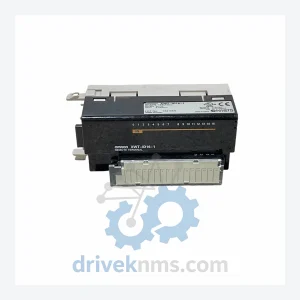
Omron XWT-ID16
Omron XWT-ID16 is listed for Servo Drives RFQ review. Confirm quantity, condition and destination before quotation.
RFQ-ready industrial model
Model: CPM1A-20CDR-A-V1
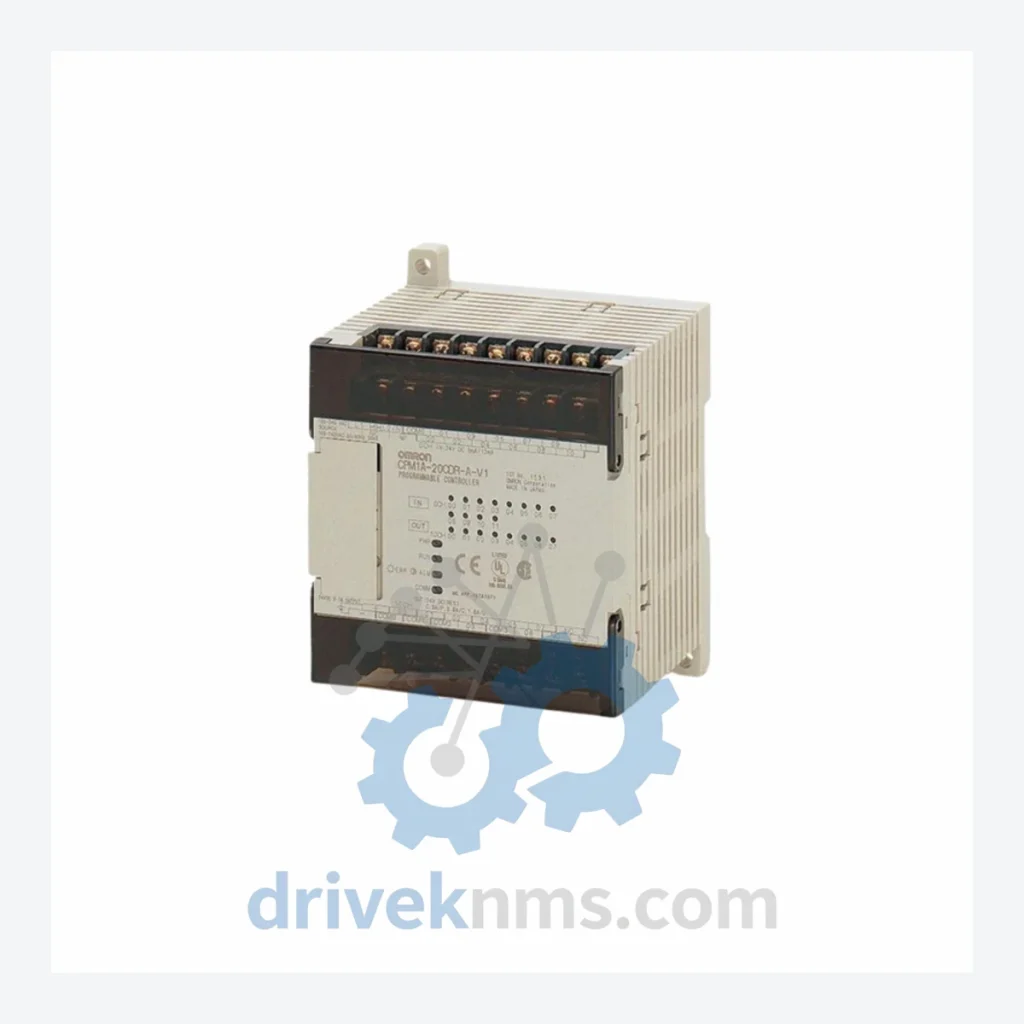
Product Overview
Commercial availability is handled through direct RFQ, model verification and export-oriented follow-up rather than public cart checkout.
Datasheet Preview
Use attached product manuals when available. If the manual is not public yet, request the full file directly through RFQ.
Commercial Path
Product pages on DRIVEKNMS are designed to verify model, brand and series first, then move the buyer into one clean quotation path.
Technical Dossier
The CPM1A operates on OMRON's proprietary SYSMAC instruction set and communicates via RS-232C and peripheral ports, supporting host link (SYSMAC WAY) and NT Link protocols. CPU units support ladder diagram programming through CX-Programmer software. The series is fully compatible with OMRON's C-series expansion I/O architecture, allowing modular expansion up to 100 I/O points depending on the CPU variant.
The CPM1A was introduced in the mid-1990s as a compact successor to the CPM1, incorporating onboard analog capability options and expanded memory. It belongs to OMRON's C-series PLC family, which also includes the CPM2A, CPM2C, CQM1, and CJ1M lines. The CPM1A CPU units range from 10 to 40 I/O points in the base unit, with relay and transistor output variants to suit different load types.
As automation architectures evolved toward open-network fieldbus systems (DeviceNet, EtherNet/IP), the CPM1A's RS-232C-centric communication model became a compatibility constraint in modern integration projects. OMRON officially positioned the CJ2M and CP1E series as functional replacements. However, the CPM1A remains in active service in legacy installations where full system replacement is not economically viable. Compatibility with existing ladder programs and I/O wiring layouts makes module-level replacement the preferred maintenance strategy for these sites.
CPU Units (Relay Output)
CPU Units (Transistor Output — NPN Sinking)
CPU Units (Transistor Output — PNP Sourcing)
Expansion I/O Units
Analog I/O Expansion Units
Communication & Specialty Units
CPM1A modules undergo a structured inspection and functional test protocol prior to dispatch. Each CPU unit is powered and loaded with a diagnostic ladder program to verify: input response time, output switching integrity (relay contact resistance for CDR variants; transistor saturation voltage for CDT variants), memory read/write cycles, and peripheral port communication handshake. Expansion I/O units are tested in conjunction with a reference CPU to confirm backplane connector integrity and I/O mapping accuracy.
Relay output units (CDR variants) receive additional contact wear assessment. Units with relay contact resistance exceeding 100 mΩ are rejected. Analog expansion units (MAD01, MAD11) are calibrated against a traceable reference signal source to verify linearity and offset within published OMRON specifications. All tested units are issued a DriveKNMS inspection record with test date, technician ID, and pass/fail criteria documentation.
Continue The Model Path
Move from this exact model into the matching system hub, brand archive, model-family archive or lifecycle sourcing route before sending a final RFQ list.
Related Paths
Omron XWT-ID16 is listed for Servo Drives RFQ review. Confirm quantity, condition and destination before quotation.
Omron CQM1-ME04K CQM1-ME08K is listed for CQM1 Series RFQ review. Confirm quantity, condition and destination before quotation.
Omron H8PR-16 is listed for Servo Drives RFQ review. Confirm quantity, condition and destination before quotation.