
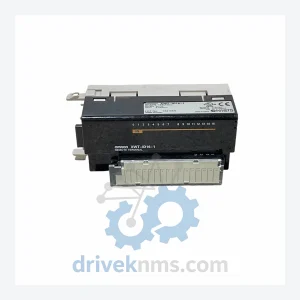
Omron XWT-ID16
Omron XWT-ID16 is listed for Servo Drives RFQ review. Confirm quantity, condition and destination before quotation.
RFQ-ready industrial model
Model: R7D-BP02HH-Z
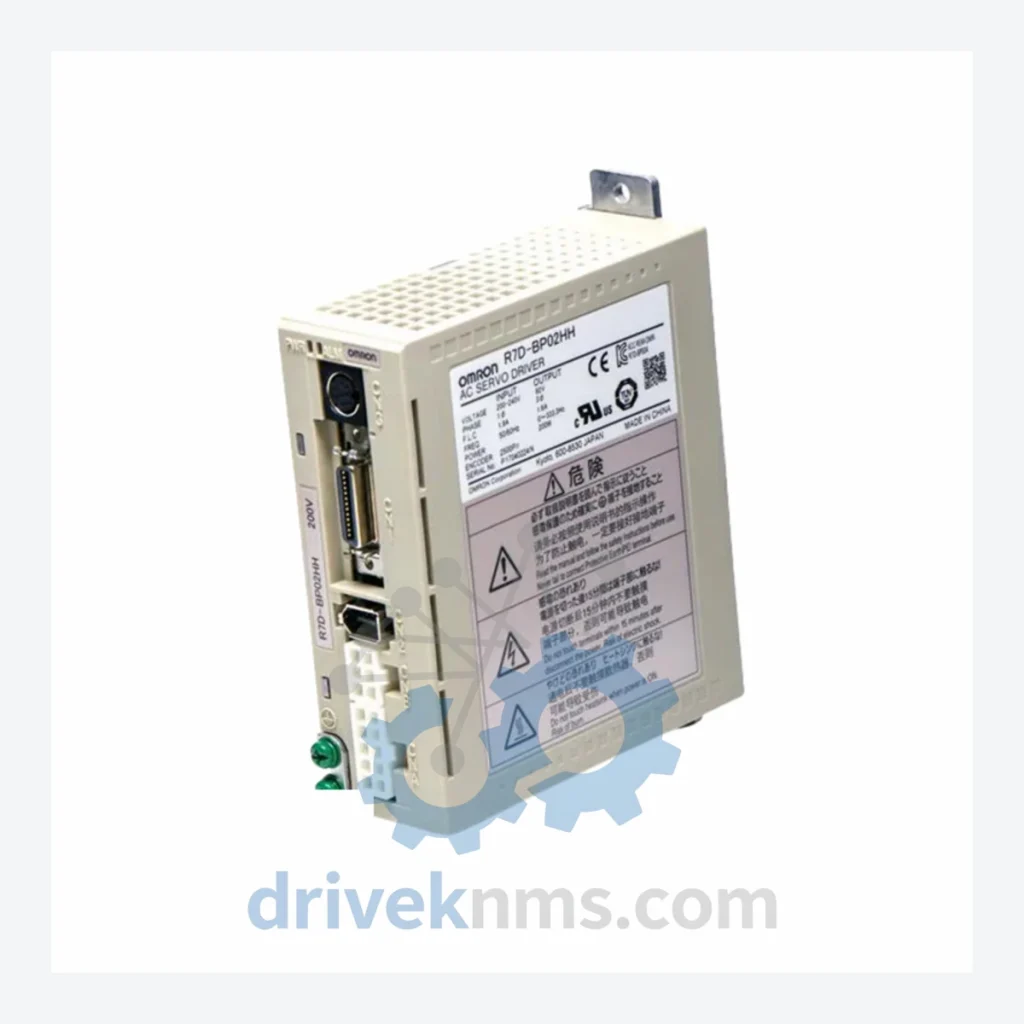
Product Overview
Commercial availability is handled through direct RFQ, model verification and export-oriented follow-up rather than public cart checkout.
Datasheet Preview
Use attached product manuals when available. If the manual is not public yet, request the full file directly through RFQ.
Commercial Path
Product pages on DRIVEKNMS are designed to verify model, brand and series first, then move the buyer into one clean quotation path.
Technical Dossier
| Parameter | Detail |
|---|---|
| Manufacturer | OMRON |
| Part Number | R7D-BP02HH-Z |
| Series | R7D (Legacy / Discontinued) |
| Product Type | AC Servo Drive |
| Discontinuation Status | Officially discontinued by OMRON. No direct OEM replacement available within the R7D platform. |
| Compatible Servo Motor Series | OMRON R88M-U series (verify motor nameplate before ordering) |
| Country of Origin | Japan |
| Typical System Environment | OMRON SYSMAC C-series / CJ-series PLC platforms; legacy motion control networks using MECHATROLINK or analog command interfaces |
Note: Electrical parameters such as rated output power, input voltage range, and encoder interface specifications should be confirmed against the original unit's nameplate and the R7D series user manual prior to installation. DriveKNMS does not publish unverified specifications.
The OMRON R7D series was engineered for deterministic motion control in environments where repeatability and response time were non-negotiable. Its analog and pulse-train command interfaces integrated directly with OMRON SYSMAC PLCs and third-party controllers without middleware. That tight integration is precisely what makes the R7D-BP02HH-Z irreplaceable in the field: the control logic, tuning parameters, and wiring infrastructure were built around this specific drive's behavior.
Migrating to a current-generation servo platform — such as the OMRON G5 or Accurax G5 series — requires not only new hardware but a full re-commissioning of the motion program, revised I/O mapping, and in many cases, mechanical recalibration of the driven axis. For a facility running 20 to 100 servo axes on a legacy SYSMAC architecture, that engineering effort is measured in months, not days. The R7D-BP02HH-Z spare eliminates that timeline entirely.
For plant managers facing pressure to justify capital expenditure deferrals, the following maintenance strategy has been applied successfully across facilities in automotive, electronics, and food processing sectors:
1. Conduct a drive-level criticality audit. Identify every R7D-series axis on your floor. Rank them by production impact if that axis fails. Prioritize spare procurement for Tier 1 axes — those with no manual bypass and direct throughput impact.
2. Establish a minimum two-unit buffer per critical axis. One unit in active service, one in sealed storage. For high-cycle applications (more than 16 operating hours per day), consider a three-unit buffer.
5. Inspect encoder cables and connectors annually. In the R7D ecosystem, encoder signal degradation — not drive failure — is the most frequent cause of servo faults. A functioning spare drive will not resolve a deteriorated encoder cable. Address both simultaneously.
This five-step protocol, applied consistently, extends the viable service life of an R7D-based motion system by 5 to 10 years beyond the OEM's end-of-support date — without a single line of new PLC code.
Every R7D-BP02HH-Z unit sourced through DriveKNMS undergoes a structured 5-step inspection protocol before dispatch:
Step 1 – Electrolytic Capacitor Assessment: Capacitor aging is the primary failure mode in servo drives stored beyond five years. Each unit is inspected for capacitor bulging, electrolyte leakage, and ESR deviation. Units with degraded capacitors are either reconditioned with OEM-equivalent components or rejected from inventory.
Step 2 – Firmware Version Verification: The installed firmware version is documented and disclosed to the buyer prior to shipment. Firmware mismatches between a replacement drive and the host PLC are a known source of commissioning failures in legacy OMRON systems.
Q: How are RFQ terms confirmed?
A: Quantity, required condition, documentation needs, destination and sourcing route are confirmed during RFQ review before quotation.
Step 4 – Functional Power-On Test: Where test infrastructure permits, units are powered and basic drive response is verified. Results are documented in the unit's inspection record.
Step 5 – Packaging for Long-Term Storage: Units are sealed in anti-static packaging with desiccant and labeled with inspection date and condition grade. This preserves unit integrity during transit and any subsequent storage period at the buyer's facility.
Key operational advantages for legacy system maintenance:
Q: How do I confirm the unit is genuine and not a counterfeit?
A: All units are sourced through verified industrial surplus and decommissioning channels. Serial numbers are documented and available for buyer verification. We do not source from unverified secondary markets. Inspection records are provided upon request.
Continue The Model Path
Move from this exact model into the matching system hub, brand archive, model-family archive or lifecycle sourcing route before sending a final RFQ list.
Related Paths
Omron XWT-ID16 is listed for Servo Drives RFQ review. Confirm quantity, condition and destination before quotation.
Omron CQM1-ME04K CQM1-ME08K is listed for CQM1 Series RFQ review. Confirm quantity, condition and destination before quotation.
Omron H8PR-16 is listed for Servo Drives RFQ review. Confirm quantity, condition and destination before quotation.