
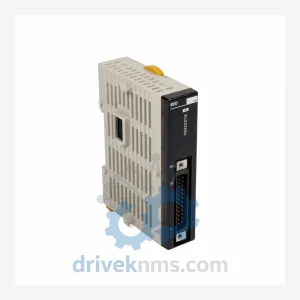
OMRON CPM2C-8EDM CPU Unit – Obsolete CPM2C Series Spare Part
OMRON CPM2C-8EDM CPU Unit – Obsolete CPM2C Series Spare Part When an OMRON CPM2C-8EDM CPU unit fails on the production…
Model: SRT2-ID16T-1
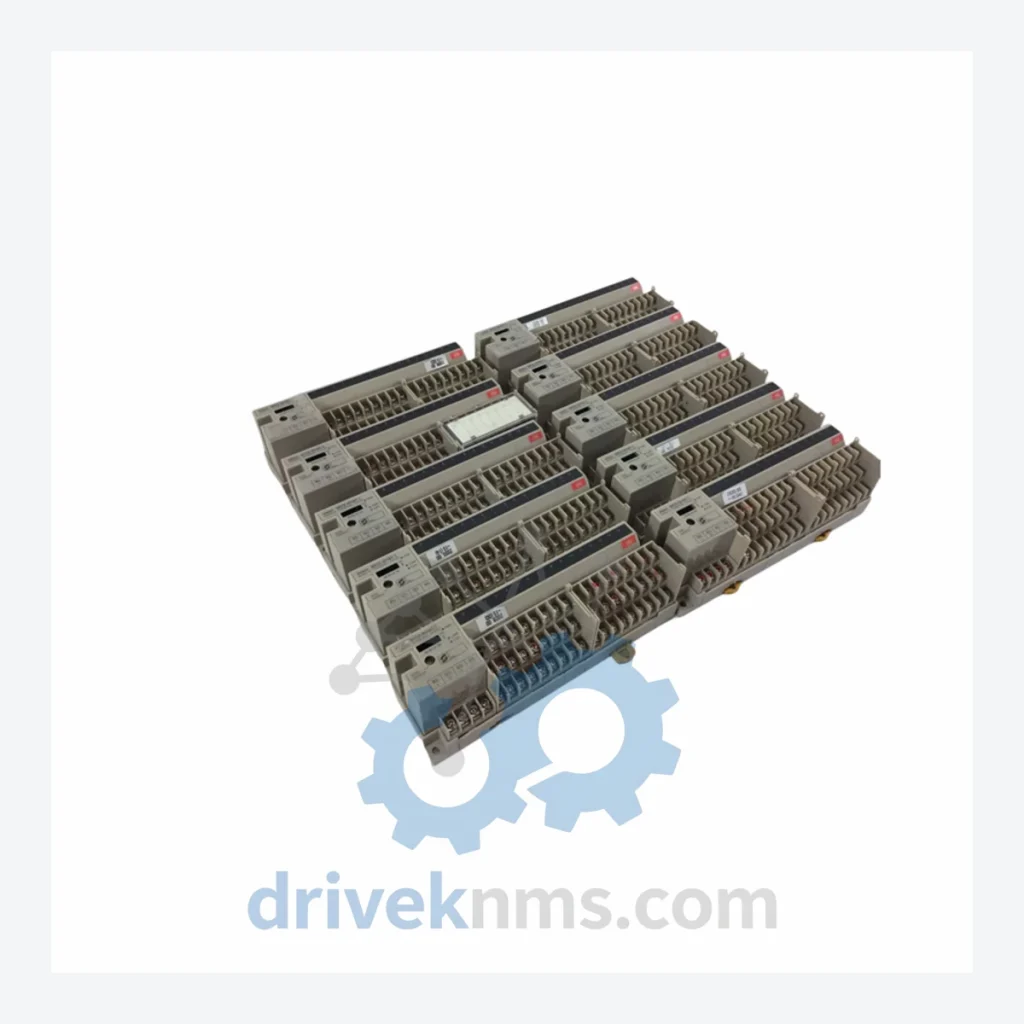
Product Overview
Commercial availability is handled through direct RFQ, model verification and export-oriented follow-up rather than public cart checkout.
Datasheet Preview
Use attached product manuals when available. If the manual is not public yet, request the full file directly through RFQ.
Commercial Path
Product pages on DRIVEKNMS are designed to verify model, brand and series first, then move the buyer into one clean quotation path.
Technical Dossier
The OMRON SRT2 Series represents OMRON's dedicated line of CompoBus/S (also known as DeviceNet-compatible) remote I/O slave modules, engineered for distributed I/O architectures in demanding industrial environments. Deployed extensively across chemical processing plants, petroleum refineries, nuclear utility facilities, automotive assembly lines, and water treatment infrastructure, the SRT2 series enables high-speed, deterministic I/O communication over a two-wire flat cable or round cable bus topology. Its compact DIN-rail form factor and high noise immunity rating make it a standard specification in control panel builds across Asia-Pacific, Europe, and North America. The series interfaces directly with OMRON CS1, CJ1, CJ2, and CV-series PLCs via CompoBus/S master units (e.g., CS1W-SRM21, CJ1W-SRM21), supporting up to 32 slave nodes per network segment with cycle times as low as 0.5 ms. The SRT2 platform remains one of the most widely installed distributed I/O families in OMRON's installed base, with millions of nodes in active service globally.
The SRT2 series succeeded the original SRT1 platform, introduced in the early 1990s as OMRON's first generation of CompoBus/S slaves. The SRT1 line established the flat-cable bus standard but was limited to 8-point I/O configurations and lacked transistor output variants suitable for high-speed applications. The SRT2 generation, released progressively through the mid-to-late 1990s and into the 2000s, introduced 16-point I/O density, NPN/PNP transistor output options, mixed I/O configurations, and analog I/O capability — significantly expanding the series' applicability to motion-adjacent and process control tasks.
A key architectural distinction of the SRT2 line is its use of the CompoBus/S protocol, a proprietary OMRON fieldbus optimized for high-speed cyclic I/O refresh rather than message-based communication. This design choice prioritizes determinism over flexibility, making SRT2 nodes unsuitable for acyclic parameter exchange but highly reliable for time-critical discrete I/O scanning. The SRT2 series is not natively compatible with EtherNet/IP or PROFIBUS without gateway hardware.
As of the mid-2010s, OMRON began transitioning new designs toward the GX Series (EtherNet/IP-based) and NX Series I/O platforms. The SRT2 series entered its end-of-life phase, with OMRON officially discontinuing production of most SRT2 models. However, given the 20–30 year operational lifespan typical of heavy industrial control systems, SRT2 modules remain in active service at a large number of installed sites. Replacement and lifecycle extension sourcing is therefore a primary procurement requirement for maintenance engineers managing legacy OMRON systems.
The following SKUs represent the core SRT2 series module range, classified by function. All models listed are verified members of the SRT2 CompoBus/S slave family.
Digital Input Modules (DI)
SRT2-ID04: 4-point 24 VDC NPN input slave module, flat cable connection.
SRT2-ID08: 8-point 24 VDC NPN input, compact DIN-rail mount, flat cable bus.
SRT2-ID08S: 8-point NPN input with individual commons, enhanced noise immunity.
SRT2-ID16: 16-point 24 VDC NPN input module, high-density discrete input slave.
SRT2-ID16T: 16-point NPN input, terminal block wiring, flat cable bus interface.
SRT2-ID16T-1: 16-point NPN input, terminal block, round cable bus compatible — the subject SKU of this listing.
SRT2-VID08: 8-point input module with voltage input compatibility for 12/24 VDC signals.
Digital Output Modules (DO)
SRT2-OD04: 4-point NPN transistor output, 0.5 A per point, flat cable connection.
SRT2-OD08: 8-point NPN transistor output slave, 0.5 A per point, DIN-rail mount.
SRT2-OD08S: 8-point NPN output with individual commons, short-circuit protection.
SRT2-OD16: 16-point NPN transistor output, high-density discrete output slave.
SRT2-OD16T: 16-point NPN output, terminal block wiring, flat cable bus.
SRT2-OD16T-1: 16-point NPN output, terminal block, round cable bus compatible.
Mixed I/O Modules
SRT2-MD16T: 8-point NPN input / 8-point NPN output mixed module, terminal block, flat cable.
SRT2-MD16T-1: 8-point NPN input / 8-point NPN output, terminal block, round cable bus.
Analog I/O Modules
SRT2-AD04: 4-channel analog input slave, 0–10 V / 4–20 mA selectable, 12-bit resolution.
SRT2-DA02: 2-channel analog output slave, 0–10 V / 4–20 mA, 12-bit resolution.
The SRT2 series is classified as a mature-to-end-of-life product line. OMRON has ceased volume production of the majority of SRT2 SKUs, and authorized distributor stock is depleted or limited to residual inventory. For maintenance engineers and reliability teams managing legacy OMRON CompoBus/S networks, the primary sourcing channels are specialist industrial spare parts distributors with access to new-old-stock (NOS), refurbished, and tested-used inventory.
DriveKNMS maintains a dedicated inventory program for discontinued OMRON SRT2 modules. Our procurement network spans manufacturer-authorized surplus channels, decommissioned plant asset recovery, and verified third-party refurbishers. We stock or can source the full SRT2 catalog range, including low-volume variants such as the SRT2-AD04 and SRT2-DA02 analog modules, which are among the most difficult to locate on the open market. All SRT2 units sourced through DriveKNMS are subject to pre-shipment functional verification. Inquiries for bulk quantities, long-term supply agreements, or emergency replacement orders are handled directly by our technical sales team.
The SRT2 series presents specific quality verification challenges due to its bus-dependent communication architecture. A module that passes basic power-on and LED indicator checks may still exhibit latent faults in its CompoBus/S ASIC, backplane connector, or internal optocoupler array that only manifest under live network conditions. DriveKNMS applies a structured test protocol to all SRT2 units prior to dispatch:
Each module is bench-powered at rated 24 VDC and inspected for capacitor condition, relay contact integrity (where applicable), and PCB contamination. Units are then connected to a live CompoBus/S test network using a CS1W-SRM21 master unit. All I/O points are individually exercised under load — inputs are stimulated with calibrated 24 VDC signals, and outputs are verified against resistive load banks at rated current. Communication cycle integrity is monitored over a minimum 30-minute soak period to detect intermittent bus errors. Analog modules (SRT2-AD04, SRT2-DA02) undergo additional calibration verification against a traceable reference standard. Units that fail any stage of this protocol are quarantined and not offered for sale.
Related Paths
OMRON CPM2C-8EDM CPU Unit – Obsolete CPM2C Series Spare Part When an OMRON CPM2C-8EDM CPU unit fails on the production…
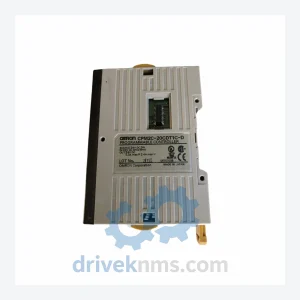
OMRON CPM2C-20CDT1C-D: Sourcing Strategy & Asset Return Value in a Constrained Global Supply Chain The OMRON CPM2C-20CDT1C-D is a compact,…
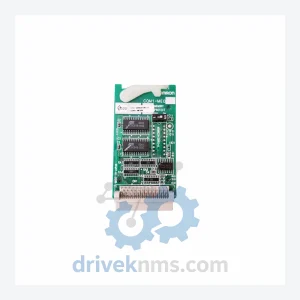
OMRON CQM1-ME04K / CQM1-ME08K PLC Memory Module: Procurement Strategy & Asset ROI in a Constrained Supply Environment The OMRON CQM1-ME04K…