
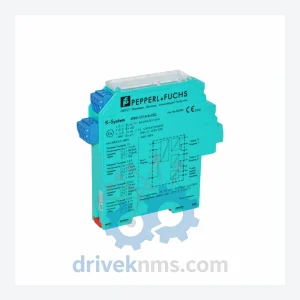
PEPPERL+FUCHS KFD2-STC4-EX1.2O Signal Isolator – NAMUR Series
Pepperl+Fuchs KFD2-STC4-EX1.2O is listed for NAMUR Series RFQ review. Confirm quantity, condition and destination before quotation.
RFQ-ready industrial model
Model: KFU8-UFT-EX2.D
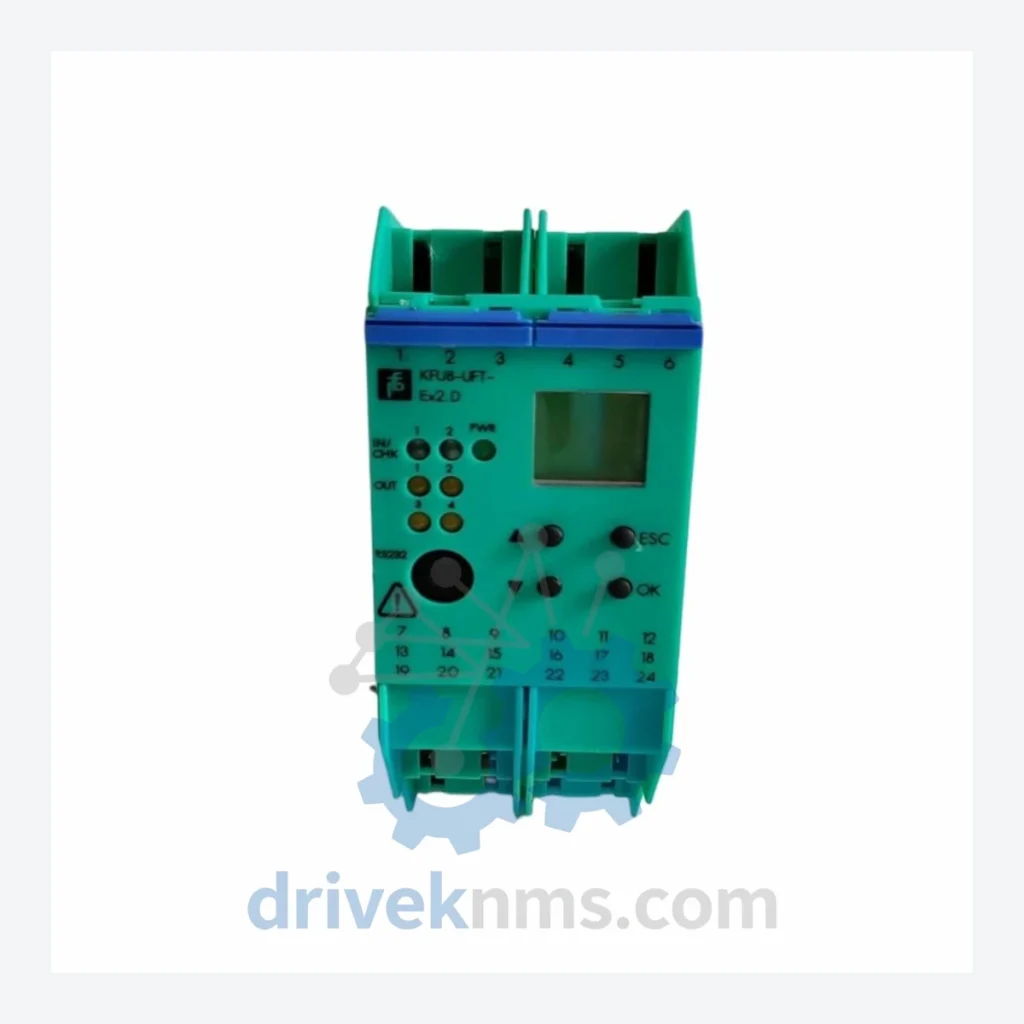
Product Overview
Commercial availability is handled through direct RFQ, model verification and export-oriented follow-up rather than public cart checkout.
Datasheet Preview
Use attached product manuals when available. If the manual is not public yet, request the full file directly through RFQ.
Commercial Path
Product pages on DRIVEKNMS are designed to verify model, brand and series first, then move the buyer into one clean quotation path.
Technical Dossier
RFQ support for obsolete parts: Send the model number, required quantity and destination so DriveKNMS can confirm sourcing options before quotation.
| Parameter | Value |
|---|---|
| Manufacturer | Pepperl+Fuchs |
| Part Number | KFU8-UFT-EX2.D |
| Product Series | KFD / KFU8 Series |
| Function | Frequency Converter / Universal Frequency Transmitter |
| Supply Voltage | 20–30 V DC (loop-powered / bus-powered via K-System backplane) |
| Input | Frequency signal from field devices (NAMUR, dry contact, or voltage pulse) |
| Output | Analog output (frequency-to-current conversion); relay output |
| Hazardous Area Approval | ATEX / IECEx – suitable for use with Ex ia field devices in Zone 0/1/2 |
| Mounting | DIN rail, K-System carrier |
| Country of Origin | Germany |
| Discontinuation Status | Obsolete – no longer in active production by Pepperl+Fuchs |
Note: Parameters above are based on published Pepperl+Fuchs documentation for the KFU8/KFD series. Buyers are advised to verify compatibility against their specific system revision before installation. DriveKNMS does not fabricate specifications.
The KFU8-UFT-EX2.D was designed for the K-System modular signal conditioning platform — a backplane-based architecture widely deployed in process plants throughout the 1990s and 2000s. Its role is precise: it converts frequency or pulse signals from field instruments into standardized analog outputs that legacy DCS and PLC systems can process. There is no universal modern equivalent that installs into the same K-System carrier slot without mechanical and electrical rework.
Plants running Honeywell TDC 3000, ABB Advant OCS, Siemens SIMATIC S5, or early S7 configurations with existing K-System I/O racks face a specific problem: the control system itself is not being replaced, but individual modules are failing as component lifespans are exceeded. Replacing the KFU8-UFT-EX2.D with a current-generation alternative requires new carrier hardware, revised wiring, updated I/O configuration in the DCS, and in many cases, a formal management of change (MOC) process — a process that can take months and cost more than the annual maintenance budget for an entire instrument loop.
Sourcing an original KFU8-UFT-EX2.D eliminates all of that. The module installs into the existing carrier, the field wiring remains unchanged, and the DCS configuration requires no modification. For plant managers under pressure to defer capital expenditure while maintaining production reliability, this is not a workaround — it is the correct engineering decision.
DriveKNMS applies a 5-step inspection protocol to all obsolete modules before dispatch:
Condition grade (New, Refurbished-Grade-A, or Tested-Used) is disclosed on the product listing and confirmed in writing before payment is processed.
Can you source additional quantity if I need more than you have listed?
Contact us with your required quantity. DriveKNMS maintains sourcing relationships across the global industrial surplus market and will conduct a targeted search on your behalf. Response time is typically 24–48 hours.
Continue The Model Path
Move from this exact model into the matching system hub, brand archive, model-family archive or lifecycle sourcing route before sending a final RFQ list.
Related Paths
Pepperl+Fuchs KFD2-STC4-EX1.2O is listed for NAMUR Series RFQ review. Confirm quantity, condition and destination before quotation.
Pepperl+Fuchs MB-16U5L-103681 MB-C3-DI32-AKB-131969 is listed for FieldConnex LB/FB Series RFQ review. Confirm quantity, condition and destination before quotation.
Pepperl+Fuchs KFD2-VM-EX1.35 is listed for KFD2 Series RFQ review. Confirm quantity, condition and destination before quotation.