
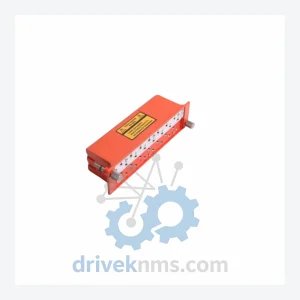
Panasonic 581B740C Circuit Board – Obsolete MINAS Series Spare Part
Panasonic 581B740C is listed for MINAS Series RFQ review. Confirm quantity, condition and destination before quotation.
RFQ-ready industrial model
Model: DV47L250LE4A P326M-250LE4A
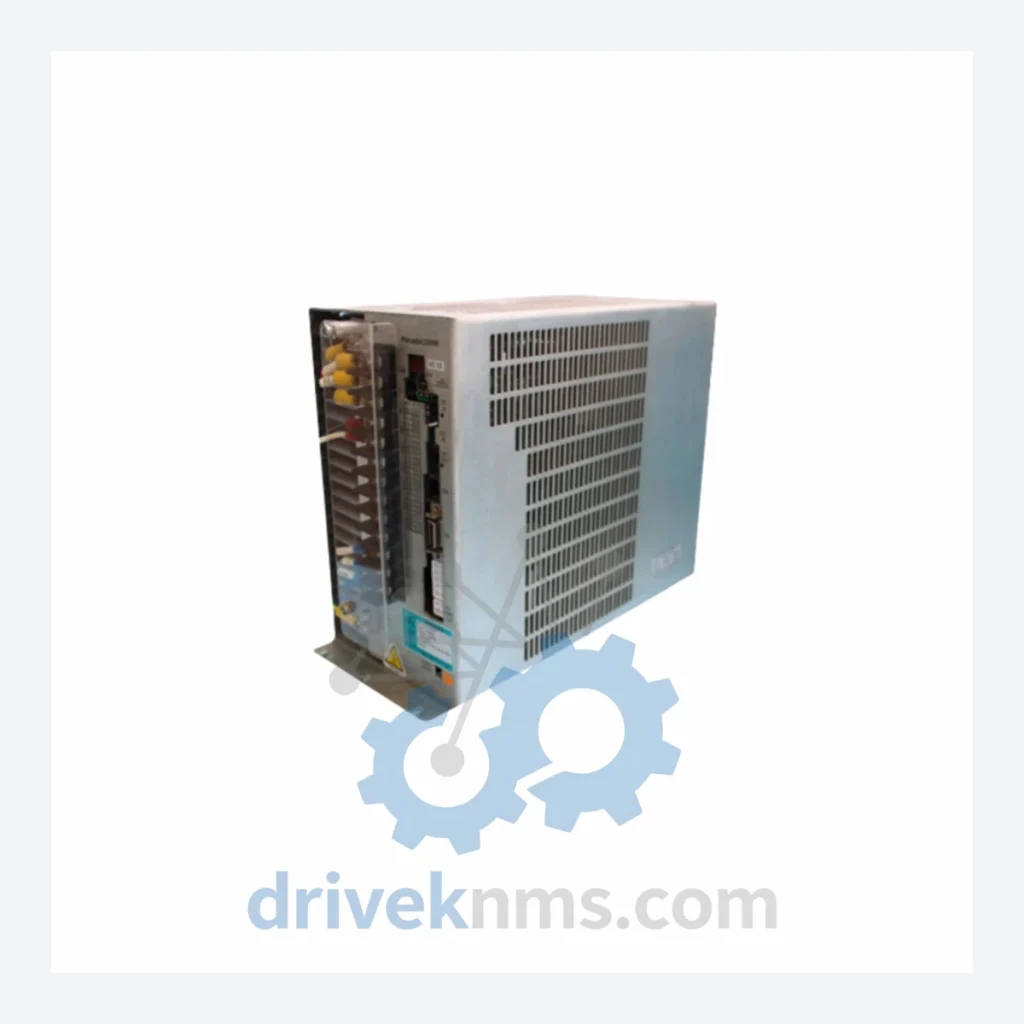
Product Overview
Commercial availability is handled through direct RFQ, model verification and export-oriented follow-up rather than public cart checkout.
Datasheet Preview
Use attached product manuals when available. If the manual is not public yet, request the full file directly through RFQ.
Commercial Path
Product pages on DRIVEKNMS are designed to verify model, brand and series first, then move the buyer into one clean quotation path.
Technical Dossier
DriveKNMS maintains hard-to-find industrial automation inventory specifically for facilities that cannot afford to be told "no longer available." If you are managing aging servo infrastructure and need a confirmed unit, act now — this is RFQ availability review.
RFQ support for obsolete parts: Send the model number, required quantity and destination so DriveKNMS can confirm sourcing options before quotation.
| Parameter | Detail |
|---|---|
| Manufacturer | Panasonic (Matsushita Electric) |
| Part Number | DV47L250LE4A |
| Alternate Part Number | P326M-250LE4A |
| Series | MINAS |
| Product Type | AC Servo Driver / Servo Amplifier |
| Country of Origin | Japan |
| Discontinuation Status | Discontinued / End-of-Life (EOL) – No longer in Panasonic active production |
| Compatible Systems | Panasonic MINAS servo motor series; legacy CNC and motion control platforms using Panasonic MINAS amplifiers |
Note: Electrical parameters such as rated output current, input voltage range, and encoder interface specifications are confirmed only against verified documentation. Parameters not confirmed by documentation are intentionally omitted to protect equipment safety.
The Panasonic MINAS servo platform was widely deployed across precision manufacturing, packaging machinery, semiconductor handling equipment, and multi-axis CNC systems throughout the 1990s and 2000s. Facilities that built production processes around MINAS-based motion control now face a structural problem: the platform is no longer supported by Panasonic's active supply chain, yet the machinery it drives continues to operate — and continues to generate revenue.
Replacing a MINAS servo driver is not simply a matter of installing a newer-generation amplifier. Modern Panasonic MINAS A6 or A5 series amplifiers use different communication protocols, different tuning parameter structures, and different connector pinouts. A direct swap without engineering intervention is not possible. The practical consequence is that every facility still running DV47L250LE4A units is dependent on the secondary market for spare inventory. There is no alternative path that does not involve significant engineering cost and production disruption.
The strategy is straightforward: identify the servo drivers and amplifiers that are single points of failure on your highest-value production assets. Secure at least one verified spare for each. The cost of that inventory is measured in thousands. The cost of an unplanned failure without a spare is measured in production days lost and emergency engineering fees.
Discontinued servo drivers present specific failure risks that differ from current-production units. DriveKNMS applies a 5-step inspection protocol to every unit before it is offered for sale:
Step 1 – Electrolytic Capacitor Assessment: Electrolytic capacitors are the primary age-related failure point in servo amplifiers. Each unit is inspected for capacitor bulging, leakage, and ESR degradation. Units with compromised capacitors are not offered as functional spares.
Step 2 – Firmware Version Verification: Where accessible, firmware revision is documented and cross-referenced against known compatibility requirements for the target application. Firmware version mismatches are disclosed prior to sale.
Step 3 – Pin and Connector Inspection: All I/O connectors, encoder interface ports, and power terminals are inspected under magnification for oxidation, corrosion, and mechanical damage. Corroded contacts are a common failure mode in long-stored units and are treated as a disqualifying defect.
Step 4 – Functional Bench Test (where applicable): Units are powered and tested for basic operational response where test infrastructure permits. Results are documented.
Step 5 – Packaging and Storage Verification: Units are stored in anti-static packaging in a controlled environment. Shipping packaging is selected to prevent mechanical shock damage in transit.
The DV47L250LE4A is a drop-in replacement for existing MINAS servo driver installations. No PLC reprogramming is required. No motor re-tuning from scratch is required if the replacement unit is the same hardware revision. The servo parameters stored in the controller or in the motor encoder memory remain valid. This means a qualified maintenance technician can execute the replacement without servo commissioning expertise, and without calling in a systems integrator.
This is the core economic argument for maintaining a spare parts inventory rather than pursuing platform migration: the replacement cost is the part cost plus one technician's time. The migration cost is the part cost, plus new motors, plus new cables, plus engineering time, plus commissioning time, plus the production hours lost during the transition. For a facility running multiple MINAS axes, that calculation is not close.
How do I know the unit is genuine and not counterfeit?
All units sourced by DriveKNMS are verified against manufacturer labeling standards. We do not source from unverified secondary channels. Provenance documentation is provided where available.
Should I buy more than one unit?
For any production asset where a servo driver failure would halt the line, holding a minimum of one spare on-site is standard practice. For high-utilization equipment or multi-axis systems using the same driver model, two units is a defensible minimum. The cost of a second spare is negligible relative to the cost of a second sourcing emergency.
Continue The Model Path
Move from this exact model into the matching system hub, brand archive, model-family archive or lifecycle sourcing route before sending a final RFQ list.
Related Paths
Panasonic 581B740C is listed for MINAS Series RFQ review. Confirm quantity, condition and destination before quotation.
Panasonic DV80X180MB5 is listed for MINAS Series RFQ review. Confirm quantity, condition and destination before quotation.
Panasonic MSD5AZA1Y is listed for MINAS Series RFQ review. Confirm quantity, condition and destination before quotation.