
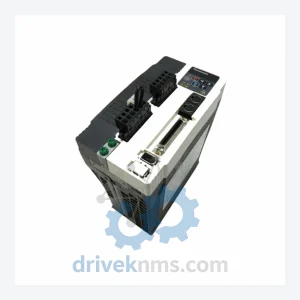
Panasonic MDDDT3530 AC Servo Driver – Obsolete MINAS A Series Spare Part
Panasonic MDDDT3530 is listed for MINAS A Series RFQ review. Confirm quantity, condition and destination before quotation.
RFQ-ready industrial model
Model: MSMD012P1U
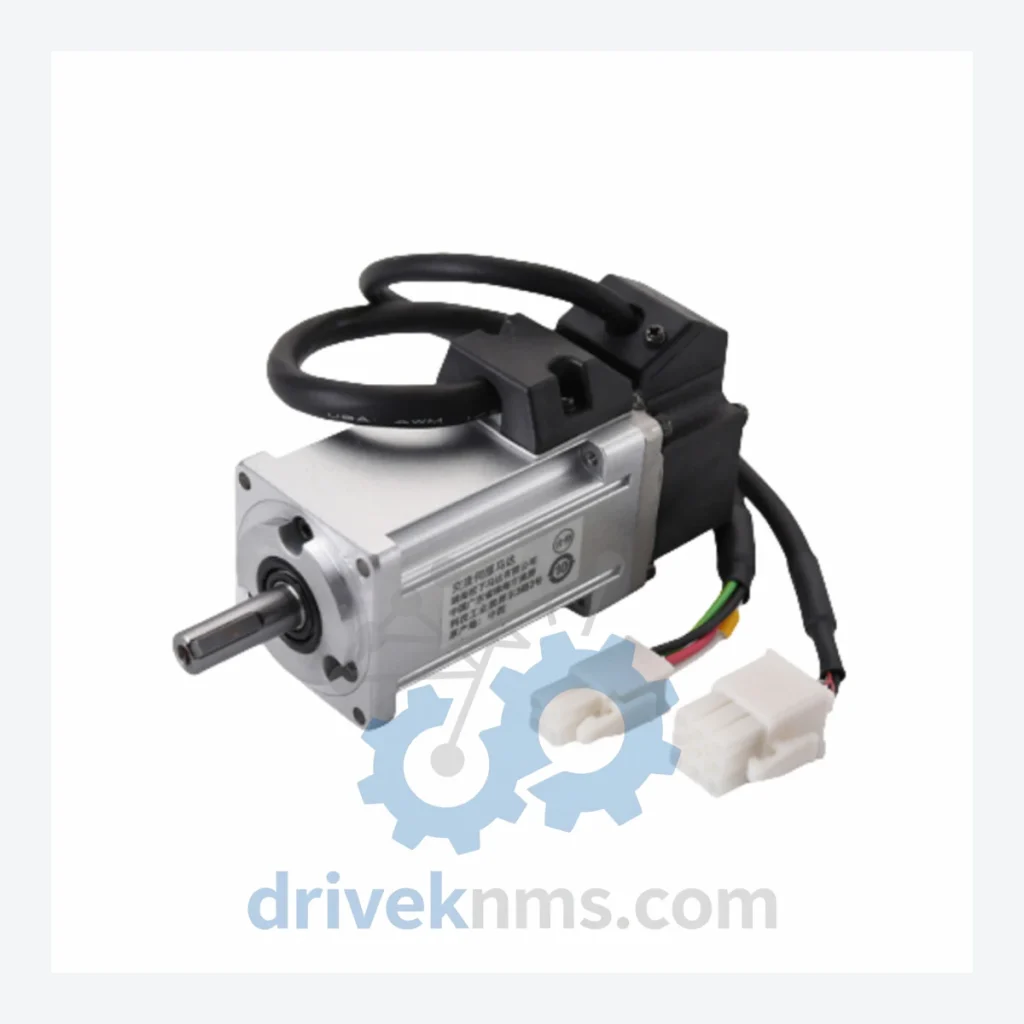
Product Overview
Commercial availability is handled through direct RFQ, model verification and export-oriented follow-up rather than public cart checkout.
Datasheet Preview
Use attached product manuals when available. If the manual is not public yet, request the full file directly through RFQ.
Commercial Path
Product pages on DRIVEKNMS are designed to verify model, brand and series first, then move the buyer into one clean quotation path.
Technical Dossier
When a Panasonic MSMD012P1U fails on the production floor, the immediate question is not where to find a replacement — it is how much a full line shutdown will cost per hour. For facilities running MINAS A Series servo systems, the answer is rarely comfortable. A single unplanned stoppage can cascade into days of lost output, emergency engineering assessments, and in the worst case, a forced migration to a newer control architecture that carries six- or seven-figure integration costs. DriveKNMS maintains RFQ-reviewed sourcing status of the MSMD012P1U specifically to interrupt that chain of events before it starts.
| Parameter | Value |
|---|---|
| Part Number | MSMD012P1U |
| Brand | Panasonic (Matsushita Electric) |
| Series | MINAS A Series |
| Motor Type | AC Servo Motor |
| Rated Output | 100 W |
| Country of Origin | Japan |
| OEM Status | Superseded – MINAS A Series phased out; replaced by A5/A6 generation |
| Compatible Drives | Panasonic MINAS A Series servo amplifiers (MSDA, MQDA series) |
| Encoder Type | Incremental encoder (series-dependent; verify with amplifier firmware) |
Note: Electrical parameters not listed above are not confirmed from verified datasheets and are intentionally omitted to prevent specification errors that could affect equipment safety.
The MINAS A Series was a workhorse platform deployed across semiconductor handling, packaging machinery, textile equipment, and precision assembly lines throughout the 1990s and 2000s. The servo amplifiers and motors in this family were designed as a tightly matched system. Substituting a motor from a later generation — even within the Panasonic product line — typically requires encoder protocol changes, amplifier parameter reconfiguration, and in many cases, mechanical shaft or flange adaptation.
For a facility that has standardized on MINAS A Series drives, the cost of a single motor failure is not limited to the component price. It includes engineering time to validate a cross-generation substitute, potential PLC parameter adjustments, and the risk of introducing instability into a tuned motion control loop. Against that backdrop, sourcing an original MSMD012P1U is the lowest-risk, lowest-cost path to restoring production.
Plant managers facing pressure to retire aging servo systems should weigh the full cost of migration against the cost of a structured spare parts program. A properly maintained MINAS A Series installation, supported by on-hand critical spares, can realistically extend asset service life by five to ten years. The capital expenditure avoided — deferred line redesign, new amplifier procurement, rewiring, and recommissioning — typically exceeds the cost of a spare parts inventory by an order of magnitude.
The strategic approach is straightforward: identify the two or three servo axes on each machine that carry the highest duty cycle or the greatest consequence of failure. Secure one spare motor and one spare amplifier for each. Review those spares every 18 to 24 months for storage condition. That program, executed consistently, is what separates facilities that manage aging automation assets from those that are managed by them.
Every MSMD012P1U unit processed through DriveKNMS undergoes a structured five-stage inspection before it is offered for sale. The protocol is designed around the failure modes most commonly observed in servo motors that have been in storage or removed from service.
Stage 1 – Electrolytic Capacitor Assessment: Internal capacitors in servo motors and associated drive electronics degrade over time regardless of operating hours. Units are inspected for capacitor bulging, leakage, and ESR deviation. Capacitors showing degradation are replaced before the unit is cleared.
Stage 2 – Firmware and Encoder Version Verification: Where applicable, encoder firmware versions are documented and cross-referenced against known compatibility matrices for MINAS A Series amplifiers. Mismatched firmware is a common source of unexplained servo faults in legacy installations.
Q: How are RFQ terms confirmed?
A: Quantity, required condition, documentation needs, destination and sourcing route are confirmed during RFQ review before quotation.
Stage 4 – Winding Insulation Test: Motor windings are tested for insulation resistance to identify degradation that would not be visible externally but would cause in-service failure.
The MSMD012P1U is a direct mechanical and electrical replacement for the original unit in any MINAS A Series installation. No amplifier parameter changes are required when replacing a like-for-like unit. The motor mounts to the same flange pattern, uses the same shaft dimensions, and connects via the same encoder and power connector pinout as the original.
For facilities managing multiple machines with MINAS A Series axes, a structured spare parts holding strategy eliminates the single-point-of-failure risk that an aging servo population represents. One spare motor per critical axis, stored correctly, is the difference between a planned maintenance event and an unplanned production loss.
How do I know the unit is genuine and in usable condition?
All units are sourced from documented supply chains and inspected through the five-stage QA process described above. Inspection records are available on request. We do not sell units that have not passed the full inspection sequence.
Can this motor be used with MINAS A5 or A6 amplifiers?
Cross-generation compatibility between MINAS A Series motors and A5/A6 amplifiers is not confirmed without engineering validation. We recommend consulting Panasonic technical documentation or your system integrator before attempting cross-generation pairing.
Continue The Model Path
Move from this exact model into the matching system hub, brand archive, model-family archive or lifecycle sourcing route before sending a final RFQ list.
Related Paths
Panasonic MDDDT3530 is listed for MINAS A Series RFQ review. Confirm quantity, condition and destination before quotation.
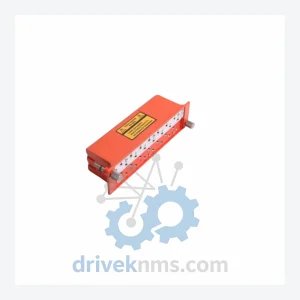
Panasonic 581B740C is listed for MINAS Series RFQ review. Confirm quantity, condition and destination before quotation.
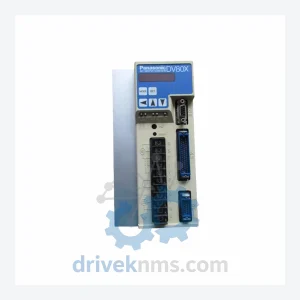
Panasonic DV80X180MB5 is listed for MINAS Series RFQ review. Confirm quantity, condition and destination before quotation.