
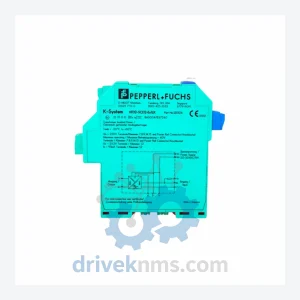
Pepperl+Fuchs SCD2-STC-EX1 Transmitter Power Supply – Obsolete SCD Series Spare Part
Pepperl+Fuchs SCD2-STC-EX1 is listed for Power Supplies RFQ review. Confirm quantity, condition and destination before quotation.
RFQ-ready industrial model
Model: KFD2£STC4£1
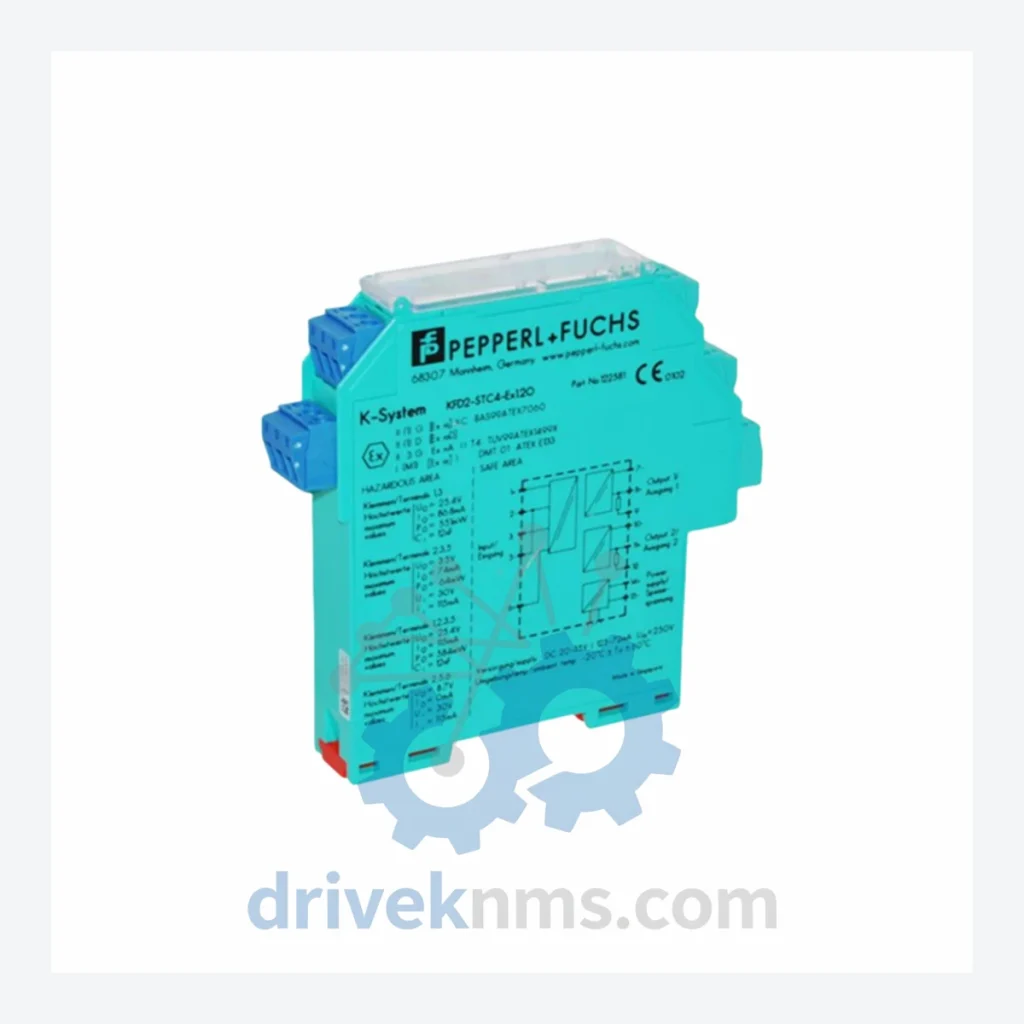
Product Overview
Commercial availability is handled through direct RFQ, model verification and export-oriented follow-up rather than public cart checkout.
Datasheet Preview
Use attached product manuals when available. If the manual is not public yet, request the full file directly through RFQ.
Commercial Path
Product pages on DRIVEKNMS are designed to verify model, brand and series first, then move the buyer into one clean quotation path.
Technical Dossier
DriveKNMS reviews sourcing options for this model through RFQ handling before quotation.
RFQ support for obsolete parts: Send the model number, required quantity and destination so DriveKNMS can confirm sourcing options before quotation.
Note: Electrical parameters are sourced from Pepperl+Fuchs published documentation. Parameters not confirmed by original datasheet are intentionally omitted. Do not rely on third-party parameter claims for safety-critical installations.
The KFD2-STC4-1 occupies a specific and non-trivial role in legacy process control architectures. It provides loop power to two-wire SMART transmitters while simultaneously conditioning the 4–20 mA signal for the DCS input card — a dual function that later-generation systems handle differently. In a plant where the DCS input cards, marshalling cabinets, and field wiring were all engineered around the KFD2 form factor and signal characteristics, substituting a modern equivalent is not a plug-and-play exercise. It requires loop recalibration, potential input card reconfiguration, updated loop drawings, and in some jurisdictions, re-certification of the intrinsic safety barrier arrangement.
The KFD2-STC4-1 is commonly found in plants running Honeywell TDC 3000, Foxboro I/A Series, ABB Advant, and Siemens TELEPERM M control systems, as well as in facilities that standardized on Pepperl+Fuchs K-System isolation barriers across their instrumentation infrastructure. In all of these environments, the original part remains the lowest-risk, lowest-cost path to maintaining loop integrity.
Sourcing a discontinued component from the secondary market carries legitimate risk. DriveKNMS applies a five-step quality assurance process to every KFD2-STC4-1 unit before it is offered for sale:
1. Visual and Physical Inspection: Full examination of housing, terminal blocks, and labeling. Units with cracked housings, corroded terminals, or evidence of field modification are rejected at this stage.
2. Electrolytic Capacitor Assessment: Aged electrolytic capacitors are the primary failure mode in stored power supply modules. Each unit is assessed for capacitor condition; units showing signs of electrolyte leakage or bulging are removed from inventory.
3. Pin and Connector Integrity Check: All connector pins and DIN-rail interface contacts are inspected for oxidation, corrosion, and mechanical deformation. Contact surfaces are cleaned where required.
4. Firmware and Configuration Verification: Where applicable, firmware version is confirmed against the original manufacturer's release documentation to ensure compatibility with the target DCS platform.
5. Functional Power-On Test: Each unit is powered and verified for correct output signal behavior prior to packaging.
The primary operational value of sourcing an original KFD2-STC4-1 is the elimination of integration risk. The unit installs directly into the existing K-System base — no mechanical modification, no wiring changes, no recalibration of the transmitter loop, and no reprogramming of the DCS input card. For maintenance teams operating under tight turnaround windows, this matters. A replacement that requires engineering intervention to commission is not a spare part; it is a mini-project with its own schedule risk.
Beyond the immediate replacement scenario, facilities managing aging automation assets should consider the following maintenance strategy: identify all KFD2-STC4-1 units currently in service, assess their installation age and operating environment, and establish a minimum strategic spare holding based on failure probability over the intended remaining system life. For a facility planning to operate a legacy DCS for a further eight years, holding three to five spare units is a defensible and cost-effective risk mitigation measure. The cost of those spares is a fraction of a single unplanned shutdown event.
Q: How do I know the unit is genuine and not a counterfeit?
A: All units are sourced through established industrial surplus and OEM channels. Physical markings, part number labels, and internal construction are verified against known-good reference units. DriveKNMS does not knowingly sell counterfeit or remarked components. Customers with specific authentication requirements are encouraged to contact us before purchase.
Q: Is it better to buy one replacement unit or build a strategic spare inventory?
A: For any facility with multiple KFD2-STC4-1 units in active service, purchasing a single replacement addresses only the immediate failure. Given that this part is no longer manufactured, secondary market availability will decrease over time and prices will increase. Facilities that have established a spare holding of three to five units have consistently found this to be the most cost-effective approach to managing end-of-life component risk over a five-to-ten-year horizon.
Continue The Model Path
Move from this exact model into the matching system hub, brand archive, model-family archive or lifecycle sourcing route before sending a final RFQ list.
Related Paths
Pepperl+Fuchs SCD2-STC-EX1 is listed for Power Supplies RFQ review. Confirm quantity, condition and destination before quotation.
Pepperl+Fuchs KFD2-STC5-1 is listed for Power Supplies RFQ review. Confirm quantity, condition and destination before quotation.
Pepperl+Fuchs KFD2-STC4-EX1.20 is listed for KFD2 Series RFQ review. Confirm quantity, condition and destination before quotation.