
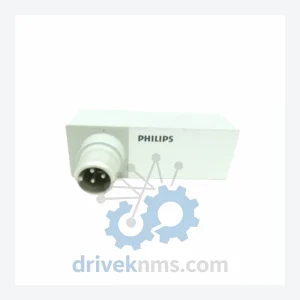
Philips LD5001M Displacement Transducer – Measurement & Sensing
Philips LD5001M is listed for Monitoring Systems RFQ review. Confirm quantity, condition and destination before quotation.
RFQ-ready industrial model
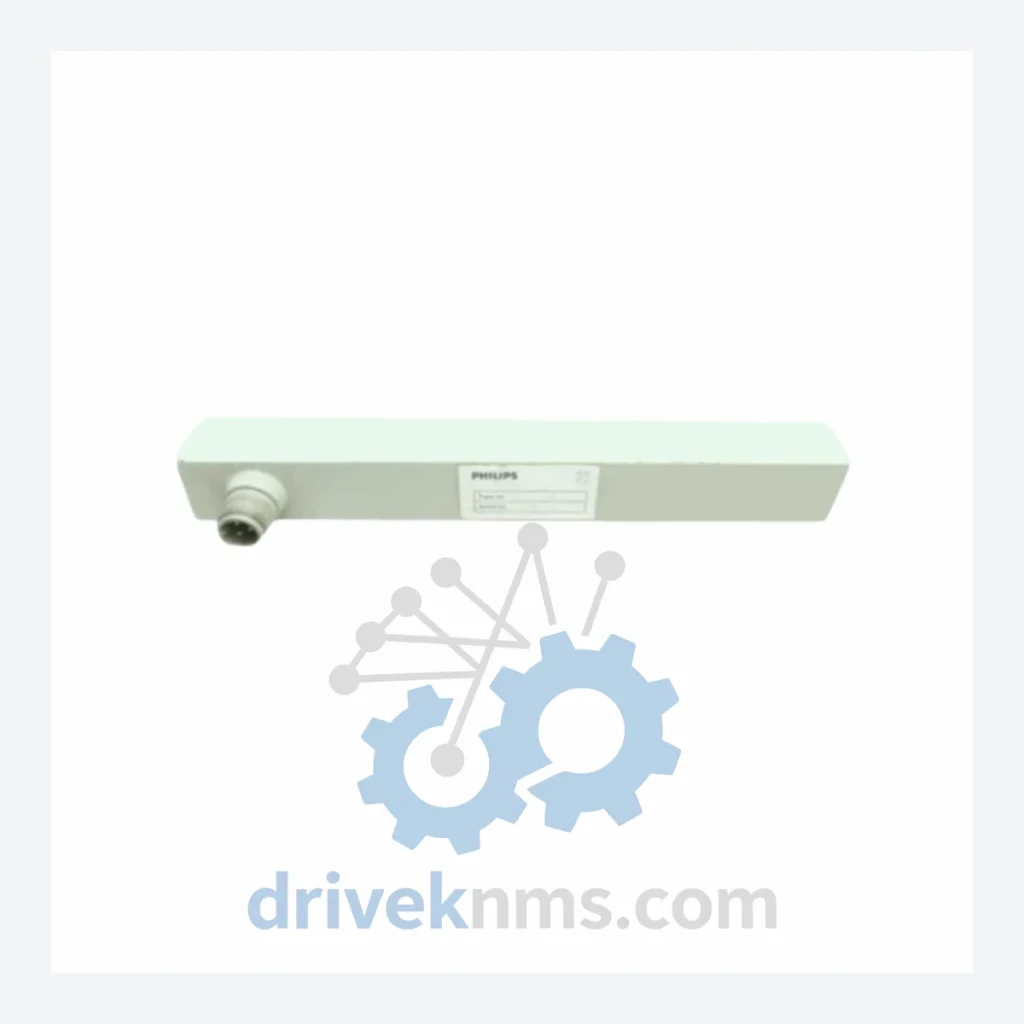
Model: LD5004M
Product Overview
Commercial availability is handled through direct RFQ, model verification and export-oriented follow-up rather than public cart checkout.
Datasheet Preview
Use attached product manuals when available. If the manual is not public yet, request the full file directly through RFQ.
Commercial Path
Product pages on DRIVEKNMS are designed to verify model, brand and series first, then move the buyer into one clean quotation path.
Technical Dossier
RFQ support for obsolete parts: Send the model number, required quantity and destination so DriveKNMS can confirm sourcing options before quotation.
| Parameter | Detail |
|---|---|
| Manufacturer | Philips |
| Part Number | LD5004M |
| Product Category | Linear Displacement Transducer (LVDT-type) |
| Discontinuation Status | Confirmed Obsolete – No longer manufactured or supported by OEM |
| Country of Origin | Netherlands |
| Typical Application | Position feedback in industrial press, forming, and motion control systems |
| Compatibility Note | Designed for integration with Philips legacy measurement and control platforms; verify signal conditioning requirements before installation |
Note: Electrical parameters (stroke range, output signal type, excitation voltage, linearity) are not published here to prevent specification mismatch. Contact us with your system documentation for a verified compatibility check before ordering.
The Philips LD5004M was engineered for high-cycle industrial environments where positional accuracy is non-negotiable. It is commonly found in legacy press control systems, hydraulic positioning rigs, and precision forming machines that were commissioned in the 1990s and early 2000s — equipment that remains mechanically sound but is increasingly vulnerable to electronic component attrition.
Facilities that have extended the service life of comparable legacy measurement systems by 5 to 10 years share a common practice: they treat critical discontinued sensors and transducers as capital assets, not consumables. A strategic inventory of two to three units of the LD5004M, stored under proper environmental conditions, converts an unplanned production stoppage into a scheduled 30-minute swap. The arithmetic is straightforward. The discipline to act before failure is the differentiator.
For plant managers facing board-level pressure to defer capital expenditure on system modernization, documented spare part availability is a defensible argument. It demonstrates that the existing asset can be maintained reliably for a defined extended period without the risk profile of operating with zero redundancy.
Every Philips LD5004M unit processed by DriveKNMS passes a structured 5-step quality protocol before it is offered for sale. This protocol was developed specifically for obsolete electromechanical components where OEM support and calibration references are no longer available.
Step 1 – Physical Inspection: Full external examination for housing cracks, connector damage, and pin corrosion. Units with compromised connectors or corroded contacts are rejected at intake.
Step 2 – Electrolytic Capacitor Assessment: Internal inspection where accessible for signs of capacitor aging, electrolyte leakage, or bulging — a primary failure mode in components of this era.
Step 3 – Continuity and Isolation Testing: Electrical continuity across all signal paths and insulation resistance testing to confirm no internal short circuits or degraded insulation.
Step 4 – Firmware / Configuration Verification (where applicable): For units with embedded configuration, version integrity is checked against known reference data.
Step 5 – Functional Verification: Where test fixtures permit, units are exercised through their operating range to confirm output linearity and signal integrity.
The primary operational value of sourcing an original Philips LD5004M — rather than pursuing a cross-reference substitute — is mechanical and electrical drop-in compatibility. The mounting geometry, connector pinout, and signal output characteristics match the original installation specification. This means:
For facilities in regulated industries (pharmaceutical, food processing, aerospace), the use of an identical OEM part number significantly simplifies the change control documentation compared to a qualified substitute. The LD5004M is the lowest-risk replacement path available for an installed LD5004M.
Q: How do I confirm the unit is genuine Philips and not a counterfeit or relabeled substitute?
All units are sourced through documented industrial surplus and decommissioning channels. Provenance documentation is available on request. Physical markings, date codes, and construction details are consistent with authentic Philips production. We do not sell relabeled or rebranded substitutes as original part numbers.
Continue The Model Path
Move from this exact model into the matching system hub, brand archive, model-family archive or lifecycle sourcing route before sending a final RFQ list.
Related Paths
Philips LD5001M is listed for Monitoring Systems RFQ review. Confirm quantity, condition and destination before quotation.
Philips SDM010 is listed for SDM Series RFQ review. Confirm quantity, condition and destination before quotation.
Philips PR9350/04 is listed for Monitoring Systems RFQ review. Confirm quantity, condition and destination before quotation.