
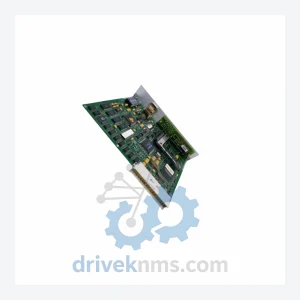
PHOENIX CONTACT IBSS5DSC/I-T 2752000 Interbus Module – IBS Series
Phoenix Contact IBSS5DSC/I-T 2752000 is listed for IBS Series RFQ review. Confirm quantity, condition and destination before quotation.
RFQ-ready industrial model
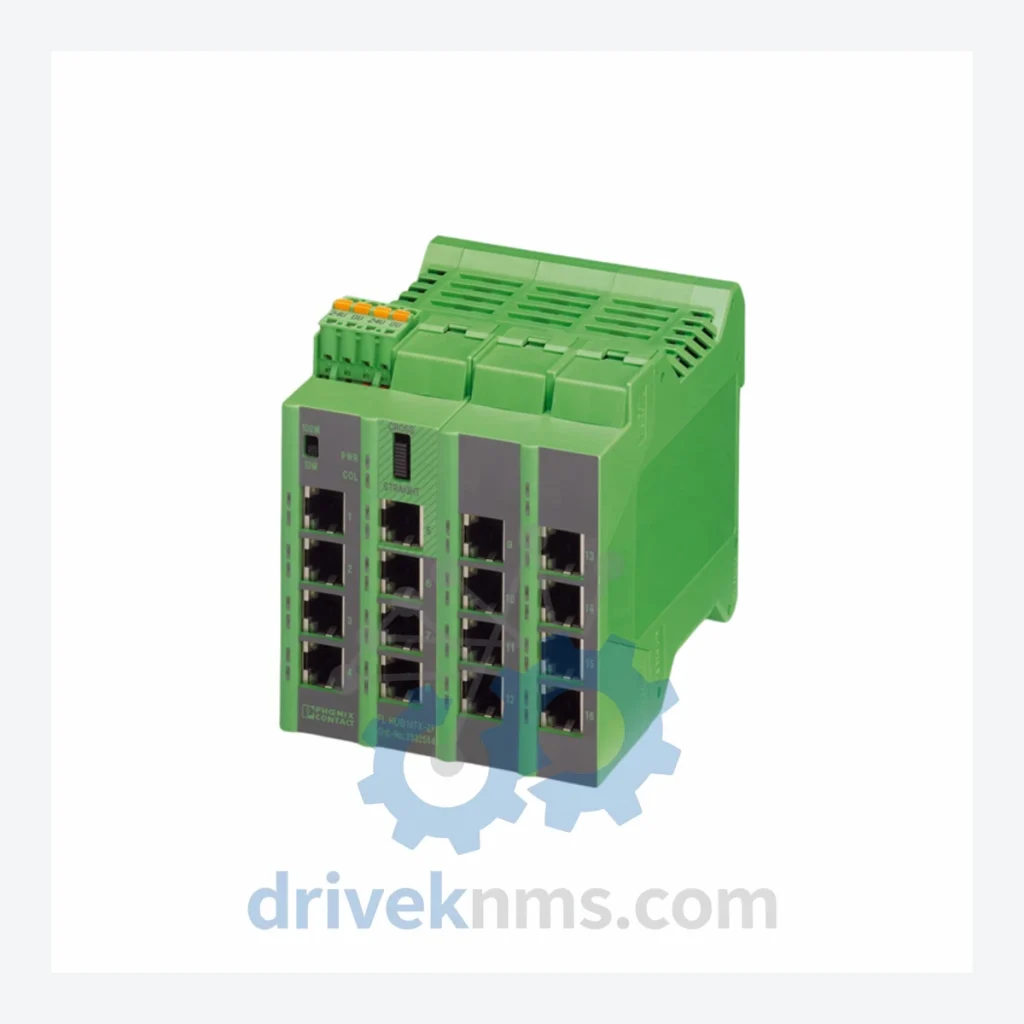
Model: 2832564 FL HUB 16TX-ZF
Product Overview
Commercial availability is handled through direct RFQ, model verification and export-oriented follow-up rather than public cart checkout.
Datasheet Preview
Use attached product manuals when available. If the manual is not public yet, request the full file directly through RFQ.
Commercial Path
Product pages on DRIVEKNMS are designed to verify model, brand and series first, then move the buyer into one clean quotation path.
Technical Dossier
The PHOENIX CONTACT FL HUB series represents a standardized range of industrial Ethernet hub and switch modules engineered for deployment in process-critical environments including chemical processing plants, nuclear power facilities, petroleum refineries, and heavy manufacturing installations. These modules operate within the PHOENIX CONTACT Automation Infrastructure and are designed for DIN-rail mounting in control cabinets, providing IEEE 802.3 compliant 10/100 Mbps Ethernet connectivity across star and cascaded topologies. The FL HUB series has achieved widespread adoption in distributed control system (DCS) architectures globally, particularly in applications requiring deterministic network segmentation and robust EMC performance under IEC 61000 standards.
The FL HUB product line was introduced by PHOENIX CONTACT as part of its Factory Line (FL) networking portfolio during the late 1990s, targeting the transition from proprietary fieldbus systems to open Ethernet-based industrial networks. Early variants such as the FL HUB 4TX and FL HUB 8TX provided basic 10BASE-T/100BASE-TX port aggregation with no managed switching capability, functioning as pure Layer 1 repeater hubs. These units were designed to extend collision domains within legacy CSMA/CD environments common in early SCADA and PLC network segments.
As industrial Ethernet matured through the 2000s, PHOENIX CONTACT expanded the FL HUB range to include zero-delay forwarding variants (ZF suffix) and fiber-optic uplink models (FX suffix), addressing latency-sensitive motion control and long-distance backbone requirements. The ZF (Zero-delay Forwarding) architecture introduced cut-through forwarding to reduce store-and-forward latency, a critical parameter in time-sensitive automation protocols such as PROFINET and EtherNet/IP. The 16-port TX-ZF configuration, represented by the 2832564 FL HUB 16TX-ZF, became the preferred high-density hub for large panel installations requiring centralized port aggregation without managed switching overhead.
By the 2010s, the FL HUB series entered its maturity phase as managed switches from the FL SWITCH family began displacing unmanaged hubs in new installations. However, the FL HUB range remains in active service across thousands of legacy DCS and SCADA installations where replacement with managed switches would require network re-architecture. PHOENIX CONTACT has formally discontinued several FL HUB variants, making third-party lifecycle support essential for ongoing plant operations.
Unmanaged TX Hub Modules (Copper, 10/100BASE-TX)
Fiber Optic Uplink Variants (FX Suffix)
Compact and Slim-Line Variants
Power Supply and Accessory Modules
Managed Transition / Successor Modules (FL SWITCH Family)
Multiple variants within the PHOENIX CONTACT FL HUB series have reached end-of-life (EOL) status, with PHOENIX CONTACT having ceased production on several 4-port and 8-port TX models. For plant operators running legacy DCS or SCADA networks built on FL HUB infrastructure, sourcing replacement units through the original manufacturer's channel is no longer viable for discontinued part numbers.
The PHOENIX CONTACT FL HUB series presents specific test requirements due to its backplane cascade bus architecture and the zero-delay forwarding logic implemented in ZF-suffix variants. DriveKNMS applies the following test protocol to all FL HUB units processed through its facility:
Continue The Model Path
Move from this exact model into the matching system hub, brand archive, model-family archive or lifecycle sourcing route before sending a final RFQ list.
Related Paths
Phoenix Contact IBSS5DSC/I-T 2752000 is listed for IBS Series RFQ review. Confirm quantity, condition and destination before quotation.
Phoenix Contact IBS RT 24 DIO 16/16-T is listed for Servo Drives RFQ review. Confirm quantity, condition and destination before quotation.
Phoenix Contact IBS RT 24DI /16-T is listed for Servo Drives RFQ review. Confirm quantity, condition and destination before quotation.