
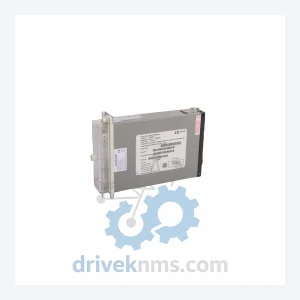
ALSTOM MVAJ105RA0802A Protection Relay – MiCOM Series
Alstom MVAJ105RA0802A is listed for MiCOM Series RFQ review. Confirm quantity, condition and destination before quotation.
RFQ-ready industrial model
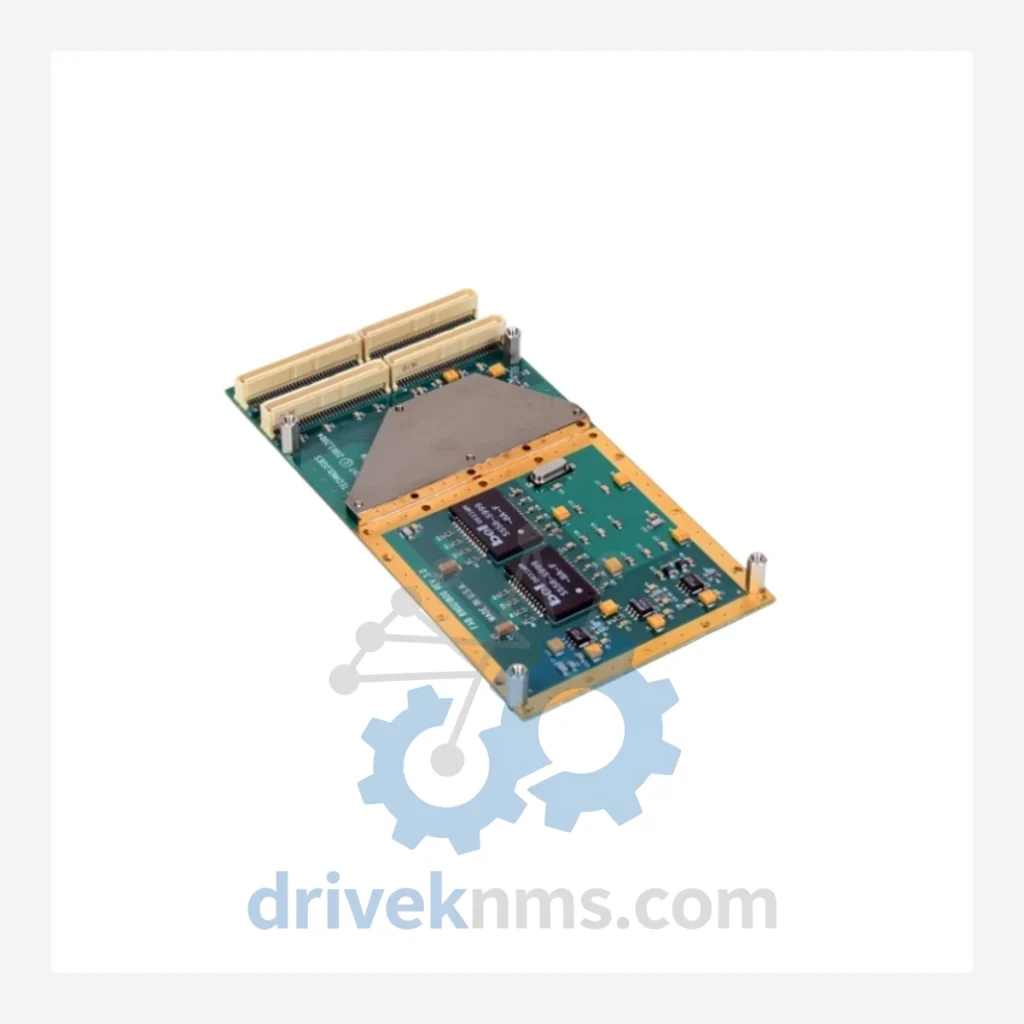
Model: PMC-GBIT-DT2BP PMC610J4RC
Product Overview
Commercial availability is handled through direct RFQ, model verification and export-oriented follow-up rather than public cart checkout.
Datasheet Preview
Use attached product manuals when available. If the manual is not public yet, request the full file directly through RFQ.
Commercial Path
Product pages on DRIVEKNMS are designed to verify model, brand and series first, then move the buyer into one clean quotation path.
Technical Dossier
RFQ support for obsolete parts: Send the model number, required quantity and destination so DriveKNMS can confirm sourcing options before quotation.
| Parameter | Detail |
|---|---|
| Part Number | PMC-GBIT-DT2BP / PMC610J4RC |
| Form Factor | PMC (PCI Mezzanine Card) – IEEE P1386.1 |
| Interface Type | Gigabit Ethernet (1000BASE-T / 1000BASE-SX depending on variant) |
| Host Bus Interface | 32-bit / 64-bit PCI, 33/66 MHz |
| Compatible Platforms | VMEbus, CompactPCI, VPX carrier boards with PMC site |
| Operating Temperature | Commercial / Industrial grade (confirm with datasheet for exact range) |
| Product Status | Discontinued / Obsolete – No longer in production |
| Country of Origin | United States |
Note: Electrical parameters listed above are based on published product family specifications. Parameters not confirmed by original datasheet are intentionally omitted. DriveKNMS does not fabricate specifications.
PMC mezzanine cards occupy a critical role in embedded computing architectures that were designed and qualified in the late 1990s through the 2010s. These platforms — found in radar signal processing, SCADA infrastructure, military communications, and industrial automation — were engineered for 20-to-30-year operational lifespans. The network interface layer handled by the PMC-GBIT-DT2BP PMC610J4RC is not a peripheral function; it is the data backbone connecting the processing node to the wider system network.
When Curtiss-Wright discontinued this card, operators faced a hard constraint: the carrier board, the BSP (Board Support Package), and the real-time operating system were all qualified against this specific PMC module. Substituting a different NIC — even one with nominally equivalent specifications — requires re-qualification of the entire software stack, re-certification of the platform (particularly in defense and aerospace contexts), and in many cases, a complete system redesign. None of these paths are fast, and none are inexpensive.
The only operationally viable path for most facilities is to source verified original hardware. A single PMC-GBIT-DT2BP PMC610J4RC held in strategic reserve can protect a platform investment that may represent tens of millions of dollars in deployed infrastructure. Facilities managing fleets of VME or CompactPCI systems should treat this component as a consumable maintenance item, not a one-time purchase.
For plant managers and operations directors facing pressure to retire aging embedded computing platforms, the financial case for a spare-parts-based life extension strategy is straightforward. A platform retirement decision that appears inevitable due to a single failed component is, in most cases, a procurement failure rather than a technical one.
The following framework applies directly to systems dependent on the PMC-GBIT-DT2BP PMC610J4RC:
1. Failure Mode Mapping. Identify every PMC site in your deployed platform fleet. Catalog the specific NIC variant installed at each site. A single-point-of-failure analysis will reveal how many systems are at risk from this one component's obsolescence.
3. Vendor Consolidation. Sourcing obsolete PMC components from a single qualified supplier — rather than ad-hoc spot purchases — reduces the risk of receiving counterfeit or improperly stored hardware. DriveKNMS maintains controlled storage conditions and documented chain of custody for all obsolete inventory.
4. Firmware Version Control. Before deploying any replacement NIC, verify firmware version compatibility with your BSP. DriveKNMS performs firmware version checks as part of the pre-shipment QA process.
5. Total Cost Comparison. A strategic spare parts program for a legacy embedded platform typically costs 1–3% of the platform's original procurement value per year. A full platform replacement program for the same fleet typically costs 40–80% of original procurement value, plus re-qualification and integration costs. The arithmetic is not ambiguous.
DriveKNMS applies a 5-step QA protocol to all obsolete PMC components before dispatch review:
Step 1 – Visual and Physical Inspection. Each board is examined under magnification for pin corrosion, solder joint cracking, PCB delamination, and connector wear. Components showing physical degradation are rejected at this stage.
Step 2 – Electrolytic Capacitor Assessment. PMC-era boards manufactured in the late 1990s and 2000s are subject to electrolytic capacitor aging. We identify and flag boards with capacitors showing ESR drift or physical bulging. Where applicable, capacitor replacement is performed by qualified technicians before the board is offered for sale.
Step 3 – Firmware Version Verification. The firmware revision loaded on the NIC is documented and provided to the customer. This allows your engineering team to confirm compatibility with your BSP before the unit ships.
Step 5 – Controlled Packaging and Storage. Units are stored in ESD-safe, humidity-controlled environments. Shipment is performed in anti-static packaging with appropriate cushioning for the PMC form factor.
The PMC-GBIT-DT2BP PMC610J4RC is a direct drop-in replacement for the original installed unit. No carrier board modification is required. No BSP changes are required. No re-programming of the host processor is required. The replacement procedure is a standard PMC module swap — a task within the competency of any qualified field service engineer familiar with the platform.
This matters because the alternative — integrating a non-original NIC — immediately triggers a software qualification cycle. In a DO-178C or IEC 61508 certified environment, that qualification cycle can take 6 to 18 months and cost more than the original platform procurement. The availability of an original replacement card eliminates that cost entirely.
Q: Should I buy more than one unit?
A: For any platform where this NIC is a single point of failure, holding a minimum of two units is the standard recommendation. For fleet operators with multiple chassis, a quantity proportional to fleet size and expected operational life is appropriate. We can assist with long-term supply planning — contact us to discuss your specific fleet profile.
Continue The Model Path
Move from this exact model into the matching system hub, brand archive, model-family archive or lifecycle sourcing route before sending a final RFQ list.
Related Paths
Alstom MVAJ105RA0802A is listed for MiCOM Series RFQ review. Confirm quantity, condition and destination before quotation.
Moore 16137-174 is listed for Servo Drives RFQ review. Confirm quantity, condition and destination before quotation.
Fuji Electric EP-3364B-CA-Z2 is listed for FRENIC Series RFQ review. Confirm quantity, condition and destination before quotation.