Technical Dossier
Product Details And Specifications
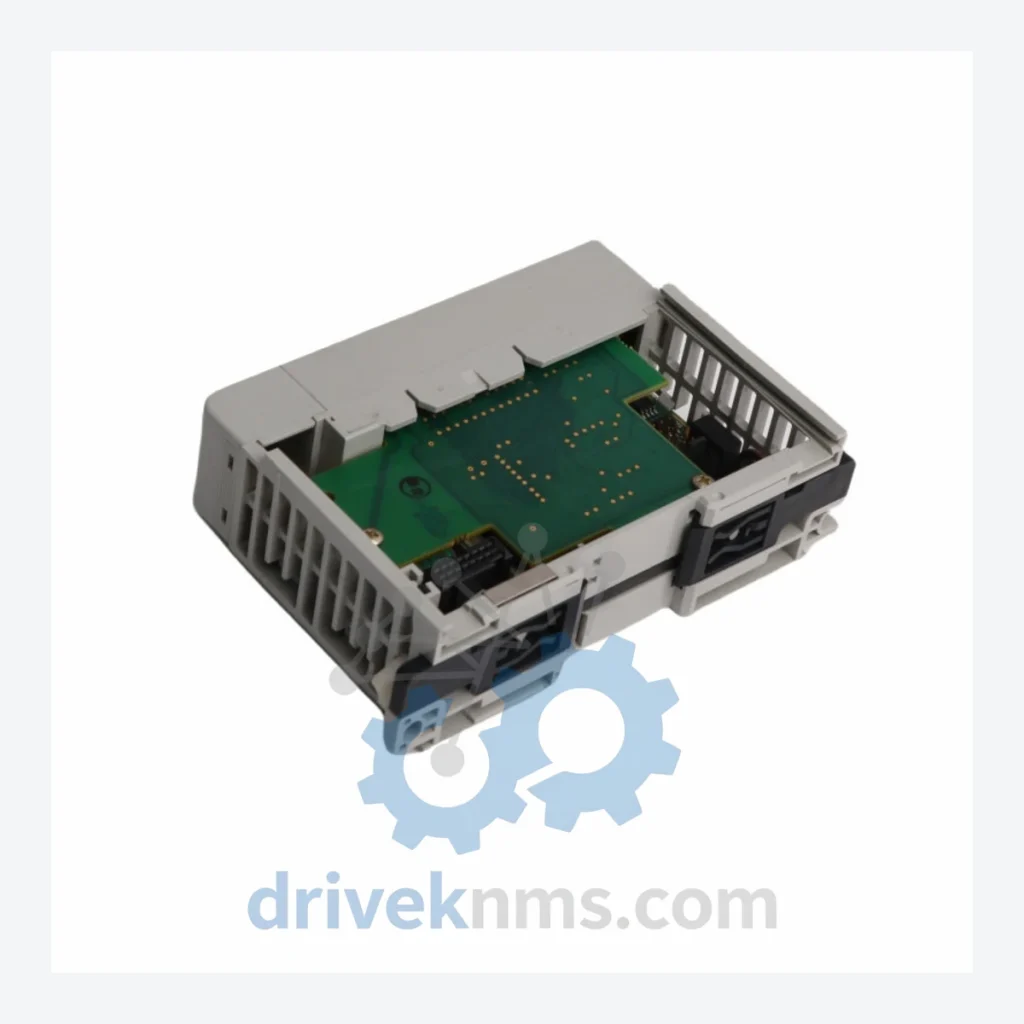
ProSoft MVI69-MNETC Modbus TCP/IP Communication Module – Obsolete MVI69 Spare Part
RFQ support for obsolete parts: Send the model number, required quantity and destination so DriveKNMS can confirm sourcing options before quotation.
Technical Specifications
| Parameter | Detail |
| Manufacturer | ProSoft Technology |
| Part Number | MVI69-MNETC |
| Series | MVI69 |
| Protocol | Modbus TCP/IP (Multi-Client) |
| Platform Compatibility | Allen-Bradley CompactLogix (1769 backplane) |
| Network Interface | Ethernet (RJ45) |
| Form Factor | Single-slot CompactLogix I/O module |
| Country of Origin | United States |
| Discontinuation Status | Discontinued – No longer manufactured or sold by ProSoft Technology |
| Successor Note | Direct firmware-compatible replacement; no successor module offers identical drop-in backplane compatibility without engineering rework |
Solving the Discontinued Hardware Crisis
The MVI69-MNETC was deployed extensively in manufacturing, water treatment, oil & gas, and building automation facilities throughout the 2000s and 2010s. Its role is specific: it bridges CompactLogix controllers to Modbus TCP/IP networks, enabling communication with field devices — drives, meters, sensors, and third-party controllers — that speak Modbus as their native protocol.
The MVI69-MNETC is commonly found in systems alongside Allen-Bradley CompactLogix L3x and L4x controllers, and in facilities where legacy Modbus RTU networks were migrated to Ethernet without replacing field devices. It is also frequently paired with ProSoft's own MVI69-MCM module in mixed-protocol environments.
Condition & Reliability Assurance
Sourcing a discontinued module from the secondary market carries risk. DriveKNMS applies a structured 5-step qualification process to every MVI69-MNETC unit before it is offered for sale:
Step 1 – Visual and Physical Inspection: Full examination of the housing, backplane connector, and RJ45 port for mechanical damage, corrosion, or evidence of prior field failure.
Step 2 – Electrolytic Capacitor Assessment: Aging electrolytic capacitors are the primary failure mode in modules of this generation. Each unit is inspected for capacitor bulging, leakage, and ESR degradation. Units with compromised capacitors are rejected.
Step 3 – Firmware Version Verification: The firmware revision is confirmed and documented. Compatibility with the target CompactLogix firmware version is verified prior to shipment.
Step 4 – Pin and Connector Integrity Check: Backplane connector pins are inspected under magnification for oxidation, bending, and contact resistance issues. Pin corrosion is a known failure mode in modules stored in humid environments.
Step 5 – Functional Power-On Test: Where test infrastructure permits, the module is powered and its diagnostic LEDs and communication initialization sequence are verified against known-good behavior.
Units that do not pass all five stages are not offered for sale. Condition is disclosed accurately — new-in-box, tested surplus, or qualified refurbished — with no ambiguity.
Key Features for System Maintenance
Drop-in backplane replacement: The MVI69-MNETC occupies a standard 1769 CompactLogix I/O slot. Physical installation requires no modification to the rack, wiring, or adjacent modules.
No reprogramming required: The module's configuration is stored in the CompactLogix controller project file. A replacement unit loaded with the same firmware revision will resume operation using the existing configuration — no ladder logic changes, no add-on instruction updates, no network reconfiguration.
Avoids engineering reconstruction costs: Replacing this module with a functionally equivalent unit eliminates the need for a communication architecture review, new hardware procurement cycles, and the validation testing that accompanies any significant control system change. The cost differential between a spare module and a system redesign is not marginal — it is structural.
Preserves existing certifications: Facilities operating under process safety management (PSM) or functional safety frameworks face re-validation obligations when control system architecture changes. A like-for-like module replacement does not trigger those obligations. A system redesign does.
Q: How is condition confirmed before quotation?
A: Available condition, photos, test records and documentation are checked according to the requested model and sourcing channel before a formal RFQ response.
How do I confirm the unit is genuine and not counterfeit?
All units are sourced through documented supply chain channels. Serial numbers, date codes, and firmware revisions are recorded and provided with shipment documentation. We do not source from unverified brokers or auction platforms.
Can you source specific firmware revisions?
Firmware version requirements should be specified at the time of inquiry. We will confirm availability of the requested revision before issuing a quotation.