Technical Dossier
Product Details And Specifications
ProSoft Technology MVI69 Series Technical Notes
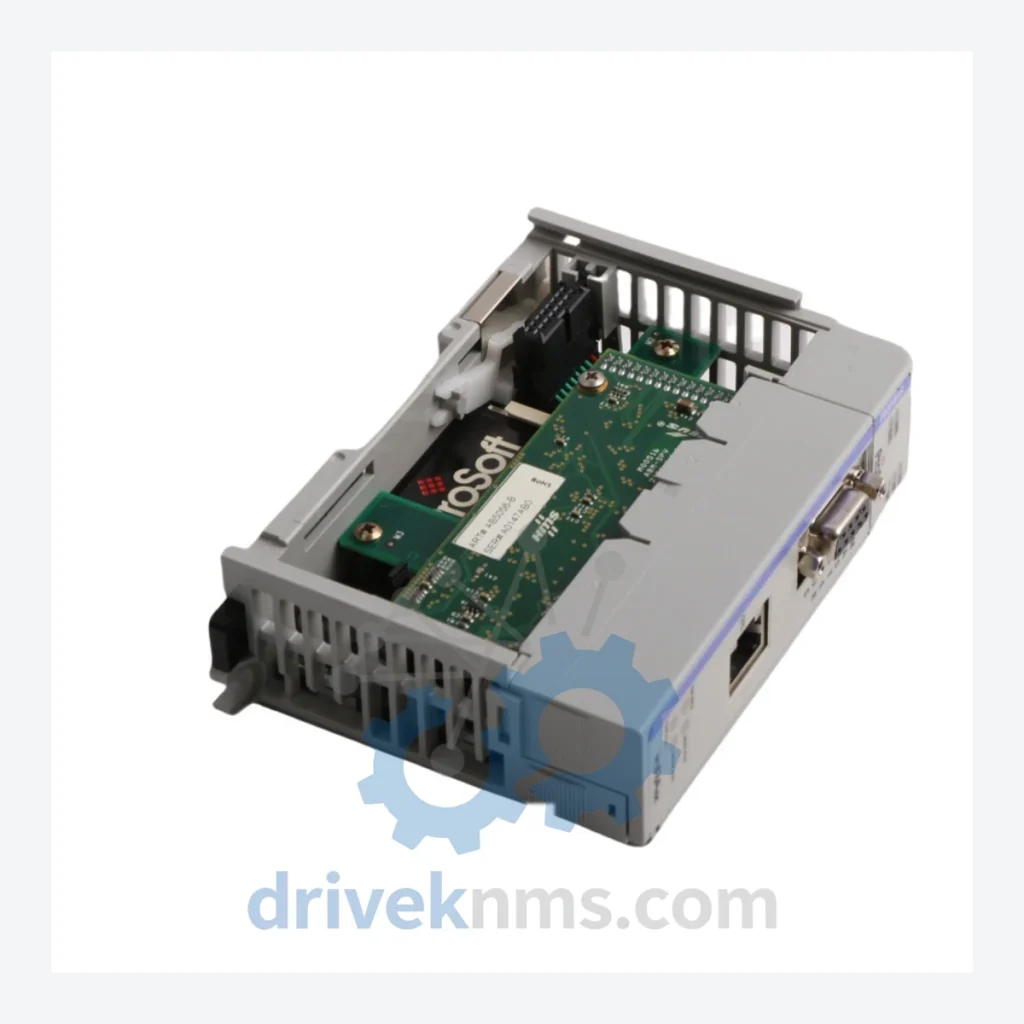
The ProSoft Technology MVI69 series is a purpose-built communication module platform designed for integration with Rockwell Automation Allen-Bradley CompactLogix (1769) programmable logic controllers. Deployed across global heavy industry — including petrochemical refineries, nuclear power auxiliary systems, offshore oil & gas platforms, and continuous-process chemical plants — the MVI69 series provides protocol bridging between CompactLogix backplanes and field-level industrial networks that are not natively supported by the ControlLogix or CompactLogix communication infrastructure.
The series occupies a defined position in distributed control architectures where legacy fieldbus protocols (PROFIBUS DP, Modbus RTU/TCP, DNP3, IEC 60870-5, DF1, ASCII) must coexist with modern EtherNet/IP-based control systems. Installed base counts in the tens of thousands of units across North America, Europe, and Asia-Pacific, with particularly high density in facilities that standardized on CompactLogix hardware during the 2005–2018 capital expenditure cycles.
The Evolution of MVI69 Architecture
The MVI69 platform was introduced by ProSoft Technology as a direct successor to the MVI46 (SLC 500) and MVI56 (ControlLogix) module families, adapted to the 1769 CompactLogix form factor and backplane interface. First-generation MVI69 modules used a dual-port memory architecture with a fixed 4,096-word data table mapped into the CompactLogix I/O tree via the 1769 backplane. Configuration was performed via RS-232 serial port using ProSoft's PCB (ProSoft Configuration Builder) software utility.
Second-generation variants introduced expanded data table sizes (up to 5,000 words per direction on select models), enhanced diagnostic ladder logic function blocks, and support for ProSoft's RLXIB wireless infrastructure. Firmware revision management became standardized across the MVI69 line, with module firmware stored in non-volatile flash memory and upgradeable via the RS-232 configuration port.
As CompactLogix hardware evolved through the L1x, L2x, L3x, L4x, and L5x processor families, MVI69 modules maintained backward compatibility through the standardized 1769 backplane protocol. However, the introduction of the CompactLogix 5380 (5069 series) with its new backplane architecture rendered MVI69 modules physically and electrically incompatible with that platform — a critical compatibility boundary that procurement and maintenance engineers must verify before specifying replacement units.
MVI69 Full Catalog & Functionalities (SKU List)
PROFIBUS DP Communication Modules
- MVI69-PDPMV1: PROFIBUS DP V1 Master – supports up to 125 slave devices, Class 1 & Class 2 master, acyclic messaging
- MVI69-PDPS: PROFIBUS DP Slave – configures CompactLogix as a PROFIBUS DP slave device on an existing master network
- MVI69-PDPM: PROFIBUS DP Master (V0) – legacy master module, cyclic data exchange only, predecessor to PDPMV1
Modbus Communication Modules
- MVI69-MCM: Modbus Master/Slave – dual-port RS-232/RS-485, supports RTU and ASCII modes, up to 32 slave devices
- MVI69-MNET: Modbus TCP/IP Client/Server – Ethernet-based Modbus, up to 16 client connections and 16 server connections
- MVI69-MNETC: Modbus TCP/IP Client – client-only variant, optimized for polling applications
- MVI69-MNETR: Modbus TCP/IP with Reduced Data Table – compact footprint variant for smaller CompactLogix chassis
DNP3 & IEC Protocol Modules
- MVI69-103M: IEC 60870-5-103 Master – teleprotection equipment interface for power utility SCADA integration
- MVI69-101S: IEC 60870-5-101 Slave – serial SCADA protocol, connects CompactLogix to utility master stations
- MVI69-104S: IEC 60870-5-104 Slave – TCP/IP variant of IEC 101, Ethernet SCADA connectivity
- MVI69-DNPM: DNP3 Master – serial DNP3 for water/wastewater and utility RTU integration
- MVI69-DNPS: DNP3 Slave – configures CompactLogix as a DNP3 outstation
Rockwell / DF1 / DH+ Protocol Modules
- MVI69-DF1: DF1 Master/Slave – Allen-Bradley DF1 full-duplex and half-duplex serial protocol bridge
- MVI69-DFCM: DF1/DH-485 Combo – simultaneous DF1 and DH-485 network bridging
- MVI69-DH485: DH-485 Master/Slave – legacy Allen-Bradley DH-485 token-passing network interface
ASCII / Generic Serial Modules
- MVI69-GSC: Generic ASCII Serial – two independent RS-232/RS-485 ports, user-defined ASCII protocol via ladder logic
- MVI69-HART: HART Master – Highway Addressable Remote Transducer protocol, up to 16 HART devices per port
Quality Control for the MVI69 Range
MVI69 modules present specific test challenges due to their dual-port memory architecture, backplane communication interface, and protocol-specific port hardware. DriveKNMS applies a structured test protocol to all MVI69 units prior to dispatch:
Backplane Interface Verification: Each module is seated in a 1769 CompactLogix test chassis and verified for correct I/O tree enumeration, data table read/write integrity across the full 5,000-word address range, and absence of backplane communication faults under sustained cyclic polling.
Protocol Port Functional Test: For the MVI69-PDPMV1 specifically, the PROFIBUS DP port is tested against a calibrated PROFIBUS DP slave simulator. Master initialization sequence, GSD file parameter exchange, cyclic data exchange at 1.5 Mbit/s and 12 Mbit/s baud rates, and V1 acyclic read/write messaging are all verified. Port termination resistor switching is confirmed functional.
Configuration Port & Firmware Verification: RS-232 configuration port connectivity is confirmed using ProSoft Configuration Builder. Module firmware revision is read and recorded. Non-volatile configuration memory is cleared and rewritten to confirm flash write integrity.
Thermal Burn-In: Units are operated at rated backplane voltage for a minimum of 4 hours at ambient temperature prior to final inspection and packaging.