
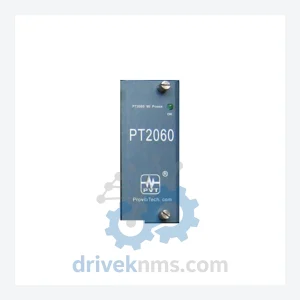
ProvibTech PT2060/90 Power Supply Module – Obsolete PT2060 Series Spare Part
Provibtech PT2060/90 is listed for PT2060 Series RFQ review. Confirm quantity, condition and destination before quotation.
RFQ-ready industrial model
Model: PT2060/53
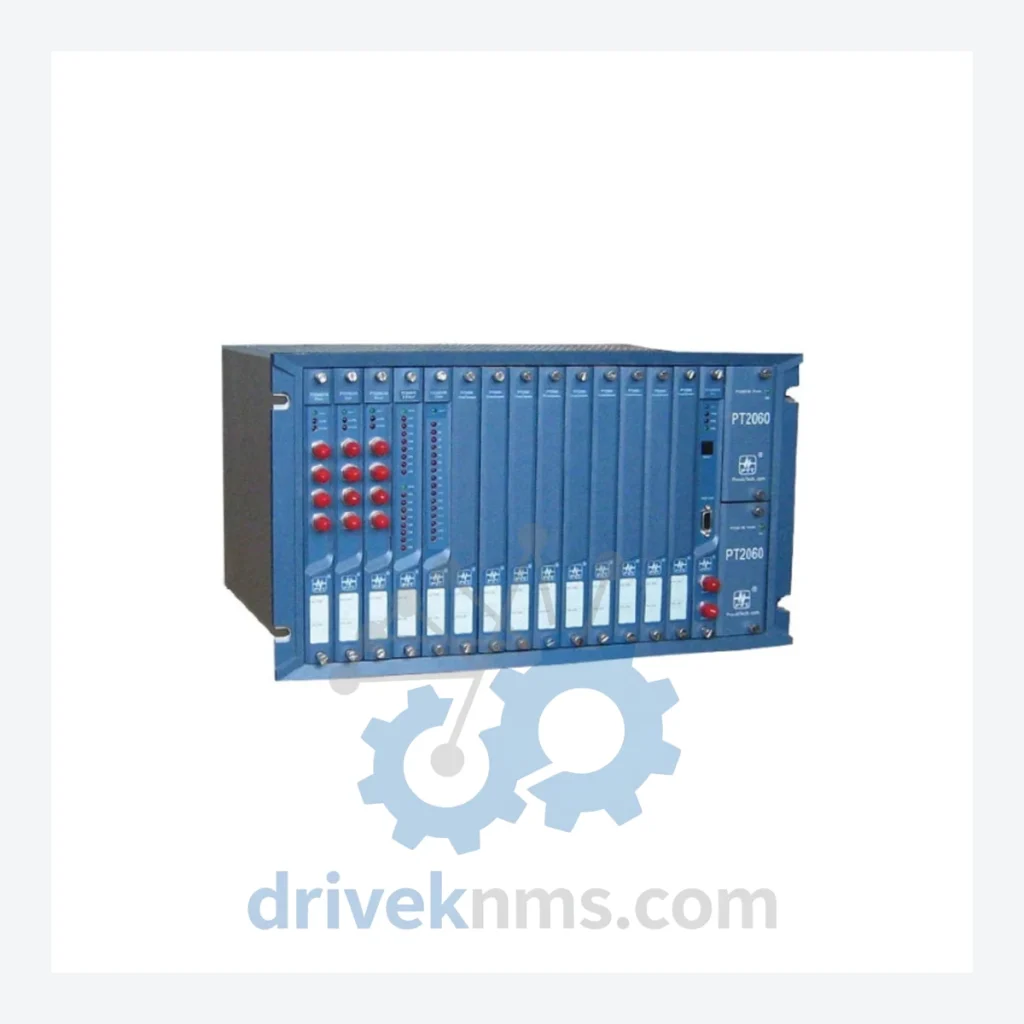
Product Overview
Commercial availability is handled through direct RFQ, model verification and export-oriented follow-up rather than public cart checkout.
Datasheet Preview
Use attached product manuals when available. If the manual is not public yet, request the full file directly through RFQ.
Commercial Path
Product pages on DRIVEKNMS are designed to verify model, brand and series first, then move the buyer into one clean quotation path.
Technical Dossier
When a vibration monitoring module fails in a legacy condition monitoring system, the consequences extend far beyond a single line item on a maintenance budget. A full system migration — new racks, new sensors, new wiring infrastructure, new software licensing, and the engineering hours to recommission — routinely runs into the hundreds of thousands of dollars, and in large rotating machinery environments, into the millions. The PT2060/53 is a discontinued module within ProvibTech's PT2060 Series vibration monitoring platform. DriveKNMS maintains RFQ-reviewed sourcing status of this module specifically to serve facilities that cannot justify a full system overhaul to replace a single failed card.
RFQ support for obsolete parts: Send the model number, required quantity and destination so DriveKNMS can confirm sourcing options before quotation.
| Parameter | Detail |
|---|---|
| Manufacturer | ProvibTech |
| Part Number | PT2060/53 |
| Series | PT2060 |
| Product Category | Vibration Monitor Module |
| Discontinuation Status | Obsolete – No longer in production |
| Country of Origin | United States |
| Compatible Systems | ProvibTech PT2060 Series Condition Monitoring Racks |
| Typical Application | Rotating machinery vibration and bearing condition monitoring in industrial plants |
Note: Electrical parameters for this obsolete module are not published in current documentation. DriveKNMS does not fabricate specifications. Contact us directly for datasheet verification prior to purchase.
The PT2060 Series was deployed extensively across petrochemical, power generation, and heavy manufacturing facilities during its production lifecycle. These systems were integrated into plant DCS and SCADA architectures — often Honeywell TDC 3000, ABB MasterPiece 200/1, or Yokogawa CENTUM-based environments — where the vibration monitoring layer feeds directly into trip logic and predictive maintenance workflows.
The risk of not acting is asymmetric. A failed vibration monitor on a high-speed compressor or turbine train does not simply generate a maintenance ticket. It removes a layer of protection from a rotating asset that may represent tens of millions of dollars in replacement value. Facilities that have not pre-positioned spare modules for obsolete monitoring systems are operating with an unacknowledged liability on their asset register.
For plant management teams facing system retirement pressure, the following approach has been applied successfully across multiple industries to defer capital expenditure while maintaining operational integrity:
1. Criticality-Based Spare Classification: Identify every module in your PT2060 rack by function. Modules in the signal conditioning and output stages — such as the PT2060/53 — are typically single points of failure. These warrant immediate spare positioning, not reactive procurement.
2. Dual-Unit Inventory Strategy: For any obsolete module with no active production, maintain a minimum of two verified spares per installed unit. One for immediate swap, one as a long-term reserve. The cost of two spare modules is negligible against the cost of an unplanned outage on a critical rotating machine.
Q: How are RFQ terms confirmed?
A: Quantity, required condition, documentation needs, destination and sourcing route are confirmed during RFQ review before quotation.
5. Documentation Preservation: Retain all original configuration records, calibration data, and wiring diagrams for PT2060 installations. When a module is replaced, this documentation eliminates recommissioning risk and reduces engineering hours to near zero.
Every PT2060/53 unit processed by DriveKNMS passes a structured five-stage quality protocol before it is offered for sale:
Stage 1 – Visual and Mechanical Inspection: Full board-level inspection for physical damage, connector integrity, and PCB contamination. Pin corrosion and oxidation are assessed and addressed before any electrical testing begins.
Stage 2 – Electrolytic Capacitor Assessment: Aged electrolytic capacitors are the primary failure mode in legacy industrial electronics. Each unit is evaluated for capacitor condition, with ESR measurement where applicable. Degraded capacitors are flagged and replaced with specification-matched components.
Stage 3 – Firmware and Configuration Verification: Where accessible, firmware version is documented and cross-referenced against known stable releases for the PT2060 platform. Configuration integrity is verified prior to shipment.
Stage 4 – Functional Electrical Test: The module is powered and tested under controlled conditions to verify signal processing and output behavior consistent with PT2060 Series specifications.
Stage 5 – Packaging and ESD Protection: Units are packaged in anti-static materials with humidity indicators. Shipping is handled with industrial fragile-goods protocols to prevent transit damage.
Drop-in Replacement: The PT2060/53 is a direct slot replacement for the original installed unit. No rack modification, no wiring changes, no software reconfiguration is required in standard installations. Maintenance personnel familiar with the PT2060 platform can complete a module swap without specialist engineering support.
Avoids Engineering Reconstruction Costs: A forced migration from the PT2060 platform to a current-generation monitoring system requires loop-by-loop rewiring, sensor recalibration, DCS integration work, and operator retraining. Sourcing a verified PT2060/53 spare eliminates all of these costs for the duration of the spare's service life.
Q: Can you verify compatibility with my specific PT2060 rack configuration before I order?
A: Yes. Provide your rack model, slot position, and any available system documentation. Our technical team will confirm compatibility before the order is processed.
Continue The Model Path
Move from this exact model into the matching system hub, brand archive, model-family archive or lifecycle sourcing route before sending a final RFQ list.
Related Paths
Provibtech PT2060/90 is listed for PT2060 Series RFQ review. Confirm quantity, condition and destination before quotation.
Provib Tech PT2060/53-A0 is listed for PT2060 Series RFQ review. Confirm quantity, condition and destination before quotation.
Provibtech TM0180-A08-B00-C10-D05 is listed for Vibration Sensor Series RFQ review. Confirm quantity, condition and destination before quotation.