Technical Dossier
Product Details And Specifications
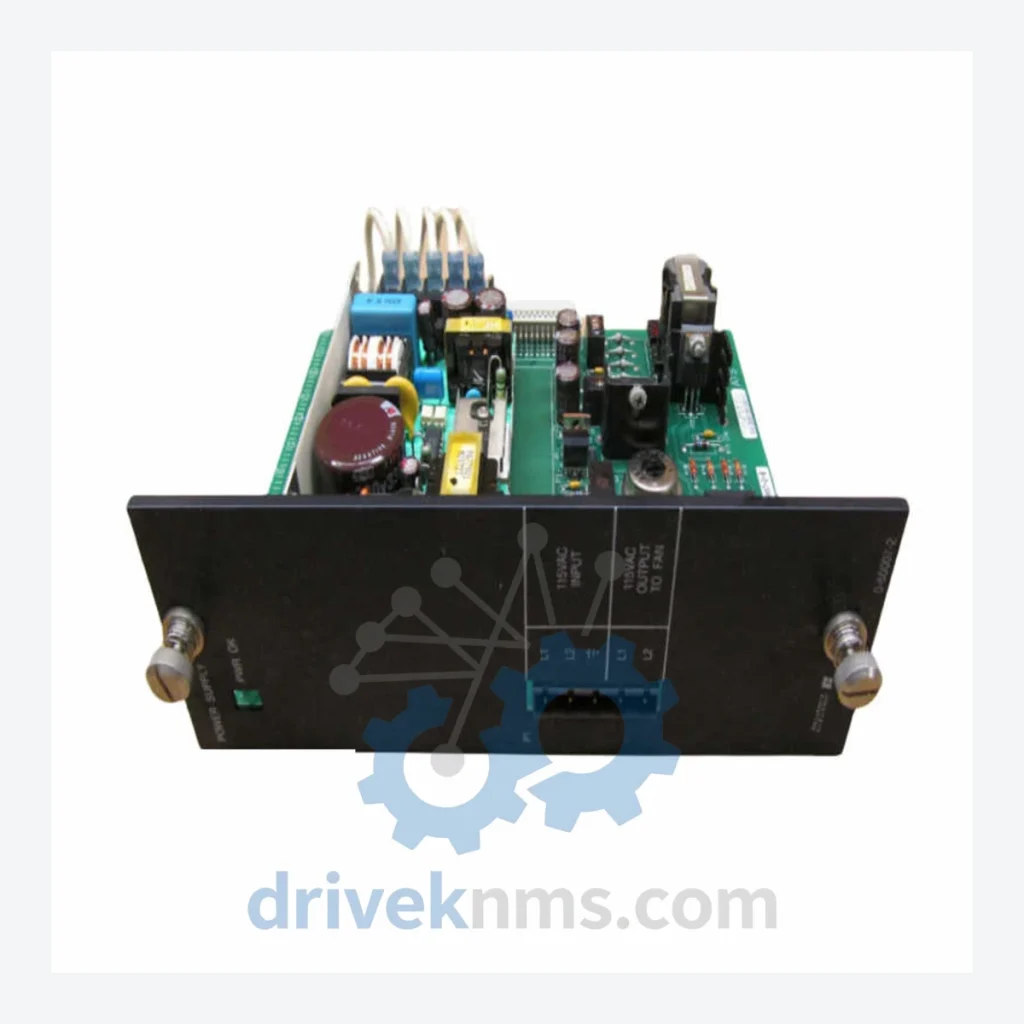
Reliance Electric 0-60007-2 Power Supply Module – Obsolete AutoMax Spare Part
Technical Specifications
Note: Electrical parameters such as input voltage range, output voltage, and current ratings are not published here to prevent specification errors. Please contact us directly for verified datasheet documentation prior to installation.
Solving the Discontinued Hardware Crisis
The Reliance Electric AutoMax platform was widely deployed across heavy industry — steel mills, paper plants, mining operations, and chemical processing facilities — throughout the 1980s and 1990s. Its distributed architecture and deterministic control made it a reliable backbone for high-stakes production environments. Reliance Electric was acquired by Rockwell Automation, and the AutoMax line was subsequently phased out. Spare parts, including the 0-60007-2 power supply module, are no longer manufactured.
For facilities still operating AutoMax-based control loops, the failure of a single power supply module can cascade into a full system shutdown. The engineering reality is that AutoMax I/O racks, communication modules, and processor cards are not interchangeable with current Rockwell ControlLogix or CompactLogix platforms. A forced migration requires complete re-architecture of the control system — a project measured in months, not days.
Condition & Reliability Assurance
DriveKNMS applies a 5-step quality assurance process to all obsolete power supply modules before dispatch review:
- Step 1 – Visual Inspection: Full external examination for physical damage, burn marks, corrosion, and label integrity.
- Step 2 – Electrolytic Capacitor Assessment: Aging electrolytic capacitors are the primary failure mode in stored power supply modules. Each unit is evaluated for capacitor condition; units with confirmed capacitor degradation are either recapped or quarantined.
- Step 3 – Pin and Connector Inspection: All edge connectors and backplane pins are inspected for oxidation, bending, and contact integrity. Corroded contacts are treated and verified.
- Step 4 – Firmware and Revision Verification: Where applicable, hardware revision markings are documented and cross-referenced against known AutoMax compatibility matrices to confirm the unit matches the target system revision.
- Step 5 – Functional Bench Test: Units designated as Tested Refurbished are powered and verified under controlled conditions prior to packaging.
Key Features for System Maintenance
- Drop-in Replacement: The 0-60007-2 installs directly into the existing AutoMax rack without mechanical modification.
- No Reprogramming Required: Power supply modules do not carry application logic. Replacement does not require PLC programming changes, parameter re-entry, or control system reconfiguration.
- Avoids Engineering Reconstruction Costs: Substituting this module eliminates the need for system integrator engagement, control panel redesign, or I/O remapping — costs that routinely exceed the value of the entire legacy system.
- Extends Asset Service Life: A functioning AutoMax system with maintained spare parts inventory can remain in productive service for an additional 5–10 years beyond the point at which OEM support was withdrawn.
Q: How is condition confirmed before quotation?
A: Available condition, photos, test records and documentation are checked according to the requested model and sourcing channel before a formal RFQ response.
Q: How are RFQ terms confirmed?
A: Quantity, required condition, documentation needs, destination and sourcing route are confirmed during RFQ review before quotation.