Technical Dossier
Product Details And Specifications
Rexroth SMP16-CPU086 A5E00344652 Proportional Valve Amplifier Card – Obsolete SMP16 Series Spare Part
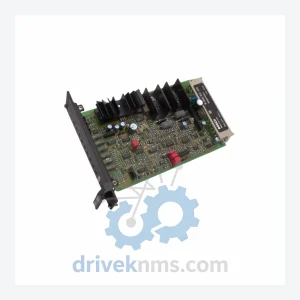
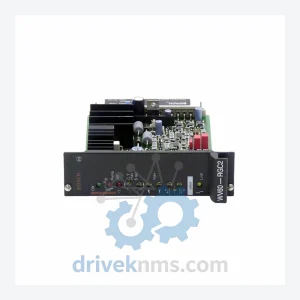
When a proportional valve amplifier card fails in a legacy hydraulic press, injection molding machine, or steel mill rolling line, the consequences extend far beyond a single component. The SMP16-CPU086 (Siemens part reference A5E00344652) is a discontinued Bosch Rexroth proportional electronics module that sits at the heart of closed-loop hydraulic control. Without it, the entire axis goes offline. Sourcing a replacement through OEM channels is no longer possible — Rexroth has discontinued the SMP16 series. The alternative — a full control system retrofit — routinely costs USD $200,000 to $800,000 in engineering, downtime, and revalidation. DriveKNMS maintains verified physical stock of this module. This is not a listing placeholder.
Technical Specifications
| Parameter | Detail |
| Manufacturer | Bosch Rexroth |
| Part Number | SMP16-CPU086 |
| Cross-Reference | A5E00344652 (Siemens OEM reference) |
| Series | SMP16 Proportional Electronics |
| Function | Proportional valve amplifier / CPU control card |
| Country of Origin | Germany |
| OEM Status | Discontinued – No longer available through Rexroth authorized channels |
| Compatible Systems | Rexroth SMP16 proportional hydraulic control platforms; legacy hydraulic presses, rolling mills, injection molding machines using Rexroth proportional valve technology |
Note: Electrical parameters such as supply voltage, signal range, and output current are not published here to prevent misapplication. Contact us with your machine documentation for compatibility verification before ordering.
Solving the Discontinued Hardware Crisis
The SMP16 series was Rexroth's workhorse proportional electronics platform through the 1990s and early 2000s. It was deployed across heavy industry globally — hydraulic presses in automotive stamping plants, continuous casting machines in steel mills, and precision injection molding systems in plastics manufacturing. The platform's closed-loop control architecture was deeply integrated into machine PLCs and HMI systems of that era.
When Rexroth discontinued the SMP16 line, it did not provide a drop-in successor. The current Rexroth VT-series amplifier cards use a different form factor, connector pinout, and parameterization protocol. Migrating from SMP16 to a current-generation amplifier requires hydraulic valve replacement, PLC analog I/O reconfiguration, and in many cases, a full machine safety revalidation under current CE or OSHA standards. For a single axis, this process typically takes 4–8 weeks of engineering time and carries significant production risk during commissioning.
For plant managers operating equipment with 15–25 years of remaining mechanical life, this is not a viable path. The machine structure, tooling investment, and process qualification built around that equipment represent assets that cannot be written off simply because one electronic card is no longer catalogued. Maintaining a stock of SMP16-CPU086 cards is the only strategy that preserves operational continuity without triggering a capital expenditure cycle.
How Spare Parts Extend Automation Asset Life by 5–10 Years
The economic case for critical spare part procurement is straightforward when the numbers are examined directly. A single SMP16-CPU086 card, sourced now while stock exists, costs a fraction of one day of unplanned downtime on a hydraulic press or rolling mill. The strategic approach used by maintenance engineering teams that successfully manage legacy systems through end-of-life periods follows a consistent pattern:
1. Failure Mode Mapping: Identify which modules have no modern equivalent and no field-repairable path. The SMP16-CPU086 falls into this category — its custom ASIC components cannot be sourced separately, and board-level repair requires specialized test equipment that most maintenance shops do not carry.
2. Mean Time Between Failure (MTBF) Analysis: For electronics of this vintage, electrolytic capacitor degradation is the primary failure mechanism. Boards that have operated continuously in warm enclosures for 15+ years are statistically approaching end-of-life for their capacitor population. Procurement decisions should be made before the first failure, not after.
3. Strategic Stock Positioning: Facilities running multiple axes on SMP16 electronics should hold a minimum of one spare card per three installed units. For single-axis critical machines, one spare is the minimum acceptable position.
4. Supplier Qualification: As OEM stock is exhausted, the market shifts to refurbished and tested units. The qualification criteria for a refurbished SMP16-CPU086 must include capacitor replacement, firmware version verification, and functional test under load — not merely a power-on check.
5. Documentation Preservation: Retain all original Rexroth SMP16 commissioning documentation, parameter sheets, and wiring diagrams. This documentation becomes irreplaceable as the installed base shrinks and institutional knowledge retires with the engineers who commissioned the original systems.
Condition & Reliability Assurance
DriveKNMS applies a 5-step quality process to all SMP16-CPU086 units before shipment:
Step 1 – Visual and Physical Inspection: Full board examination for mechanical damage, connector pin corrosion, solder joint cracking, and PCB delamination. Boards with corroded edge connectors or damaged backplane pins are rejected at this stage.
Step 2 – Electrolytic Capacitor Assessment: ESR (Equivalent Series Resistance) measurement on all electrolytic capacitors. Units showing capacitor degradation beyond tolerance are either recapped with equivalent-specification components or rejected. This is the single most common failure point in boards of this age.
Step 3 – Firmware Version Verification: The firmware version is documented and disclosed to the buyer prior to shipment. Compatibility with the target machine's parameter set is the buyer's responsibility to confirm, but we provide the version data to enable that verification.
Step 4 – Functional Test: Where test fixtures are available, boards are powered and tested for basic signal processing function. Test results are documented.
Step 5 – Packaging and ESD Protection: All boards are shipped in anti-static bags with foam cushioning. Boards are not shipped loose in cardboard.
Key Features for System Maintenance
The SMP16-CPU086 installs directly into the existing SMP16 rack backplane without mechanical modification. There is no firmware re-flashing required for standard replacement — the board reads its operating parameters from the system's parameter memory on startup. This means a qualified maintenance technician can execute a card swap during a planned maintenance window without involving the original machine builder or a controls engineer.
This drop-in replacement characteristic is the core reason why sourcing a spare SMP16-CPU086 is categorically different from undertaking a system retrofit. The retrofit path requires engineering resources, production downtime for commissioning, and carries the risk of introducing new failure modes during system integration. The spare card path requires none of these. It restores the machine to its validated operating state.
For facilities that have already invested in process qualification, product certification, or regulatory approval tied to a specific machine configuration, maintaining that configuration through spare parts is not merely a cost decision — it is a compliance and quality management decision.
FAQ
Q: What warranty applies to a refurbished SMP16-CPU086?
A: DriveKNMS provides a 12-month warranty against functional failure under normal operating conditions on tested refurbished units. New old stock (NOS) units carry a 12-month warranty from date of shipment. Warranty does not cover damage resulting from incorrect installation, overvoltage, or use outside the original Rexroth SMP16 system specification.
Q: How do I confirm whether a unit is new old stock or refurbished?
A: We disclose the condition of each unit explicitly in the order confirmation. We do not mix condition grades within a single order without buyer consent. If you require new old stock specifically, state this requirement when inquiring.
Q: How many units should we stock as long-term spares?
A: For a facility running 3 or more SMP16-controlled axes, we recommend a minimum of 2 spare CPU086 cards. For single-axis critical applications where downtime cost exceeds USD $10,000 per day, 1 spare is the minimum defensible position. We can discuss volume pricing for facilities building a strategic spare parts inventory.
Q: Can you source other SMP16 series modules?
A: Yes. Contact us with your full SMP16 rack configuration and we will advise on availability across the SMP16 module range.