Technical Dossier
Product Details And Specifications
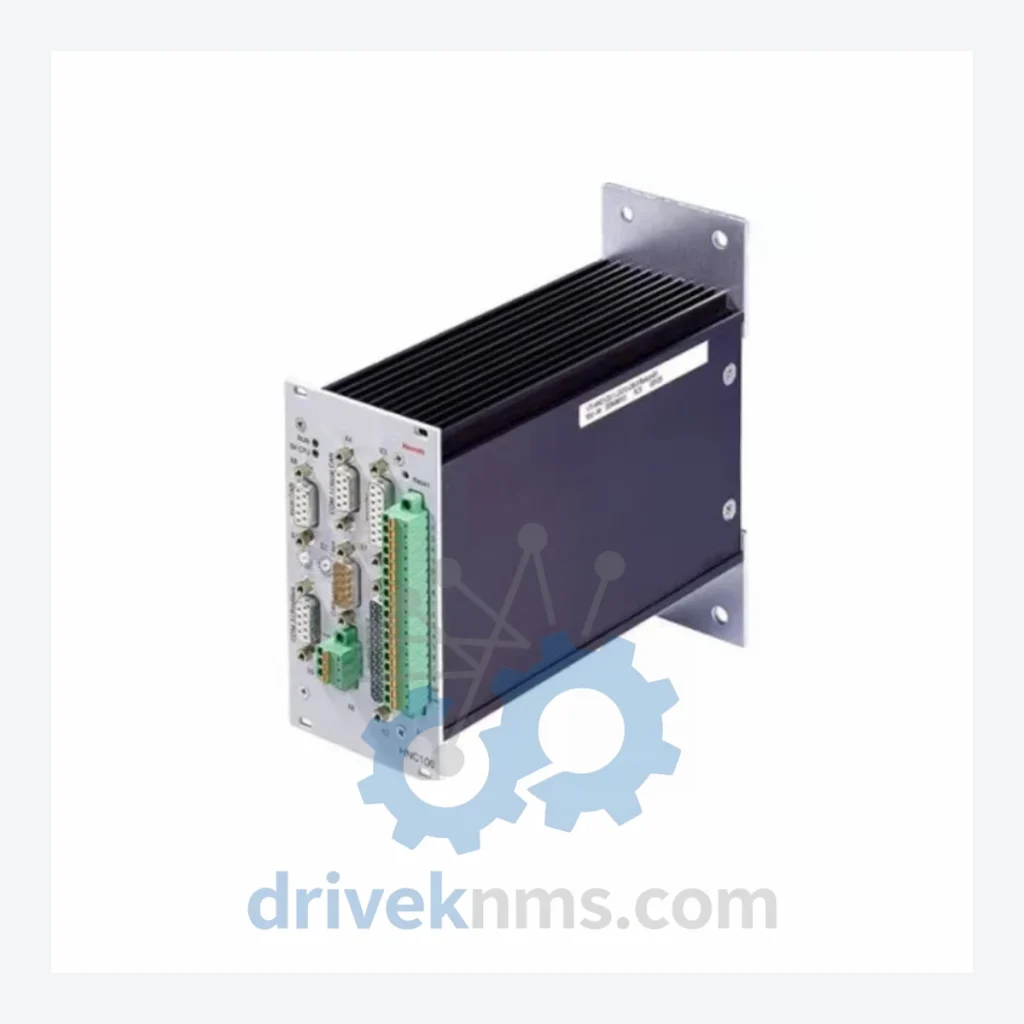
Rexroth VT-HNC100-1-14/134 Digital Axis Controller – Obsolete Rexroth Spare Part
When a VT-HNC100-1-14/134 axis controller fails on your production floor, the clock starts immediately. This module is the core of Rexroth's analog-to-digital axis positioning architecture. It is no longer manufactured. A replacement unit cannot be ordered from the OEM. The alternative — migrating to a current-generation Rexroth IndraDrive or Siemens SINAMICS platform — carries engineering costs, PLC reprogramming, mechanical recalibration, and production downtime that routinely exceed USD $500,000 on a single axis line. DriveKNMS holds verified physical stock of the VT-HNC100-1-14/134. This is not a catalog listing. Inventory is finite and will not be replenished.
Technical Specifications
| Parameter | Detail |
| Manufacturer | Bosch Rexroth AG |
| Part Number | VT-HNC100-1-14/134 |
| Series | VT-HNC100 |
| Function | Digital Axis Controller (Hydraulic / Electrohydraulic Positioning) |
| OEM Status | Discontinued – No longer in production |
| Country of Origin | Germany |
| Compatible Systems | Rexroth Indramat legacy hydraulic axis systems; Rexroth HNC series motion controllers |
| Condition Available | New Old Stock (NOS) / Professionally Refurbished |
Note: Electrical parameters such as supply voltage range, analog input specifications, and communication interface details vary by firmware revision. DriveKNMS will confirm exact hardware revision upon inquiry. No parameters are published here that cannot be verified against physical unit markings.
Solving the Discontinued Hardware Crisis
The VT-HNC100-1-14/134 was designed for closed-loop electrohydraulic axis positioning in heavy industrial environments — press lines, injection molding machines, steel mill roll gap control, and marine steering gear systems. These are not applications where close enough is acceptable. The controller's proprietary command interface and tuning parameters are deeply embedded in the machine's PLC logic. Swapping it for a modern equivalent is not a drop-in exercise; it is a capital project.
Factory management teams facing this situation typically encounter three options: (1) source the original part, (2) fund a full drive system retrofit, or (3) accept reduced production capacity while the retrofit is planned. Option 1 is the only path that preserves the existing asset without capital expenditure. The challenge is that the global pool of VT-HNC100-1-14/134 units shrinks with every failure. Distributors who held stock have largely exhausted it. What remains is held by specialist suppliers — and that stock does not last.
Maintaining a strategic spare on the shelf converts a potential six-week production halt into a four-hour swap. For a line producing $50,000 per day, the arithmetic is straightforward.
How to extend expensive automation assets by 5–10 years using critical spare parts:
- Identify single-point-of-failure modules. The axis controller is typically the highest-risk component in a hydraulic servo loop. Map every VT-HNC100 variant in your facility and cross-reference against available stock globally before the next failure event.
- Establish a minimum spare holding policy. For discontinued controllers with no modern equivalent, a minimum of two units per machine type is a defensible maintenance standard. One unit in service, one on the shelf.
- Document firmware and parameter sets before failure. The VT-HNC100 series stores axis tuning parameters internally. Back up all parameter sets while the unit is still operational. A replacement unit without the correct parameters will not perform correctly at commissioning.
- Negotiate long-term supply agreements with verified holders. Spot-buying obsolete parts at the moment of failure is the most expensive procurement strategy. Locking in pricing and reservation with a supplier like DriveKNMS while stock exists protects both budget and timeline.
- Schedule proactive replacement during planned shutdowns. Running a 15-year-old axis controller to failure is a risk management decision, not a maintenance strategy. Replacing it during a scheduled outage, with a tested spare, eliminates the unplanned downtime scenario entirely.
Condition and Reliability Assurance
Every VT-HNC100-1-14/134 unit shipped by DriveKNMS passes a structured 5-step inspection protocol before dispatch:
- Electrolytic Capacitor Assessment: Capacitors in legacy Rexroth axis controllers are a known failure point after 10+ years of service. Each unit is inspected for capacitor bulging, leakage, and ESR deviation. Units with degraded capacitors are either recapped with equivalent-spec components or rejected from stock.
- Firmware Version Verification: The hardware revision and firmware version are recorded and disclosed to the buyer prior to shipment. Compatibility with the target machine's PLC interface is the buyer's responsibility to confirm; DriveKNMS provides the data required to make that determination.
- Pin and Connector Corrosion Inspection: All edge connectors and terminal pins are inspected under magnification for oxidation, mechanical damage, and contact deformation. Affected contacts are cleaned or the unit is downgraded accordingly.
- Functional Power-On Test: Where test fixtures are available for the VT-HNC100 series, units are powered and basic diagnostic outputs are verified. Test results are documented.
- Packaging for Long-Term Storage: Units are packed in anti-static bags with desiccant and sealed in rigid foam-lined cartons. This is relevant for buyers purchasing strategic spares intended for shelf storage rather than immediate installation.
Key Features for System Maintenance
- Drop-in replacement: The VT-HNC100-1-14/134 installs into the original mounting position using the original wiring harness. No mechanical modification is required.
- No PLC reprogramming required: Provided the replacement unit carries the same hardware revision and the parameter set is restored correctly, the host PLC does not require modification. This eliminates the need for a controls engineer to be present at commissioning in most cases.
- Avoids engineering retrofit costs: A full drive system retrofit on a single hydraulic axis typically requires 3–6 weeks of engineering time, new hardware, and a planned production shutdown. Sourcing the original part eliminates all of these costs.
- Preserves existing safety certifications: Replacing a like-for-like component does not trigger re-certification requirements in most jurisdictions. A platform migration may. This is a compliance consideration that is frequently overlooked in retrofit cost calculations.
FAQ
What warranty applies to a discontinued part?
DriveKNMS provides a 90-day warranty against defects in materials and workmanship on all refurbished units. New Old Stock units carry a 180-day warranty. Warranty terms are confirmed in writing at the time of order.
How do I know the unit is genuine and not counterfeit?
All units are sourced from decommissioned OEM equipment, authorized surplus channels, or verified industrial estates. Serial numbers are checked against known Rexroth production ranges. DriveKNMS does not source from unverified secondary markets. Documentation of unit origin is available upon request for critical applications.
Should I buy more than one unit?
For a discontinued controller with no modern equivalent, holding a minimum of one additional spare per machine is a standard recommendation. If your facility operates multiple machines using the VT-HNC100-1-14/134, a consolidated purchase reduces per-unit cost and guarantees availability before global stock is exhausted.
Can you source a specific hardware revision?
DriveKNMS will disclose the hardware revision of available stock before order confirmation. If a specific revision is required for compatibility, communicate this requirement at the time of inquiry.