Technical Dossier
Product Details And Specifications
Bosch Rexroth VT-HNC100 Series: Comprehensive Module Range and Technical Overview
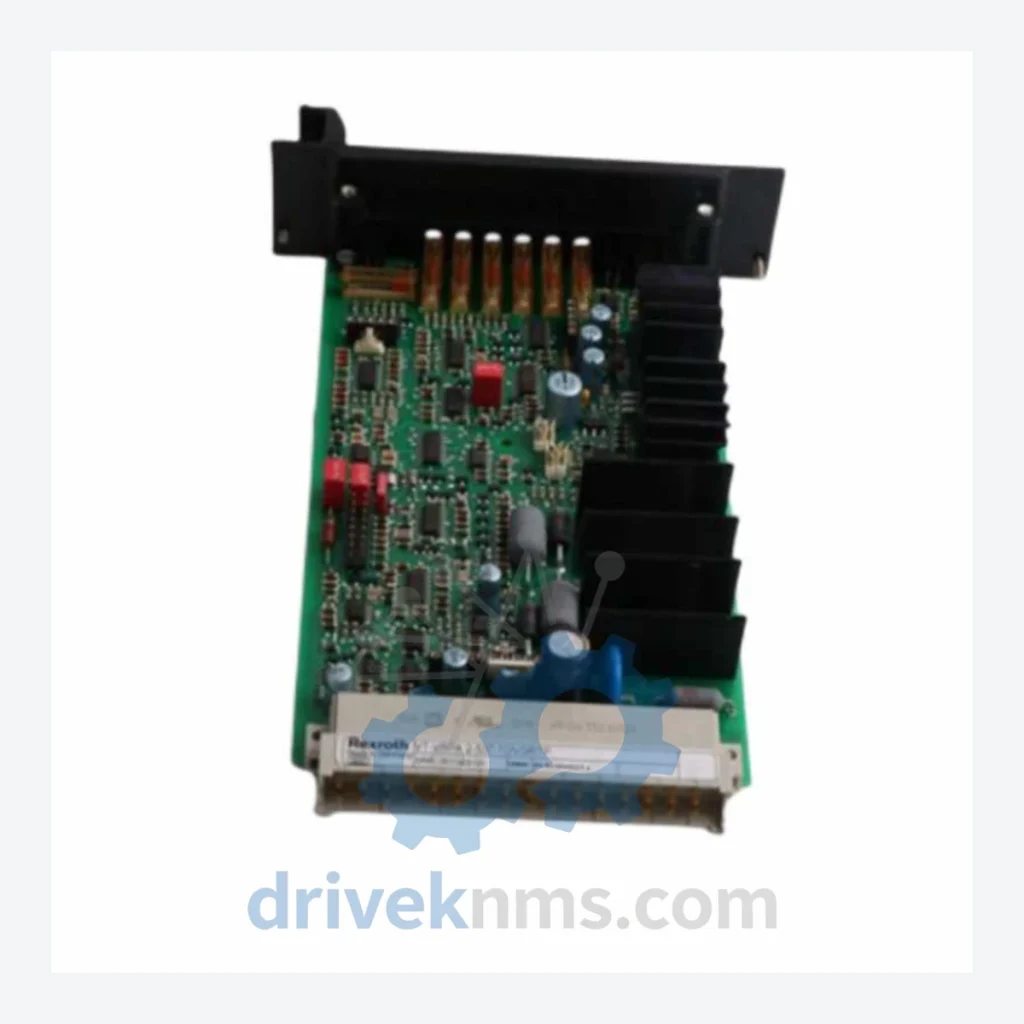
The Bosch Rexroth VT-HNC100 series represents a dedicated line of digital axis controllers engineered for high-precision hydraulic motion control in heavy industrial environments. Deployed extensively across chemical processing plants, nuclear power facilities, steel mills, offshore platforms, and petroleum refineries, the VT-HNC100 platform provides closed-loop position, velocity, and force control for electrohydraulic servo and proportional valve systems. Its compact Euro-card form factor and standardized EURO rack mounting make it a long-term fixture in control cabinets where replacement cycles span decades. The series is fully compatible with Rexroth proportional valves (4WRPH, 4WRKE, 4WRPEH families) and servo valves (4WSE, 4WS2EM families), making it a universal interface layer between PLC/DCS command systems and hydraulic actuators in safety-critical processes.
The Evolution of VT-HNC100 Architecture
The VT-HNC100 series was introduced by Bosch Rexroth as a successor to earlier analog axis controllers (VT-SR2, VT-SR4 families), transitioning hydraulic motion control from potentiometer-based analog tuning to fully digital parameterization via RS-232 and later PROFIBUS-DP interfaces. Early variants (suffix /P-S-00) relied on serial PC-based commissioning tools (HNC-WIN software), while later revisions introduced onboard display modules and expanded fieldbus options. The architecture centers on a 16-bit DSP core executing real-time PID algorithms at 1 kHz sampling rates, with onboard EEPROM for parameter retention across power cycles. Key compatibility considerations: VT-HNC100 modules are not pin-compatible with the older VT-HNC50 series despite sharing the same rack format. Firmware versions must be matched to the connected valve type (proportional vs. servo) to avoid instability. The /P variant denotes PROFIBUS-DP slave capability; the /S-00 suffix indicates standard I/O configuration without extended safety relay outputs. As of 2024, the VT-HNC100 series is classified by Rexroth as a mature/end-of-active-production product line, with spare parts support continuing through authorized distributors and independent MRO suppliers.
VT-HNC100 Full Catalog & Functionalities (SKU List)
The following SKUs represent verified, commonly deployed modules within the Bosch Rexroth VT-HNC100 digital axis controller family. Each unit is a single-axis controller occupying one Euro-card slot:
VT-HNC100.C-30/P-S-00/000: Single-axis digital controller, PROFIBUS-DP, standard I/O, 30V supply rail, base configuration — the subject unit of this listing.
VT-HNC100.C-08/P-S-00/000: Single-axis controller, PROFIBUS-DP, 8A valve output current rating, standard I/O configuration.
VT-HNC100.C-30/P-S-00/001: Variant /001 — extended parameter set with additional ramp function generator options.
VT-HNC100.C-30/P-S-00/002: Variant /002 — modified enable logic for safety relay integration in SIL-rated circuits.
VT-HNC100.C-30/0-S-00/000: Non-PROFIBUS variant; RS-232 commissioning only, no fieldbus slave capability.
VT-HNC100.C-08/0-S-00/000: RS-232 only, 8A output, standard I/O — common in legacy standalone hydraulic press control.
VT-HNC100.C-30/P-S-01/000: Extended I/O variant; additional analog input channel for external position transducer (SSI or analog ±10V).
VT-HNC100.C-30/P-S-02/000: Dual-transducer input variant for redundant position feedback in nuclear and offshore applications.
VT-HNC100.C-30/P-S-00/010: Factory-configured for servo valve drive; higher current resolution, tighter deadband compensation.
VT-HNC100.C-08/P-S-00/010: Servo valve variant, 8A output, PROFIBUS-DP — used with 4WSE2EM servo valves in rolling mill applications.
VT-HNC100.C-30/P-S-03/000: Extended diagnostics variant; onboard fault logging to EEPROM, retrievable via RS-232.
VT-HNC100.C-30/P-S-00/020: High-speed variant; 2 kHz control loop execution for fast-response injection molding hydraulics.
VT-HNC100.C-30/P-S-04/000: Pressure/force control primary mode; position control secondary — for forging press force regulation.
VT-HNC100.C-30/P-S-05/000: Synchronization variant; electronic gearing function for multi-axis hydraulic synchronization without master PLC.
VT-HNC100.C-30/P-S-06/000: CANopen slave variant — alternative fieldbus for mobile hydraulics and non-PROFIBUS plant architectures.
VT-HNC100.C-30/P-S-07/000: DeviceNet slave variant — deployed in North American automotive stamping lines with Allen-Bradley PLC infrastructure.
VT-HNC100.C-30/P-S-08/000: Ethernet/IP variant — later-generation fieldbus option for integration with Rockwell ControlLogix systems.
Sourcing Hard-to-Find & Obsolete VT-HNC100 Parts
With the VT-HNC100 series in mature/end-of-active-production status, OEM lead times for new units are extended or unavailable through standard distribution channels. DriveKNMS maintains a dedicated inventory of both new-surplus and professionally refurbished VT-HNC100 modules sourced from decommissioned plant equipment, authorized surplus channels, and direct factory overstock. For facilities operating VT-HNC100 controllers in long-lifecycle installations (10–25 year plant horizons), DriveKNMS provides: (1) direct unit replacement with tested stock, (2) parameter backup and restoration services to preserve existing axis tuning data, (3) cross-reference advisory for migration to current Rexroth VT-HNC200 or VT-HACD series where full replacement is required. All obsolete units are inspected, repaired to component level where necessary, and functionally validated before dispatch. Emergency same-day quotation is available for critical plant breakdown situations.
Quality Control for the VT-HNC100 Range
VT-HNC100 modules present specific test challenges due to their integrated DSP control architecture, EEPROM parameter storage, and multi-channel analog I/O. DriveKNMS applies the following validation protocol to every unit processed: (1) Power-on self-test — verification of internal supply rails (±15V analog, +5V digital) against Rexroth specification tolerances. (2) Firmware version identification — reading and logging firmware revision via RS-232 HNC-WIN interface to confirm compatibility with target valve type. (3) Analog I/O calibration check — measurement of command input (±10V), actual value input (±10V), and valve output (±10V / rated mA) against factory calibration data. (4) PROFIBUS-DP communication test — live GSD-based cyclic data exchange verification with a Siemens S7 master at 1.5 Mbit/s and 12 Mbit/s baud rates. (5) Closed-loop functional test — connection to a hydraulic test bench with a 4WRPH proportional valve and LVDT position transducer; step response, ramp tracking, and steady-state error measured and recorded. (6) EEPROM integrity verification — parameter write/read cycle to confirm non-volatile storage reliability. All test records are retained and available to the customer upon request.