
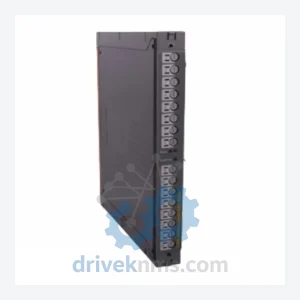
SAIA PCD3.W720 Dynamic Weighing Module – PCD3 Series
SAIA-Burgess Controls PCD3.W720 is listed for PCD3 Series RFQ review. Confirm quantity, condition and destination before quotation.
RFQ-ready industrial model
Model: PCD3.C100
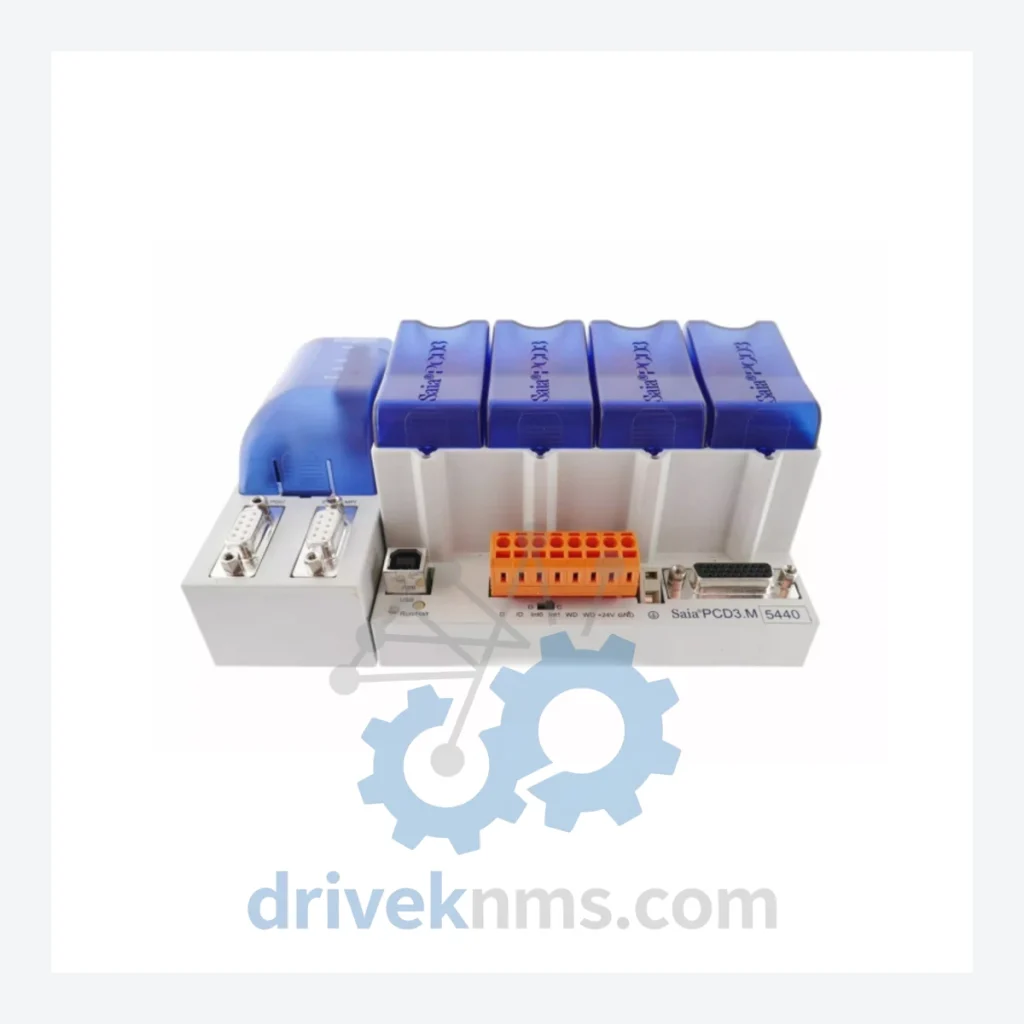
Product Overview
Commercial availability is handled through direct RFQ, model verification and export-oriented follow-up rather than public cart checkout.
Datasheet Preview
Use attached product manuals when available. If the manual is not public yet, request the full file directly through RFQ.
Commercial Path
Product pages on DRIVEKNMS are designed to verify model, brand and series first, then move the buyer into one clean quotation path.
Technical Dossier
RFQ support for obsolete parts: Send the model number, required quantity and destination so DriveKNMS can confirm sourcing options before quotation.
| Parameter | Detail |
|---|---|
| Manufacturer | Saia-Burgess Controls AG (now part of Honeywell) |
| Part Number | PCD3.C100 |
| Series | Saia PCD3 |
| Function | Extension Module Holder / Rack Expansion Carrier |
| Compatible Platform | Saia PCD3 PLC System |
| Country of Origin | Switzerland |
| Product Status | Discontinued / Obsolete |
| Typical Application | Building automation, process control, HVAC management, energy monitoring |
Note: Electrical parameters not independently verified. Specifications above are drawn from publicly available Saia PCD3 platform documentation. Do not rely on unverified third-party parameter claims for safety-critical installations.
The Saia PCD3 platform was a dominant force in European building automation and industrial process control throughout the 1990s and 2000s. Its modular architecture — of which the PCD3.C100 extension holder is a structural cornerstone — allowed facilities to scale I/O capacity without replacing the central CPU. That same modularity is now both the system's greatest strength and its most acute vulnerability in the aftermarket.
Saia-Burgess was acquired by Honeywell, and the PCD3 hardware line has been progressively phased out in favor of the PCD2.M5xxx and newer platforms. Replacement parts are no longer manufactured. The global supply of genuine PCD3.C100 units is finite and shrinking. Facilities that have not established a spare parts buffer are operating with no safety net.
For plant managers and maintenance engineers responsible for PCD3-based systems, the calculus is straightforward: the cost of a single unplanned shutdown — lost production, emergency contractor fees, expedited freight — typically exceeds the cost of holding three to five years of critical spare parts. The PCD3.C100, as the physical carrier for all expansion modules in the rack, is not a peripheral component. It is load-bearing infrastructure. Its failure is a system failure.
Extending the operational life of a PCD3 installation by five to ten years through proactive spare parts management is a documented, low-risk strategy. It requires no firmware changes, no retraining, and no revalidation of control logic. The existing system continues to perform exactly as engineered — provided the hardware remains intact.
Every PCD3.C100 unit that leaves DriveKNMS has passed a structured five-stage inspection protocol developed specifically for long-shelf-life industrial components:
1. Visual and Mechanical Integrity Check — Housing inspected for cracks, deformation, and connector damage. Module retention clips and guide rails verified for full engagement travel.
2. Electrolytic Capacitor Assessment — Where applicable, capacitors are checked for bulging, electrolyte leakage, and ESR deviation. Aged capacitors are flagged and units are graded accordingly.
3. Pin and Connector Corrosion Inspection — All backplane connector pins examined under magnification for oxidation, pitting, and contamination. Affected contacts are treated or the unit is downgraded.
4. Firmware and Label Verification — Hardware revision markings and any embedded firmware version identifiers are cross-referenced against known PCD3 compatibility matrices to confirm the unit is appropriate for the target system revision.
5. Functional Bench Test — Where test fixtures are available, units are powered and module seating is verified under load conditions.
Units are graded as: New Surplus (original packaging, never installed), Refurbished (inspected, cleaned, tested, with documented findings), or As-Is / For Parts (sold with full disclosure of condition). Grade is confirmed in writing prior to shipment.
The PCD3.C100 is a direct, drop-in replacement for any failed or degraded extension module holder within a PCD3 rack assembly. No programming changes are required. No engineering reconfiguration is necessary. The replacement procedure is a mechanical swap — remove the failed holder, seat the replacement, reconnect the backplane, and restore power.
This characteristic is critical for facilities operating under strict change-management protocols. A like-for-like hardware replacement does not trigger revalidation requirements in most regulated environments, whereas a platform migration does. Sourcing a genuine PCD3.C100 is not merely a cost decision — it is a compliance and operational continuity decision.
Facilities that have standardized on the PCD3 platform should treat the C100 holder as a consumable infrastructure item and maintain a minimum buffer of two to four units per active rack. The component is passive, has no wear mechanism under normal operation, and stores indefinitely when kept in a dry, ESD-safe environment.
Can you source other PCD3 components?
Yes. DriveKNMS specializes in the full Saia PCD3 ecosystem, including CPU modules, I/O cards, power supplies, and communication modules. Contact us with your full BOM for a consolidated sourcing assessment.
Continue The Model Path
Move from this exact model into the matching system hub, brand archive, model-family archive or lifecycle sourcing route before sending a final RFQ list.
Related Paths
SAIA-Burgess Controls PCD3.W720 is listed for PCD3 Series RFQ review. Confirm quantity, condition and destination before quotation.
SAIA-Burgess PCD2.K110 is listed for Controller Cards RFQ review. Confirm quantity, condition and destination before quotation.
SAIA-Burgess PCA1.M41M4 is listed for Controller Cards RFQ review. Confirm quantity, condition and destination before quotation.