Products / Sanken Electric / Power Module
Sanken Electric Power Module

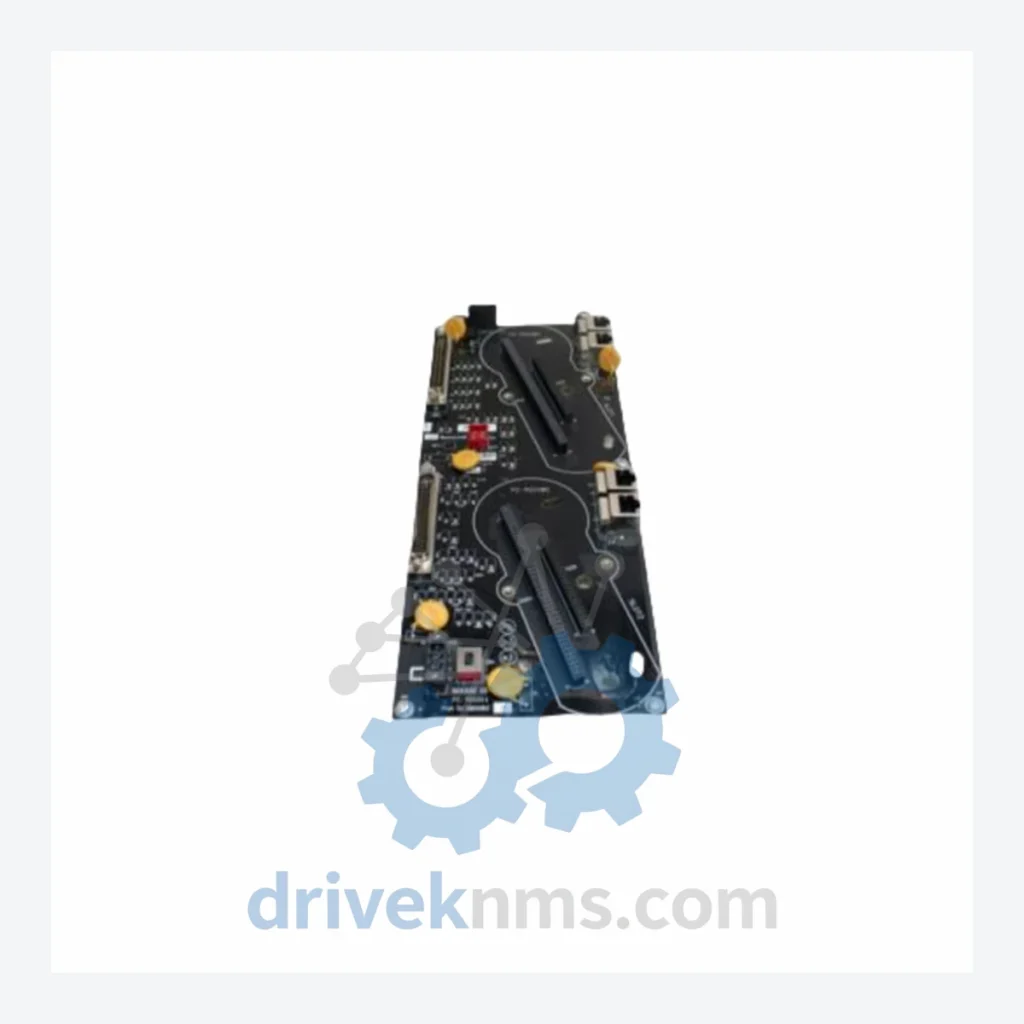
Sanken DK14073A Circuit Control Board – Obsolete Power Module Spare Part

Model: DK14073A

Brand Sanken Electric
Series Power Module
Model DK14073A
RFQ-ready model route Obsolete and surplus sourcing Export follow-up by model list

Product Overview

Commercial availability is handled through direct RFQ, model verification and export-oriented follow-up rather than public cart checkout.

Datasheet Preview

Datasheet Preview

Use attached product manuals when available. If the manual is not public yet, request the full file directly through RFQ.

Request Full Manual

Commercial Path

Use This Page To Confirm The Model, Then Move To RFQ

Product pages on DRIVEKNMS are designed to verify model, brand and series first, then move the buyer into one clean quotation path.

Technical Dossier

Product Details And Specifications

Sanken DK14073A Circuit Control Board – Obsolete Power Module Spare Part

When a circuit control board like the Sanken DK14073A fails in a production environment, the immediate question is not where to find a replacement — it is whether the entire control system must be retired. For facilities running legacy automation infrastructure, that question carries a price tag measured in hundreds of thousands, sometimes millions, of dollars: new PLC platforms, re-engineering of I/O mapping, rewriting of control logic, retraining of maintenance personnel, and weeks of unplanned downtime during commissioning. The DK14073A is a discontinued component. Finding verified stock is not a routine procurement task. DriveKNMS maintains sourced inventory of hard-to-find industrial boards precisely to prevent that forced upgrade scenario.

Technical Specifications

Parameter Detail
Manufacturer Sanken Electric Co., Ltd.
Part Number DK14073A
Component Type Circuit Control Board
Country of Origin Japan
Lifecycle Status Discontinued / Obsolete – No longer in active production
Condition Available New Old Stock (NOS) / Tested Refurbished

Note: Specific electrical parameters (voltage ratings, current capacity, signal interface) are verified against physical units during QA inspection. Parameters are not published here to prevent misapplication. Contact us for a full datasheet cross-reference prior to ordering.

Solving the Discontinued Hardware Crisis

Sanken Electric has a long history of supplying power conversion and motor drive components to industrial OEMs across Asia, Europe, and North America. The DK14073A circuit control board was designed for integration into drive and power conditioning equipment — systems that, in many facilities, have been running continuously for 15 to 25 years. These are not systems that can be swapped out on a maintenance window. They are embedded in production lines with custom mechanical interfaces, proprietary communication protocols, and control logic that exists only in the institutional memory of the engineering team that commissioned them.

When Sanken discontinued the DK14073A, the aftermarket supply chain did not immediately dry up. Boards remained in MRO stockrooms, in decommissioned equipment, and in the inventories of specialist distributors. That supply is finite. Each year, the pool of available units shrinks while the installed base of equipment that depends on them does not. Facilities that have not yet secured a spare are operating with a single point of failure that cannot be resolved through standard procurement channels.

DriveKNMS sources DK14073A boards through verified industrial surplus channels. Each unit is physically inspected before listing. We do not publish stock quantities — contact us directly for current availability and lead time.

Condition & Reliability Assurance

Obsolete boards sourced from the secondary market carry risks that new components do not. Our 5-step QA process is designed to identify and eliminate the failure modes most common in aged electronic assemblies:

  • Step 1 – Visual Inspection: Full board examination for physical damage, burn marks, cracked solder joints, and corrosion on connector pins and edge contacts.
  • Step 2 – Electrolytic Capacitor Assessment: Electrolytic capacitors are the primary age-related failure point in control boards stored beyond 10 years. Each capacitor is checked for ESR deviation and physical deformation. Units with suspect capacitors are either recapped or rejected.
  • Step 3 – Firmware / Version Verification: Where applicable, onboard firmware version or hardware revision markings are documented and cross-referenced against known compatible revisions for the target equipment.
  • Step 4 – Pin and Connector Integrity: All connector interfaces are inspected for oxidation, bent pins, and contact resistance. Corroded contacts are treated or the unit is rejected.
  • Step 5 – Functional Bench Test: Where test fixtures are available, boards are powered and tested under controlled conditions before shipment.

Units that do not pass all five steps are not sold. QA records are available upon request for critical applications.

Key Features for System Maintenance

  • Drop-in replacement: The DK14073A is a direct form-fit-function replacement for the original board position. No mechanical modification to the host equipment is required.
  • No reprogramming required: Control logic and parameter settings resident in the host system's CPU or HMI are unaffected by a board-level replacement. Maintenance personnel do not need PLC programming access to complete the swap.
  • Avoids engineering reconstruction costs: Replacing a failed DK14073A with a verified spare eliminates the need to engage a systems integrator for platform migration — a project that typically runs from USD 80,000 to USD 500,000 depending on system complexity.
  • Extends asset service life by 5–10 years: A single verified spare board, held in on-site inventory, converts a potential forced retirement event into a scheduled maintenance action. For capital equipment with a replacement cost in the millions, this is not a minor operational consideration — it is a core asset protection strategy.
  • Reduces unplanned downtime exposure: The mean time to source an obsolete board through standard channels, when no spare exists, ranges from weeks to months. On-hand inventory eliminates that exposure entirely.

How to Extend Legacy Automation Asset Life by 5–10 Years: A Maintenance Strategy for Plant Management

The decision to retire an automation system is rarely driven by the system's inability to perform its function. It is driven by the inability to maintain it. When critical spare parts become unavailable, the risk calculus shifts: a single component failure can force a capital expenditure that was not budgeted, not planned, and not timed to production schedules.

The following approach has been used by maintenance teams across process industries to defer system retirement without compromising reliability:

  • Identify single points of failure: Map every component in the control system that has no available replacement through standard distribution. Circuit control boards, legacy drive modules, and proprietary I/O cards are the most common candidates. The DK14073A is one such component.
  • Establish a minimum spare holding: For critical boards, a minimum of two units — one installed, one on-shelf — is the standard recommendation. For systems where downtime cost exceeds USD 10,000 per hour, three units is defensible.
  • Source now, not after failure: Secondary market availability for obsolete components decreases over time. The cost of sourcing a DK14073A today is a fraction of what it will cost in three years, if units are available at all.
  • Document the system configuration: Before any maintenance action, capture the full parameter set of the host system. This protects against configuration loss during board replacement and is essential if the system must eventually be migrated.
  • Schedule proactive board inspection: Even boards that are functioning should be inspected on a 3–5 year cycle for capacitor condition and connector integrity. Catching degradation before failure is less disruptive than emergency replacement.

This is not a strategy that requires significant capital. It requires procurement discipline and an accurate understanding of which components are no longer being manufactured.

FAQ

What warranty is provided on obsolete parts?
DriveKNMS provides a 90-day warranty on all tested and refurbished units, covering functional failure under normal operating conditions. New Old Stock (NOS) units are sold with a 30-day inspection warranty. Warranty terms for specific orders are confirmed in writing prior to shipment.

How do I know the unit is genuine and not counterfeit?
All DK14073A units sourced by DriveKNMS are physically inspected for manufacturer markings, date codes, and construction consistency. We do not source from unverified brokers. Certificates of conformance and inspection reports are available for orders requiring documentation.

Can I order multiple units for long-term spare holding?
Yes. We recommend contacting us directly for multi-unit orders. Pricing and availability for bulk spare holding are discussed on a per-inquiry basis. Stock is not guaranteed to remain available — inquire early.

What is the lead time?
Lead time depends on current stock status. In-stock units typically ship within 3–5 business days after order confirmation. Contact us for current availability before committing to a project timeline.

Do you ship internationally?
Yes. DriveKNMS ships to industrial customers globally. Export documentation, including commercial invoices and packing lists, is provided as standard.

WhatsApp Prefilled Inquiry Email [email protected] Phone +86 18359293191 Top Back To Top