
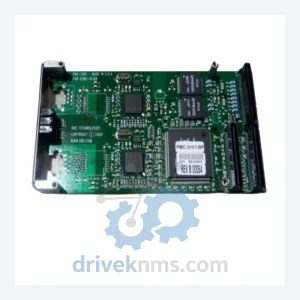
SBS Technologies PMC-3101-BP Ethernet PMC Module – PMC Series
SBS Technologies PMC-3101-BP is listed for PMC Series RFQ review. Confirm quantity, condition and destination before quotation.
RFQ-ready industrial model
Model: M68CPU CPU
Product Overview
Commercial availability is handled through direct RFQ, model verification and export-oriented follow-up rather than public cart checkout.
Datasheet Preview
Use attached product manuals when available. If the manual is not public yet, request the full file directly through RFQ.
Commercial Path
Product pages on DRIVEKNMS are designed to verify model, brand and series first, then move the buyer into one clean quotation path.
Technical Dossier
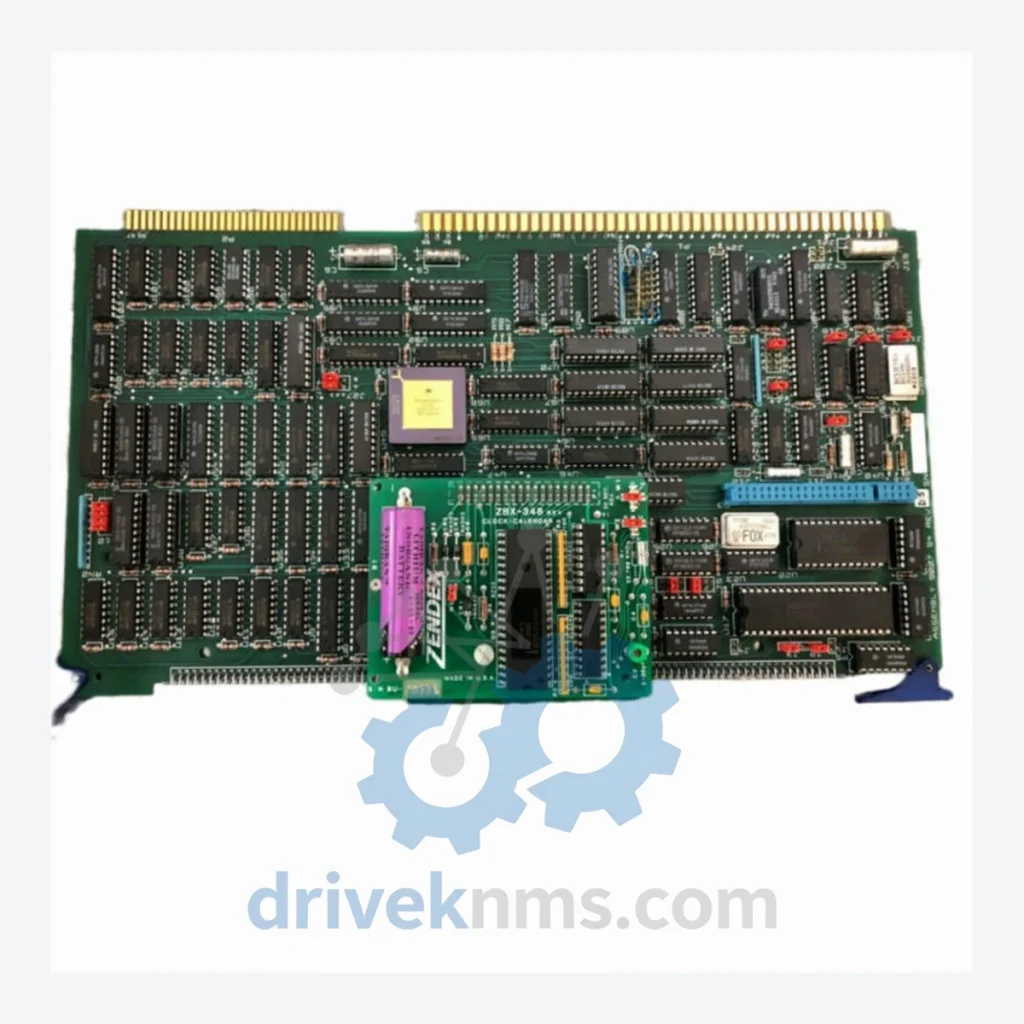
The SBS Technologies SBE M68 series represents a foundational line of Motorola 68000-family VMEbus and Multibus CPU boards deployed across global heavy industry. These single-board computers have served as embedded controllers in chemical processing plants, petroleum refineries, nuclear facility instrumentation systems, and continuous manufacturing environments. The SBE M68 platform achieved widespread adoption due to its deterministic real-time performance, robust backplane architecture, and long production lifecycle — characteristics that made it a default selection for safety-critical control infrastructure throughout the 1980s and 1990s. Installed base density remains high in legacy DCS and SCADA environments where replacement of the host system is not economically viable.
The SBE M68 architecture originated with the Motorola MC68000 processor at 8–10 MHz, providing 16-bit external data bus access on a 32-bit internal architecture. Early boards such as the SBE-M68CPU and SBE-M68020 targeted Multibus I and VMEbus Rev. C environments, operating under OS-9, VxWorks, or bare-metal RTOS configurations. The transition to the MC68020 and MC68030 processors introduced full 32-bit external bus width, on-chip MMU (MC68030), and expanded addressing to 4 GB — enabling more complex real-time applications without hardware redesign of the backplane infrastructure.
By the mid-1990s, SBS Technologies (which had absorbed the SBE product line) extended the M68 family with enhanced memory configurations, dual-ported SRAM for inter-processor communication, and IEEE 1014 (VMEbus) compliance at the D32/A32 level. The introduction of the MC68040 and MC68060 variants brought integrated FPU capability and cache coherency improvements. Compatibility across generations was maintained at the backplane level, allowing incremental CPU upgrades without full system replacement — a key factor in the series' longevity in installed industrial systems.
As the embedded market transitioned to PowerPC and x86 architectures in the late 1990s and early 2000s, the SBE M68 series entered its maintenance phase. SBS Technologies (subsequently acquired by GE Intelligent Platforms, now Abaco Systems) ceased active development of new M68 variants. The series is now classified as end-of-life (EOL) with no manufacturer support. Third-party MRO suppliers and specialist distributors represent the sole sourcing channel for replacement units and spare modules.
The following SKUs represent verified models within the SBS Technologies SBE M68 and associated VMEbus/Multibus product family. Each entry includes a concise functional descriptor.
SBE-M68CPU: MC68000 Multibus CPU board, 8 MHz, 512 KB RAM, Multibus I interface.
SBE-M68020: MC68020 VMEbus CPU, 16 MHz, 32-bit bus, on-board EPROM socket.
SBE-M68030: MC68030 VMEbus SBC, integrated MMU, 25 MHz, A32/D32 VMEbus master.
SBE-340: VMEbus single-board computer, MC68040, 25 MHz, 4 MB DRAM, SCSI interface.
SBE-350: Enhanced MC68040 VMEbus SBC, 32 MB DRAM max, Ethernet, serial I/O.
SBE-2340: Dual-processor VMEbus board, MC68040 x2, shared DRAM, inter-CPU mailbox.
SBE-2360: MC68060 VMEbus SBC, 66 MHz, 64 MB DRAM, high-throughput DMA engine.
SBE-616: VMEbus serial communications module, 6-channel RS-232/422, interrupt-driven.
SBE-617: 8-channel serial I/O VMEbus module, RS-232/422/485 configurable per port.
SBE-620: VMEbus parallel I/O board, 48-channel TTL digital I/O, programmable direction.
SBE-621: 64-channel digital I/O VMEbus module, optoisolated inputs, relay-compatible outputs.
SBE-920: VMEbus memory board, 4 MB static RAM, battery-backed, dual-port access.
SBE-921: 8 MB VMEbus DRAM module, auto-refresh, A32/D32, parity-protected.
SBE-1003A: VMEbus-to-Multibus I adapter, transparent bridge, supports legacy Multibus peripherals.
SBE-8260: VMEbus communications processor, dual Ethernet, MPC8260 PowerQUICC II core.
SBE-4680: VMEbus transition module, rear I/O, P2 connector breakout for SBE-340/350 series.
DriveKNMS maintains an active procurement network for EOL and hard-to-find SBS Technologies SBE M68 series modules. As the original manufacturer no longer produces or supports these boards, sourcing requires access to decommissioned system inventories, certified refurbishment channels, and cross-referenced alternative part databases.
The SBE M68 series presents specific test challenges due to its VMEbus backplane interface, on-board memory subsystems, and processor-dependent firmware dependencies. DriveKNMS applies the following test protocol to all SBE M68 units processed through its facility:
Continue The Model Path
Move from this exact model into the matching system hub, brand archive, model-family archive or lifecycle sourcing route before sending a final RFQ list.
Related Paths
SBS Technologies PMC-3101-BP is listed for PMC Series RFQ review. Confirm quantity, condition and destination before quotation.
SBS Technologies 85853637-001 is listed for Controller Cards RFQ review. Confirm quantity, condition and destination before quotation.
Alstom MVAJ105RA0802A is listed for MiCOM Series RFQ review. Confirm quantity, condition and destination before quotation.