Technical Dossier
Product Details And Specifications
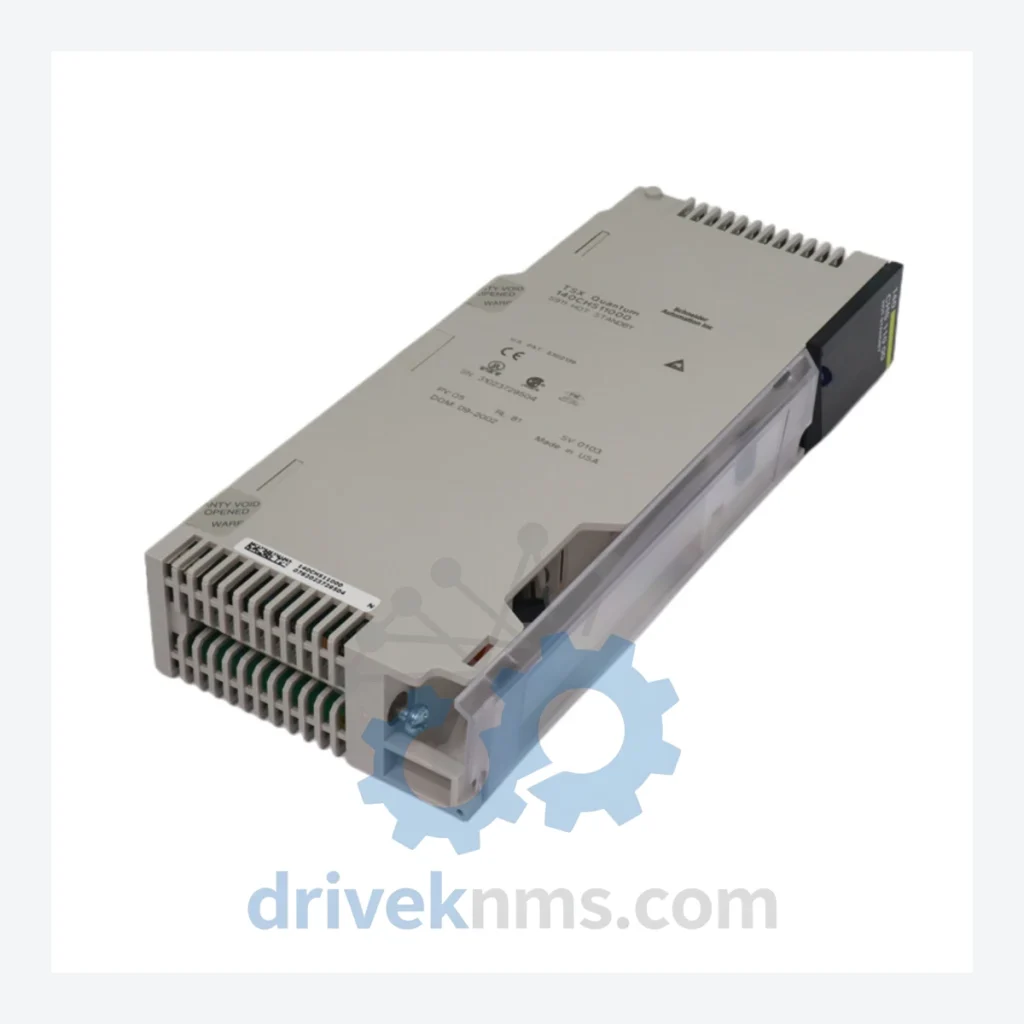
Schneider Electric 140CHS32000 Standby Splitter Kit – Obsolete Modicon Quantum Spare Part
When a Modicon Quantum Hot Standby system loses its splitter module, the entire redundancy architecture collapses. There is no software patch, no firmware workaround, and no cross-compatible substitute from the current Schneider Electric catalog. The 140CHS32000 Standby Splitter Kit is a hardware-specific component that physically manages the synchronization cable path between the primary and standby CPUs in a Quantum Hot Standby pair. Without it, your redundant control system reverts to a single point of failure — an unacceptable condition in any continuous process environment.
RFQ support for obsolete parts: Send the model number, required quantity and destination so DriveKNMS can confirm sourcing options before quotation.
Technical Specifications
| Part Number | 140CHS32000 |
| Manufacturer | Schneider Electric (formerly Modicon) |
| Series | Modicon Quantum |
| Function | Hot Standby Splitter Kit – synchronization cable management between primary and standby CPU racks |
| Compatible Systems | Modicon Quantum Hot Standby configurations (140CPU65xxx series CPUs) |
| Country of Origin | France |
| Discontinuation Status | Discontinued / Obsolete – no longer manufactured or supplied by Schneider Electric |
| Replacement Notice | No direct OEM replacement available; migration path requires platform change to Modicon M580 |
Note: Electrical parameters not independently verified. Specifications above are drawn from published Modicon Quantum system documentation. No parameters have been assumed or fabricated.
Solving the Discontinued Hardware Crisis
The Modicon Quantum platform was the backbone of heavy process automation — oil & gas, water treatment, power generation, and chemical manufacturing — throughout the 1990s and 2000s. Many of these installations remain in active production today, running control logic that has been refined over decades and is deeply embedded in plant operations.
Schneider Electric's end-of-life announcement for the Quantum platform did not come with a simple upgrade path. The Hot Standby architecture, in particular, relies on a tightly integrated set of hardware components — CPUs, coprocessors, and the 140CHS32000 splitter kit — that must be replaced as a matched system if any single element fails. Sourcing the splitter kit independently is the only way to restore redundancy without triggering a full system replacement.
For plant managers facing this situation, the calculus is straightforward: a verified 140CHS32000 unit costs a fraction of a percent of what a platform migration would require. The risk is not in buying the spare part — the risk is in not having it when the system demands it.
How to extend your Modicon Quantum system life by 5–10 years:
Condition & Reliability Assurance
DriveKNMS applies a 5-step quality assurance process to all obsolete and legacy spare parts before dispatch review:
- Visual and mechanical inspection: Full external examination for physical damage, pin corrosion, connector wear, and housing integrity. Units with corroded or bent pins are rejected at this stage.
- Electrolytic capacitor assessment: Legacy hardware from this era commonly suffers from capacitor aging and electrolyte leakage. Each unit is inspected for capacitor bulging, leakage residue, and ESR deviation where test access permits.
- Firmware and label verification: Part number markings, revision labels, and where applicable, firmware version identifiers are cross-referenced against known authentic Schneider Electric production records to screen for counterfeit or misrepresented units.
- Functional continuity check: Connector and cable path continuity is verified to confirm the splitter kit's core mechanical and electrical function is intact.
- Final documentation: Each unit ships with an inspection record noting condition grade (New / Refurbished-Grade A / Tested-Used), any observed cosmetic defects, and the technician sign-off.
Key Features for System Maintenance
- Drop-in replacement: The 140CHS32000 installs directly into existing Modicon Quantum Hot Standby rack configurations without modification to the control cabinet or cable infrastructure.
- No reprogramming required: Replacing the splitter kit does not affect CPU logic, I/O mapping, or application program integrity. The Hot Standby synchronization resumes automatically upon correct installation.
- Avoids engineering reconstruction costs: A platform migration from Quantum to M580 requires full I/O remapping, application code conversion, and re-commissioning. The 140CHS32000 spare eliminates this cost for the duration of the part's service life.
- Preserves validated control logic: In regulated industries (pharmaceutical, nuclear, water), re-validating a migrated control system can take 12–24 months. Maintaining the existing hardware preserves your validation status.
Q: Should I buy more than one unit?
A: For any facility running Modicon Quantum Hot Standby systems, holding at least one cold spare 140CHS32000 is a minimum prudent position. Given the finite and declining availability of this part on the secondary market, facilities with multiple Hot Standby installations should consider securing a multi-unit reserve now rather than sourcing reactively after a failure event.
Q: Can this part be used in a non-Hot Standby Quantum configuration?
A: The 140CHS32000 is specific to the Hot Standby architecture. It is not applicable to standard simplex Quantum configurations.