Technical Dossier
Product Details And Specifications
Schneider Electric Modicon Quantum Series Technical Notes
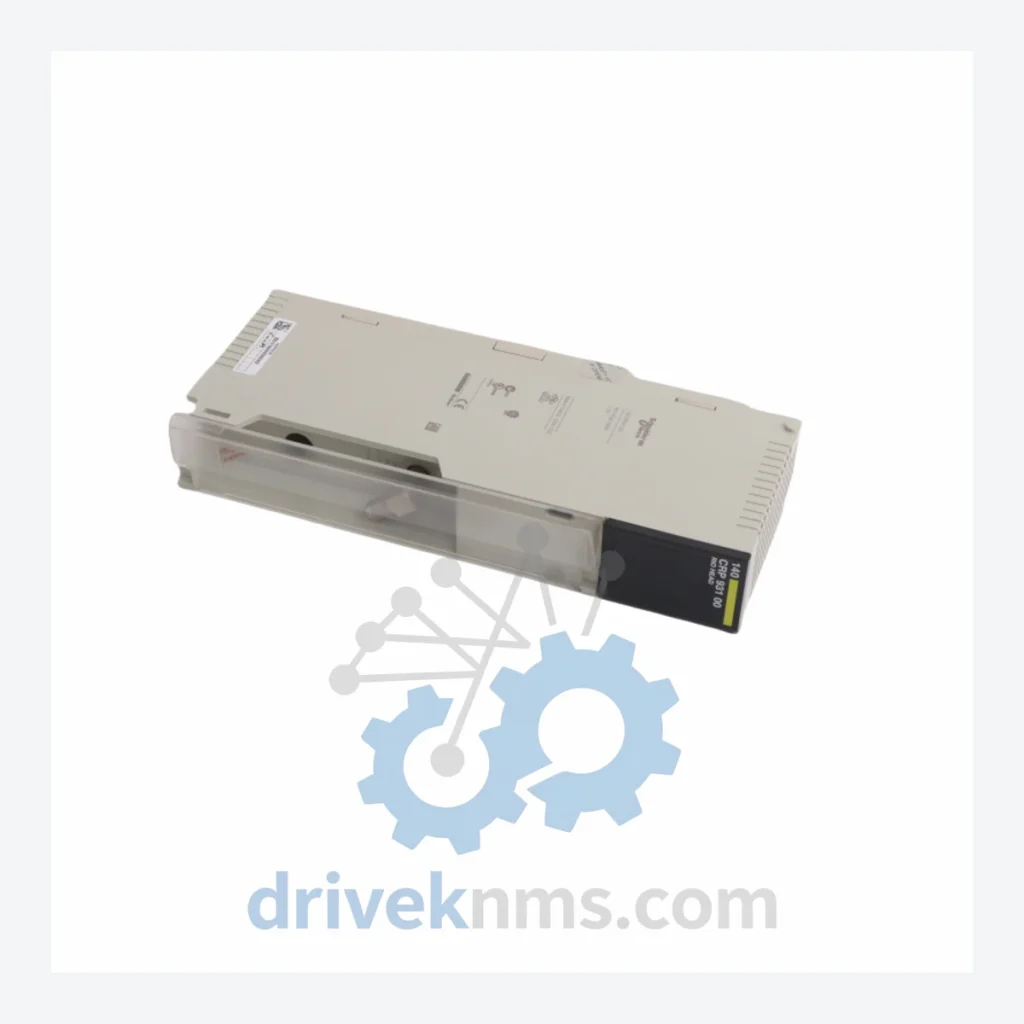
The Schneider Electric Modicon Quantum (140-series) platform is one of the most widely deployed programmable automation controller (PAC) architectures in global heavy industry. Installed across petrochemical refineries, nuclear power generation facilities, offshore oil & gas platforms, and large-scale chemical processing plants, the Quantum backplane-based architecture has served as the backbone of safety-critical and process-critical automation since its commercial introduction in the early 1990s. Its modular slot-based chassis design, deterministic Modbus Plus and Ethernet I/O scanning, and compatibility with Unity Pro / Control Expert engineering software have made it a reference standard for distributed control system (DCS) integration in IEC 61511 and IEC 61508 environments. The 140CRP93100 is a Remote I/O (RIO) Drop Cable Adaptor Module used within the Quantum RIO architecture to interface the coaxial RIO cable drop with the local I/O chassis, enabling distributed I/O expansion across large plant footprints without additional CPU overhead.
The Evolution of Modicon Quantum Architecture
The Modicon Quantum platform was introduced by Modicon (subsequently acquired by Schneider Electric in 1994) as a successor to the Modicon 984 series. The original 140-series chassis and I/O modules were designed around a proprietary backplane bus operating at 1.5 Mbps, with the Modbus Plus (MB+) network providing peer-to-peer communication at 1 Mbps across up to 64 nodes per segment. Early CPU modules such as the 140CPU11302 and 140CPU43412A established the platform's deterministic scan-cycle model.
Through the late 1990s and 2000s, Schneider Electric expanded the Quantum line with Ethernet-capable CPUs (140CPU65150, 140CPU65160), Hot Standby redundancy modules (140CHS11000), and Profibus/DeviceNet communication adapters. The RIO sub-system — anchored by the 140CRP93100 drop adaptor and the 140CRA93100 remote adapter — allowed plants to extend I/O over coaxial cable drops up to 4,500 meters from the head-end chassis, a critical capability for large refinery units and power plant turbine halls.
As of 2020, Schneider Electric has formally classified the majority of the 140-series hardware as End of Life (EOL) / End of Sale (EOS), with migration paths recommended toward the Modicon M580 (BMENOC, BMEP, BMEH series) ePAC platform. However, installed base volumes in long-lifecycle industries (nuclear, refining, water treatment) ensure continued demand for 140-series spare parts and lifecycle extension support through at least 2035.
Modicon Quantum Full Catalog & Functionalities (SKU List)
CPU & Processor Modules
- 140CPU11302: Quantum CPU, 512KB memory, Modbus Plus port, no Ethernet
- 140CPU43412A: Quantum CPU, 1MB memory, dual MB+ ports, enhanced instruction set
- 140CPU65150: Quantum CPU, 3.5MB memory, 10/100 Ethernet, MB+ port
- 140CPU65160: Quantum CPU, 7MB memory, dual Ethernet, Unity Pro compatible
- 140CPU67160: Quantum CPU, Hot Standby capable, dual Ethernet, 7MB memory
Remote I/O (RIO) & Communication Adapters
- 140CRP93100: RIO Drop Cable Adaptor Module — interfaces coaxial RIO drop cable to local I/O chassis
- 140CRA93100: RIO Remote Adapter — head-end RIO coaxial cable interface for remote chassis
- 140NOE77100: Ethernet TCP/IP Network Option Module, 10/100 Mbps, Modbus TCP server
- 140NOE77101: Ethernet TCP/IP NOM, enhanced web server, I/O scanner, 10/100 Mbps
- 140NOM21100: Modbus Plus Network Option Module, single MB+ port
- 140NOM21200: Modbus Plus NOM, dual MB+ ports for bridge/routing applications
Digital Input (DI) Modules
- 140DAI34000: 32-channel 24VDC digital input module, sink/source compatible
- 140DAI54000: 16-channel 115VAC digital input module, isolated
- 140DAI74000: 32-channel 24VDC digital input, high-density, IEC 61131-2 Type 1/3
Digital Output (DO) Modules
- 140DAO84010: 32-channel 24VDC digital output, 0.5A per channel, source type
- 140DAO84000: 16-channel relay output module, 2A per channel, Form C contacts
Analog Input (AI) Modules
- 140ACI04000: 8-channel analog current input, 4–20mA, 12-bit resolution
- 140AVI03000: 8-channel analog voltage input, ±10V / 0–10V, 12-bit
- 140ARI03010: 4-channel RTD/resistance input, Pt100/Pt1000, 16-bit
Analog Output (AO) Modules
- 140ACO02000: 4-channel analog current output, 4–20mA, 12-bit resolution
Power Supply Modules
- 140CPS11420: 115/230VAC input power supply, 3.4A @ 5VDC backplane output
- 140CPS21400: 24VDC input power supply, 8A @ 5VDC, for DC-powered panels
Hot Standby & Chassis
- 140CHS11000: Hot Standby module for CPU redundancy, fiber-optic sync link
- 140XBP01600: 16-slot Quantum backplane chassis, passive bus
- 140XBP00600: 6-slot Quantum backplane chassis, passive bus
Sourcing Hard-to-Find & Obsolete Modicon Quantum Parts
Priority sourcing focus includes: 140CRP93100, 140CRA93100, 140CPU65150, 140CPU65160, 140CPU67160, 140NOE77100, 140CHS11000, and all 140-series power supply modules. Customers operating Quantum systems in nuclear or refinery environments with 10–15 year maintenance horizons are advised to establish blanket purchase agreements for critical spare modules.
Quality Control for the Modicon Quantum Range
The Quantum platform's backplane bus architecture and RIO coaxial communication sub-system require specialized test procedures that differ from standard PLC module bench testing. DriveKNMS applies the following protocol to all 140-series modules prior to shipment:
- Backplane Bus Integrity Test: Each module is seated in a live Quantum chassis and subjected to a full backplane communication cycle test, verifying address decoding, data bus integrity, and interrupt response at rated scan rates.
- RIO Drop Adaptor Functional Test (140CRP93100 specific): The CRP93100 is tested in a live RIO loop with a 140CRA93100 head-end adapter and a minimum two-chassis drop configuration. Coaxial termination impedance (75Ω), signal attenuation, and drop address assignment are verified under load.
- Firmware Version Verification: CPU and communication modules are checked against Schneider Electric's firmware compatibility matrix for Unity Pro / Control Expert version alignment. Downgrade or upgrade is performed as required by customer specification.
- Thermal Burn-In: All repaired or refurbished modules undergo a minimum 24-hour powered burn-in at 45°C ambient to screen for infant-mortality component failures.
- Isolation & Dielectric Test: I/O modules with field-side isolation (analog and high-voltage digital) are tested at 500VDC isolation resistance and 1500VAC dielectric withstand per IEC 61010-1.