
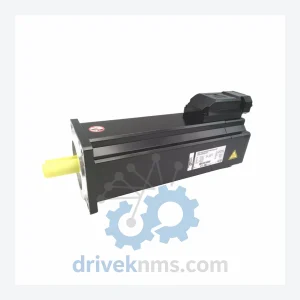
Schneider SM100-40-080-P0-45-S1-B1 Servo Motor – Lexium Series
Schneider Electric SM100-40-080-P0-45-S1-B1 is listed for Lexium Series RFQ review. Confirm quantity, condition and destination before quotation.
RFQ-ready industrial model
Model: LMC300CAA10100
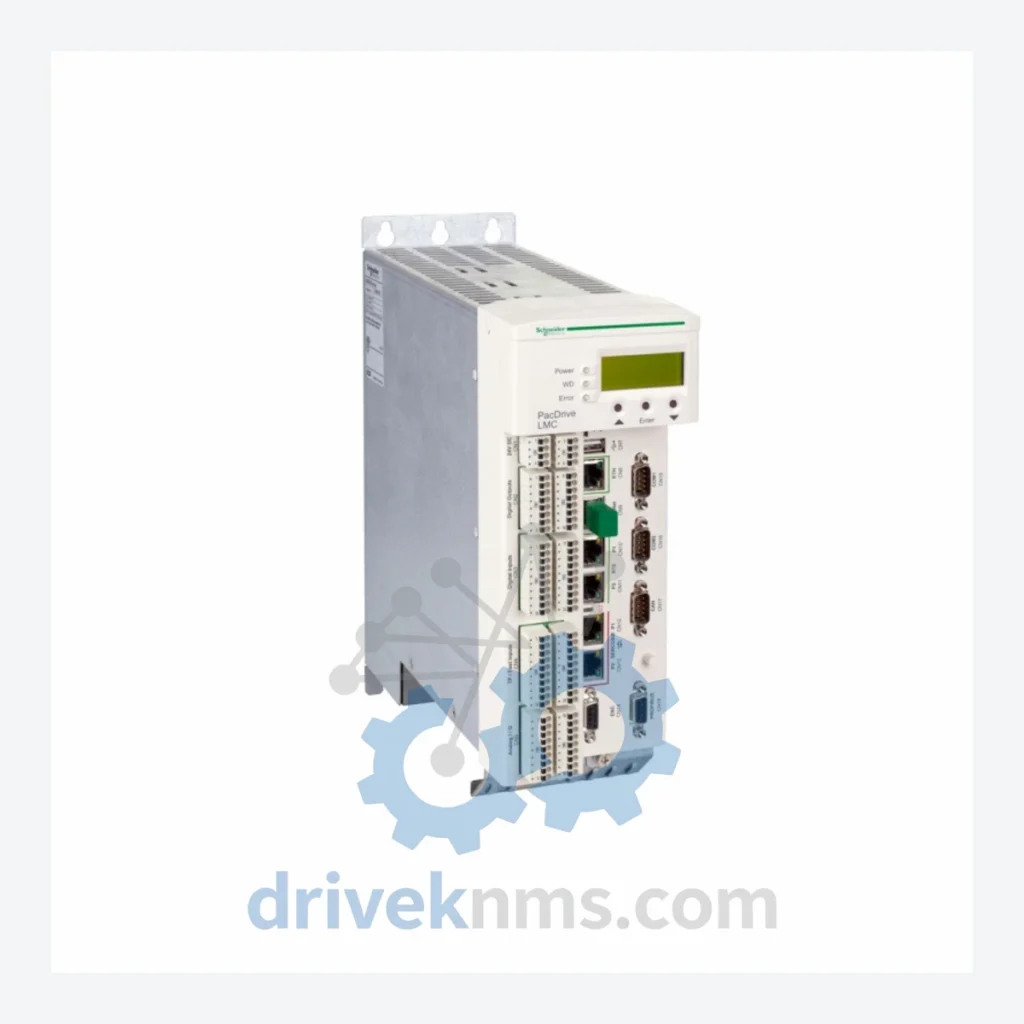
Product Overview
Commercial availability is handled through direct RFQ, model verification and export-oriented follow-up rather than public cart checkout.
Datasheet Preview
Use attached product manuals when available. If the manual is not public yet, request the full file directly through RFQ.
Commercial Path
Product pages on DRIVEKNMS are designed to verify model, brand and series first, then move the buyer into one clean quotation path.
Technical Dossier
RFQ support for obsolete parts: Send the model number, required quantity and destination so DriveKNMS can confirm sourcing options before quotation.
| Parameter | Detail |
|---|---|
| Part Number | LMC300CAA10100 |
| Brand | Schneider Electric |
| Series | Lexium Motion Controller (LMC300) |
| Product Type | Multi-Axis Motion Controller |
| Country of Origin | France |
| Discontinuation Status | Obsolete – No longer in production. No OEM replacement announced. |
| Compatible Systems | Schneider Electric Lexium 32, Lexium 62, SoMachine Motion environments; legacy PacDrive-adjacent architectures |
| Communication Interface | CANopen motion bus (confirmed by part suffix); Ethernet port for programming |
| Programming Environment | SoMachine Motion / Machine Expert |
Note: Electrical parameters not independently verified by DriveKNMS. Specifications above are derived from publicly available Schneider Electric documentation. Do not rely solely on this listing for safety-critical installation decisions — always cross-reference with original engineering drawings.
The LMC300CAA10100 sits at the core of coordinated multi-axis motion control in Schneider Electric's Lexium ecosystem. It manages position loop execution, axis synchronization, and real-time trajectory calculation for connected servo drives. In a functioning line, it is invisible. When it fails, every downstream axis stops.
Schneider Electric's Lexium 32 and Lexium 62 servo drive families were widely deployed across packaging, printing, textile, and semiconductor handling equipment throughout the 2000s and 2010s. Many of these installations remain in active production. The control logic, HMI interfaces, and safety interlocks were engineered around the LMC300 platform. Replacing the controller with a current-generation Modicon M262 or similar requires re-engineering the motion program, reconfiguring drive parameters, and in many cases, replacing the HMI and fieldbus infrastructure. That is a capital project, not a maintenance task.
Extending the service life of an LMC300-based system by 5 to 10 years through strategic spare part procurement is, in most cases, the lowest-cost path available to plant management. A single verified spare unit held in the maintenance store eliminates the primary failure mode that would otherwise force an unplanned system retirement. For facilities operating multiple identical lines, a two-unit buffer is a defensible capital allocation against the risk of a multi-week production halt.
The LMC300CAA10100 is not a component that can be improvised around. Its role in the control architecture is fixed. The maintenance strategy is straightforward: hold a verified spare, or accept the risk of an uncontrolled shutdown.
DriveKNMS applies a structured 5-step inspection protocol to all obsolete motion controllers before they are offered for sale. This process is designed specifically for the failure modes common to hardware that has been in storage or field service for extended periods.
Step 1 – Visual and Mechanical Inspection: Full external examination for physical damage, connector pin condition, and PCB contamination. Corroded or bent pins on the CANopen and Ethernet interfaces are a primary failure point on stored LMC300 units and are assessed under magnification.
Step 2 – Electrolytic Capacitor Assessment: Aging electrolytic capacitors are the most common cause of intermittent failure in motion controllers of this generation. The power supply section and any onboard capacitor banks are inspected for bulging, leakage, and ESR deviation where test access permits.
Step 3 – Firmware Version Verification: Where the unit can be powered safely, firmware version is recorded and compared against known compatible versions for the target application environment. Firmware mismatches between the LMC300 and connected Lexium drives are a documented source of commissioning failures.
Step 4 – Functional Power-On Test: The unit is powered and boot sequence is verified. Communication port response is checked where test equipment is available.
Step 5 – Documentation and Traceability: Each unit is assigned an internal inspection record. Condition grade (New, Refurbished-Grade A, or Tested-Used) is declared explicitly in the sales confirmation. No unit is shipped without a declared condition grade.
The LMC300CAA10100 is a direct hardware replacement for the same part number in any existing Lexium motion control installation. It does not require changes to the motion program, axis configuration, or drive parameter sets, provided the firmware version is compatible with the existing system. This is a drop-in replacement in the engineering sense: the mechanical mounting, connector pinout, and communication protocol are identical to the original installed unit.
This matters operationally. A maintenance team can execute the replacement during a planned shutdown window without involving the original machine builder or a Schneider Electric service engineer. There is no requirement to re-commission the servo drives, re-tune position loops, or revalidate safety functions that are external to the controller. The cost of the replacement is the part cost plus internal labor. The cost of the alternative — system migration — is a capital project with a multi-month timeline.
How do I know the unit is genuine and not a counterfeit?
All units sourced by DriveKNMS are inspected for authenticity markers including label format, PCB markings, and component population consistent with genuine Schneider Electric manufacturing. We do not source from unverified secondary markets. Provenance documentation is provided where available.
Continue The Model Path
Move from this exact model into the matching system hub, brand archive, model-family archive or lifecycle sourcing route before sending a final RFQ list.
Related Paths
Schneider Electric SM100-40-080-P0-45-S1-B1 is listed for Lexium Series RFQ review. Confirm quantity, condition and destination before quotation.
Schneider Electric MHDA1008A00 is listed for Lexium Series RFQ review. Confirm quantity, condition and destination before quotation.
Schneider Electric ATV340D11N4 is listed for Electric ATV340 Series RFQ review. Confirm quantity, condition and destination before quotation.