
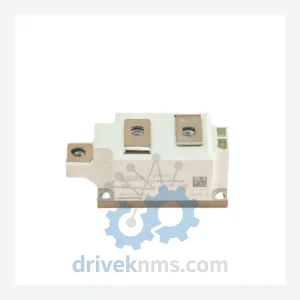
SEMIKRON SKKH330/16 Thyristor Diode Module – SKIIP Series
Semikron SKKH330/16 is listed for SKIIP Series RFQ review. Confirm quantity, condition and destination before quotation.
RFQ-ready industrial model
Model: SKKR300/0.2-BVR
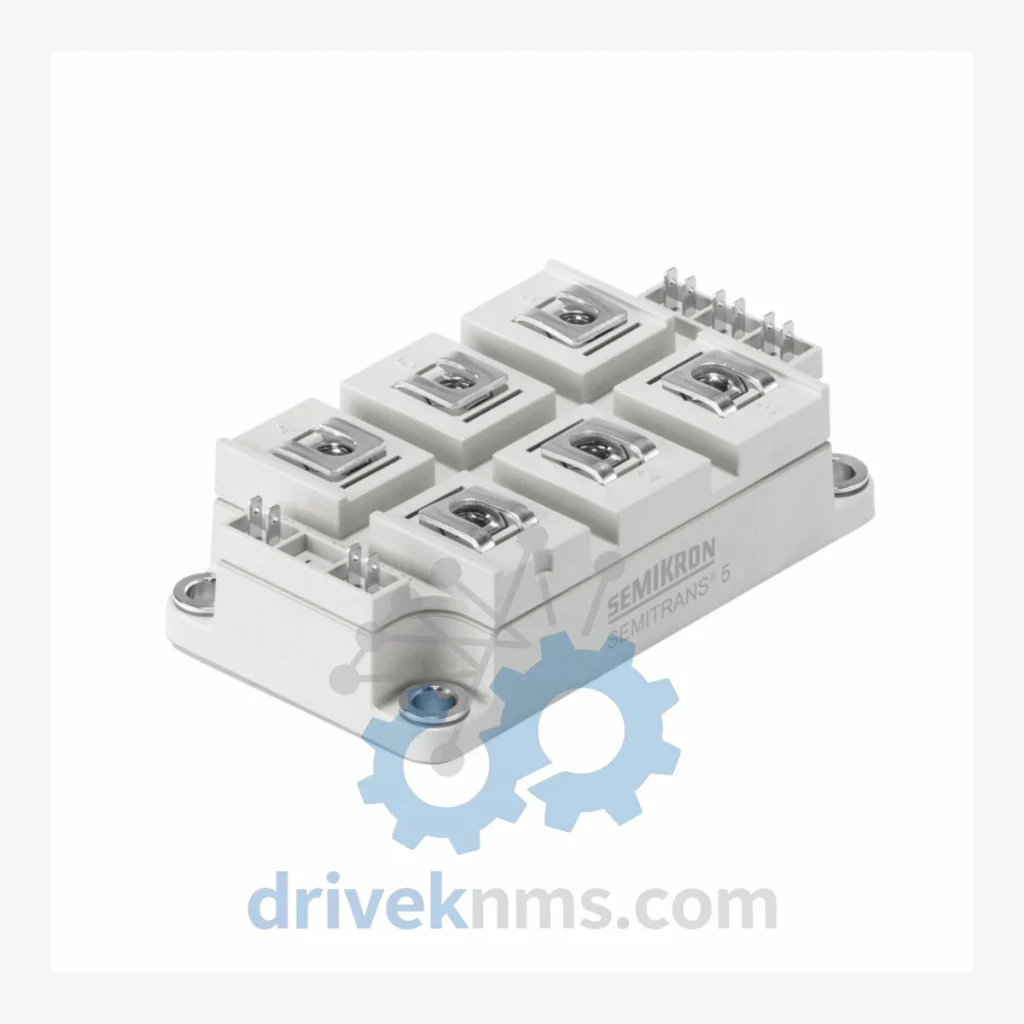
Product Overview
Commercial availability is handled through direct RFQ, model verification and export-oriented follow-up rather than public cart checkout.
Datasheet Preview
Use attached product manuals when available. If the manual is not public yet, request the full file directly through RFQ.
Commercial Path
Product pages on DRIVEKNMS are designed to verify model, brand and series first, then move the buyer into one clean quotation path.
Technical Dossier
RFQ support for obsolete parts: Send the model number, required quantity and destination so DriveKNMS can confirm sourcing options before quotation.
| Parameter | Value |
|---|---|
| Manufacturer | Semikron |
| Part Number | SKKR300/0.2-BVR |
| Series | SKKR |
| Component Type | Three-Phase Thyristor Rectifier Bridge Module |
| Repetitive Peak Reverse Voltage (VRRM) | 200 V |
| Average On-State Current (IT(AV)) | 300 A |
| Configuration | Three-Phase Bridge (B6) |
| Country of Origin | Germany |
| Discontinuation Status | Discontinued / Obsolete – No longer in Semikron active production |
| Typical Legacy System Compatibility | DC motor drive cabinets, industrial rectifier units, legacy variable speed drives using thyristor front-end topology |
The SKKR300/0.2-BVR belongs to Semikron's legacy SKKR rectifier module family, a series that was widely deployed throughout the 1980s and 1990s in industrial DC drive systems, electrochemical process rectifiers, and heavy-duty motor control panels. These systems were engineered for 20–30 year service lives, and many remain in productive operation today — not because replacement is impossible, but because the cost and complexity of replacement is prohibitive.
Against that backdrop, a verified replacement SKKR300/0.2-BVR module extends the operational life of the existing asset at a fraction of the cost. For plant managers operating under capital expenditure constraints, this is the rational path. The module is a drop-in replacement within the original rectifier assembly — no system redesign required.
Facilities that successfully operate legacy thyristor-based drive systems beyond their nominal design life share a common practice: they treat critical power semiconductors as managed assets, not consumables. The following strategy applies directly to systems using the SKKR300/0.2-BVR and comparable modules:
1. Identify single-point-of-failure components. In a thyristor rectifier cabinet, the bridge module is the highest-stress, highest-consequence component. A single failed thyristor cell in the bridge takes the entire drive offline. Holding one or two verified spare modules eliminates this failure mode entirely.
2. Establish a condition monitoring baseline. Periodic thermal imaging of the module heatsink interface, combined with forward voltage drop measurements across each thyristor cell, provides early warning of degradation before catastrophic failure occurs. This requires no specialized equipment beyond a thermal camera and a multimeter.
3. Address the electrolytic capacitor population in the associated DC bus filter. Capacitor aging is the second most common cause of rectifier system failure after semiconductor degradation. A scheduled capacitor replacement program — typically every 8–12 years depending on operating temperature — removes the most common secondary failure mode.
4. Maintain gate drive circuit integrity. The thyristor firing circuit is sensitive to component drift over time. Periodic verification of gate pulse timing and amplitude against original commissioning records identifies drift before it causes misfiring or asymmetric conduction.
DriveKNMS applies a structured 5-step qualification process to all obsolete power semiconductor modules prior to dispatch:
Step 1 – Visual and mechanical inspection. Each unit is examined for case cracking, terminal corrosion, pin oxidation, and evidence of prior thermal stress. Units with physical damage are rejected at this stage.
Step 2 – Electrolytic capacitor assessment. Where internal capacitors are present in the assembly, capacitance and ESR are measured and compared against datasheet limits. Aged capacitors are flagged and, where applicable, replaced.
Step 3 – Firmware and marking verification. Date codes, lot markings, and any embedded firmware identifiers are cross-referenced against known authentic production records to screen for counterfeit or remarked components.
Step 4 – Electrical parameter verification. Forward voltage drop, blocking voltage integrity, and gate trigger characteristics are tested against published Semikron datasheet parameters.
Step 5 – Pin and terminal integrity check. All connection terminals are inspected for corrosion, mechanical deformation, and contact resistance. Terminals are cleaned and treated where required prior to packaging.
Q: Should I purchase more than one unit?
A: For any system where this module is a single point of failure, holding a minimum of one additional spare is standard practice. Given the discontinued status and finite global availability, procurement of two to three units is a defensible asset protection strategy for facilities planning 5–10 year continued operation.
Q: Can this module be used in a different rectifier configuration than the original?
A: The SKKR300/0.2-BVR is designed for three-phase bridge rectifier service. Application outside the original design envelope requires engineering review and is outside the scope of DriveKNMS's supply responsibility.
Continue The Model Path
Move from this exact model into the matching system hub, brand archive, model-family archive or lifecycle sourcing route before sending a final RFQ list.
Related Paths
Semikron SKKH330/16 is listed for SKIIP Series RFQ review. Confirm quantity, condition and destination before quotation.
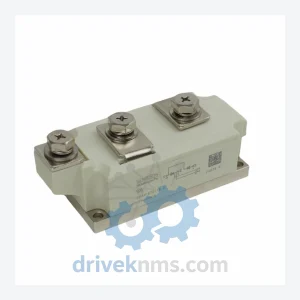
Semikron SKKH570/16E is listed for SKKH Series RFQ review. Confirm quantity, condition and destination before quotation.
Semikron SEMIX353GB126V1 is listed for SEMIX Series RFQ review. Confirm quantity, condition and destination before quotation.