
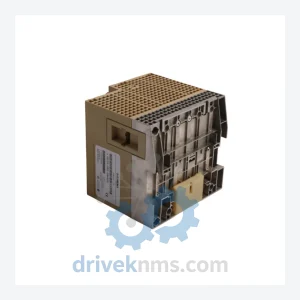
Siemens SIMATIC S5 Modules: 6ES5095-8MA05
Siemens 6ES5095-8MA05 is listed for S5 RFQ review. Confirm quantity, condition and destination before quotation.
RFQ-ready industrial model
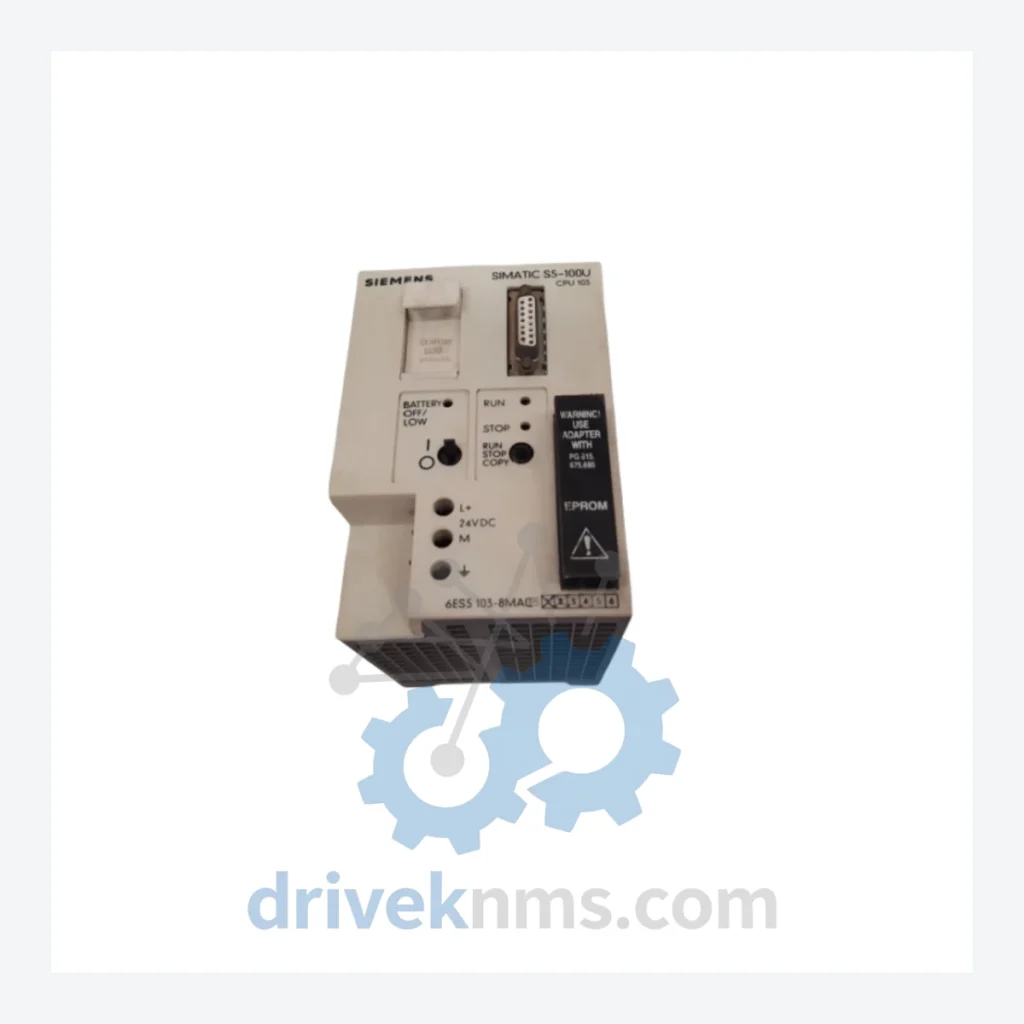
Model: 6ES5103-8MA03
Product Overview
Commercial availability is handled through direct RFQ, model verification and export-oriented follow-up rather than public cart checkout.
Datasheet Preview
Use attached product manuals when available. If the manual is not public yet, request the full file directly through RFQ.
Commercial Path
Product pages on DRIVEKNMS are designed to verify model, brand and series first, then move the buyer into one clean quotation path.
Technical Dossier
The Siemens SIMATIC S5 programmable logic controller (PLC) series represents one of the most widely deployed automation platforms in global heavy industry. Installed across petrochemical refineries, nuclear power stations, chemical processing plants, steel mills, and offshore platforms from the 1980s through the early 2000s, the S5 architecture established the baseline for industrial automation reliability in continuous-process environments. Facilities operating under IEC 61511 (functional safety) and ISO 55000 (asset management) frameworks continue to maintain S5-based control systems as the cost and risk of full migration to S7 or TIA Portal platforms remains prohibitive. The installed base of SIMATIC S5 hardware globally is estimated in the hundreds of thousands of racks, making spare parts availability a critical operational concern for maintenance engineers worldwide.
The SIMATIC S5 family was introduced by Siemens in the late 1970s and underwent continuous development through four primary hardware generations. The earliest S5-90U and S5-95U compact controllers used proprietary STEP 5 programming and a parallel backplane bus. The mid-generation S5-100U, S5-115U, S5-135U, and S5-155U systems introduced modular rack-based architectures with the S5 bus (also referred to as the P-bus and C-bus), enabling distributed I/O expansion and multi-CPU configurations. The S5-115U platform, which includes the 6ES5103-8MA03 CPU module, became the dominant mid-range controller for process industries due to its balance of processing capacity, memory addressability, and I/O density.
Siemens officially announced end-of-production for the SIMATIC S5 series in 1994, with extended spare parts support running through 2013. As of 2026, all S5 hardware is classified as obsolete (End of Life / EOL). No new production runs are available from Siemens. The migration path recommended by Siemens is to SIMATIC S7-300, S7-400, or S7-1500 via the S5/S7 converter tool and STEP 7 / TIA Portal. However, due to the complexity of STEP 5 ladder logic conversion and the cost of I/O rewiring, a significant portion of the installed base remains on S5 hardware under lifecycle extension programs.
Compatibility note: S5 modules are not electrically or logically interchangeable with S7 hardware. The S5 bus protocol, memory addressing (bit, byte, word, timer, counter), and programming environment (STEP 5 v7.x) are entirely distinct from S7 systems. Cross-generation substitution requires hardware gateways or full system replacement.
The following SKUs represent verified, commonly sourced modules within the SIMATIC S5 ecosystem. Modules are classified by functional category.
CPU / Processor Modules
Digital Input (DI) Modules
Digital Output (DO) Modules
Analog Input / Output (AI/AO) Modules
Communication & Interface Modules
Power Supply Modules
All SIMATIC S5 modules processed by DriveKNMS undergo a structured multi-stage inspection protocol prior to dispatch. The S5 backplane bus architecture requires verification of both the P-bus (peripheral bus, for I/O data) and C-bus (communication bus, for inter-CPU and IM communication) signal integrity, which cannot be assessed through visual inspection alone.
The DriveKNMS S5 test procedure includes: (1) Visual inspection for physical damage, corrosion on edge connectors, and capacitor condition; (2) Power-on functional test using a reference S5-115U rack with known-good CPU and power supply; (3) STEP 5 diagnostic read-out to verify module identification, firmware version, and error register status; (4) I/O channel-level verification for all DI, DO, AI, and AO modules using calibrated signal sources and measurement equipment; (5) Communication module loopback testing for SINEC L1 and IM interface modules; (6) 48-hour burn-in cycle under operational load conditions for CPU and power supply modules. Modules that pass all stages are issued a DriveKNMS test certificate and shipped with anti-static packaging and humidity indicator cards.
Continue The Model Path
Move from this exact model into the matching system hub, brand archive, model-family archive or lifecycle sourcing route before sending a final RFQ list.
Related Paths
Siemens 6ES5095-8MA05 is listed for S5 RFQ review. Confirm quantity, condition and destination before quotation.
Siemens 6ES5526-3LF01 is listed for S5 RFQ review. Confirm quantity, condition and destination before quotation.

Siemens U-55T is listed for PLC Modules RFQ review. Confirm quantity, condition and destination before quotation.