
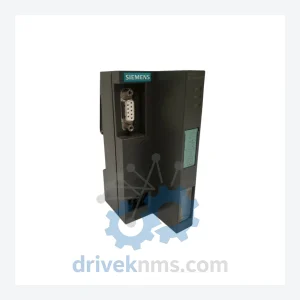
Siemens SIMATIC ET 200S Modules: 6ES7151-1AA03-0AB0
Siemens 6ES7151-1AA03-0AB0 is listed for ET 200S RFQ review. Confirm quantity, condition and destination before quotation.
RFQ-ready industrial model
Model: 6ES7 132-4BD02-0AA0
Product Overview
Commercial availability is handled through direct RFQ, model verification and export-oriented follow-up rather than public cart checkout.
Datasheet Preview
Use attached product manuals when available. If the manual is not public yet, request the full file directly through RFQ.
Commercial Path
Product pages on DRIVEKNMS are designed to verify model, brand and series first, then move the buyer into one clean quotation path.
Technical Dossier
The Siemens ET 200S is a modular distributed I/O system within the SIMATIC family, designed for decentralized automation in process-intensive industries. Deployed across chemical plants, oil refineries, nuclear facilities, and heavy manufacturing lines worldwide, the ET 200S operates as a field-level I/O station communicating via PROFIBUS DP or PROFINET IO. Its slot-based architecture allows engineers to configure mixed I/O assemblies — digital, analog, motor starter, and safety modules — on a single IM 151 interface module, reducing cabinet footprint and wiring complexity. The 6ES7 132-4BD02-0AA0 is a 4-channel 24 VDC digital output module rated at 0.5 A per channel, widely installed in legacy PROFIBUS-based ET 200S stations across process automation segments.
The ET 200S platform was introduced in the late 1990s as a successor to the ET 200B and ET 200U systems, addressing the need for finer I/O granularity at the field level. Early generations used PROFIBUS DP as the sole backplane communication protocol, with interface modules such as the IM 151-1 Standard and IM 151-1 FO (fiber optic). The introduction of the IM 151-3 PN series extended the platform to PROFINET IO, enabling integration with TIA Portal-based S7-300 and S7-1500 controllers without protocol conversion gateways.
The 4xx-series electronic modules (6ES7 131-4xxx for DI, 6ES7 132-4xxx for DO, 6ES7 134-4xxx for AI, 6ES7 135-4xxx for AO) represent the core I/O layer. Terminal modules (TM-E, TM-P) provide the physical backplane connection and allow hot-swap replacement of electronic modules without rewiring. As of 2020, Siemens has positioned the ET 200SP as the strategic successor to ET 200S, offering a smaller form factor and native PROFINET support. However, ET 200S installations remain active in brownfield sites where PROFIBUS infrastructure is retained, and spare part availability is a critical operational requirement for maintenance teams.
Digital Input Modules (DI)
Digital Output Modules (DO)
Analog Input Modules (AI)
Analog Output Modules (AO)
Interface & Power Modules
Siemens has formally announced the phase-out of the ET 200S product line in favor of ET 200SP. Several 6ES7 13x-4xxx modules have reached end-of-sale status, with Siemens no longer accepting new orders through standard distribution channels. For plant operators running PROFIBUS-based ET 200S stations, this creates a direct risk to maintenance continuity.
ET 200S electronic modules communicate with the interface module via a proprietary internal bus operating at 12 Mbit/s. Verification of module functionality requires simulation of this backplane protocol, not merely power-on continuity checks. DriveKNMS employs dedicated ET 200S test rigs comprising a live IM 151 interface module, a PROFIBUS DP master (S7-300 CPU), and STEP 7 diagnostic software to perform full functional validation of each electronic module prior to dispatch.
For digital output modules including the 6ES7 132-4BD02-0AA0, the test procedure covers: channel-level switching under rated load (0.5 A resistive), short-circuit protection response, diagnostic interrupt generation (for diagnostic-capable variants), and backplane communication integrity over a minimum 30-minute soak cycle. Analog modules undergo calibration verification against traceable reference standards. All tested units are issued a DriveKNMS inspection report documenting test date, technician ID, and pass/fail criteria per channel.
Continue The Model Path
Move from this exact model into the matching system hub, brand archive, model-family archive or lifecycle sourcing route before sending a final RFQ list.
Related Paths
Siemens 6ES7151-1AA03-0AB0 is listed for ET 200S RFQ review. Confirm quantity, condition and destination before quotation.
Siemens 330104-08-15-10-02-CN is listed for ET 200S RFQ review. Confirm quantity, condition and destination before quotation.
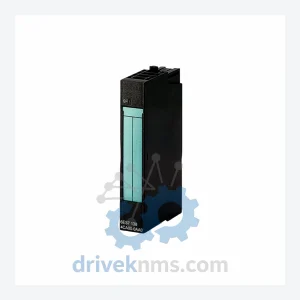
Siemens 6ES7135-4GB52-0AB0 is listed for ET 200S RFQ review. Confirm quantity, condition and destination before quotation.