Technical Dossier
Product Details And Specifications
Siemens SIMATIC S7-300 Series Technical Notes
The Siemens SIMATIC S7-300 is one of the most widely deployed programmable logic controller (PLC) platforms in global heavy industry. Installed across petrochemical refineries, nuclear power auxiliary systems, offshore platforms, steel mills, and pharmaceutical batch processing facilities, the S7-300 family has accumulated decades of field-proven reliability since its commercial introduction in the early 1990s. Its modular rack architecture, deterministic PROFIBUS-DP communication, and broad I/O density made it the reference standard for mid-range process automation throughout the 1990s and 2000s. As of 2026, the S7-300 series is in its end-of-life and discontinuation phase, with Siemens having formally announced migration paths toward the SIMATIC S7-1500 platform. This lifecycle status makes reliable sourcing of spare and replacement modules — including backup batteries such as the 6ES7 971-0BA00 — a critical operational requirement for facilities maintaining legacy installations.
The Evolution of SIMATIC S7-300 Architecture
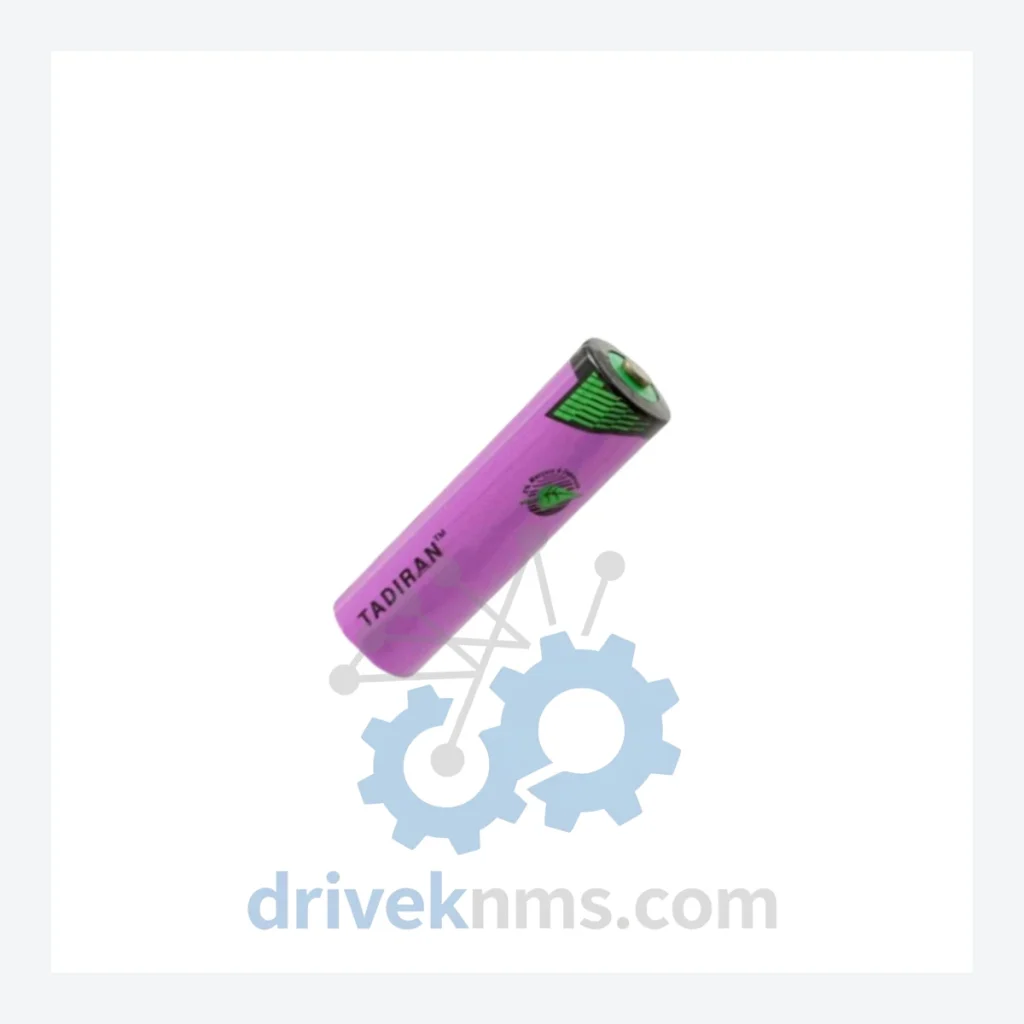
The S7-300 platform was architected around a passive backplane bus (the S7-300 bus connector system), with modules physically connected via bus connectors rather than a shared active backplane. This design allowed incremental rack expansion without powered backplane infrastructure, reducing failure points in harsh environments. Early CPU generations (CPU 312, CPU 314) relied on external EPROM memory cards and internal RAM backed by lithium batteries for retentive data and program storage. The 6ES7 971-0BA00 backup battery (3.6 V lithium, Tadiran TL-5902 equivalent) was introduced to maintain RAM content and real-time clock data during power interruptions across the CPU 31x family.
Subsequent CPU generations (CPU 315-2 DP, CPU 317-2 PN/DP, CPU 319-3 PN/DP) retained the same battery form factor while expanding onboard SRAM capacity and integrating PROFINET interfaces. The introduction of SIMATIC Micro Memory Cards (MMC) in later S7-300 revisions shifted program storage from battery-backed RAM to flash-based MMC, reducing battery dependency for program retention — but retentive data areas (DB, M, T, C) and the hardware clock continued to require battery backup. The battery specification remained consistent across the entire CPU 31x range, ensuring backward compatibility of the 6ES7 971-0BA00 across all S7-300 CPU variants.
SIMATIC S7-300 Full Catalog & Functionalities (SKU List)
Backup Batteries
- 6ES7 971-0BA00: 3.6 V lithium backup battery for S7-300 CPU 31x series; maintains retentive RAM and RTC during power loss.
- 6ES7 971-1AA00-0AA0: Rechargeable backup battery module for CPU 31xC compact controllers with integrated charging circuit.
Central Processing Units (CPU)
- 6ES7 315-2AH14-0AB0: CPU 315-2 DP; 256 KB work memory, PROFIBUS-DP master/slave interface, standard mid-range controller.
- 6ES7 317-2AK14-0AB0: CPU 317-2 DP; 1 MB work memory, dual PROFIBUS-DP, high I/O count applications.
- 6ES7 317-2EK14-0AB0: CPU 317-2 PN/DP; 1 MB work memory, integrated PROFINET IO controller and PROFIBUS-DP.
- 6ES7 319-3BL00-0AB0: CPU 319-3 PN/DP; 2 MB work memory, three communication interfaces, top-tier S7-300 CPU.
- 6ES7 312-1AE14-0AB0: CPU 312; 64 KB work memory, entry-level S7-300 CPU for small standalone applications.
- 6ES7 314-1AG14-0AB0: CPU 314; 192 KB work memory, general-purpose mid-range CPU without integrated DP.
Digital Input/Output Modules (DI/DO)
- 6ES7 321-1BH02-0AA0: SM 321 DI 16×DC 24V; 16-channel 24 VDC digital input module.
- 6ES7 322-1BH01-0AA0: SM 322 DO 16×DC 24V/0.5A; 16-channel 24 VDC transistor output module.
- 6ES7 321-1FF01-0AA0: SM 321 DI 8×AC 120/230V; 8-channel AC input module for high-voltage field signals.
- 6ES7 322-1HF01-0AA0: SM 322 DO 8×AC 120/230V/2A; 8-channel relay output module for AC loads.
Analog Input/Output Modules (AI/AO)
- 6ES7 331-7KF02-0AB0: SM 331 AI 8×13Bit; 8-channel analog input, configurable for current/voltage/RTD/TC.
- 6ES7 332-5HB01-0AB0: SM 332 AO 4×12Bit; 4-channel analog output, ±10 V / 0–20 mA configurable.
- 6ES7 334-0CE01-0AA0: SM 334 AI 4/AO 2×8/8Bit; combined 4-input / 2-output analog module for compact installations.
Communication & Interface Modules
- 6ES7 340-1AH02-0AE0: CP 340 RS-232C; serial communication processor for point-to-point ASCII/3964R protocols.
- 6ES7 341-1CH02-0AE0: CP 341 RS-422/485; serial CP for MODBUS RTU and USS protocol integration.
- 6GK7 343-1EX30-0XE0: CP 343-1; Industrial Ethernet communication processor, TCP/IP and ISO-on-TCP.
Power Supply Modules (PS)
- 6ES7 307-1BA01-0AA0: PS 307 2A; 24 VDC / 2 A regulated power supply for S7-300 rack.
- 6ES7 307-1EA01-0AA0: PS 307 5A; 24 VDC / 5 A regulated power supply for larger rack configurations.
Quality Control for the SIMATIC S7-300 Range
Each 6ES7 971-0BA00 backup battery unit is tested for open-circuit voltage (minimum 3.55 V), internal resistance, and residual capacity estimation prior to dispatch. CPU modules undergo functional verification on a dedicated S7-300 test rack running STEP 7 v5.7, including RAM retention test cycles, PROFIBUS-DP communication handshake verification, and diagnostic buffer integrity checks. Digital and analog I/O modules are tested against channel-by-channel signal injection using calibrated sources traceable to national standards. Communication processors are validated for protocol stack integrity under simulated network load. All modules are repackaged in ESD-compliant packaging with individual test records.