
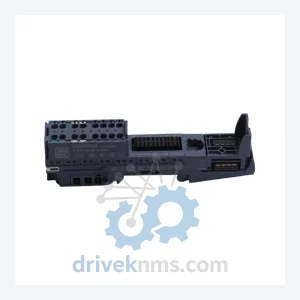
SIEMENS 6ES7193-6BP20-0BB0 Terminal Module – ET 200SP
Siemens 6ES7193-6BP20-0BB0 is listed for ET 200SP RFQ review. Confirm quantity, condition and destination before quotation.
RFQ-ready industrial model
Model: 6ES7137-6EA00-0BA0
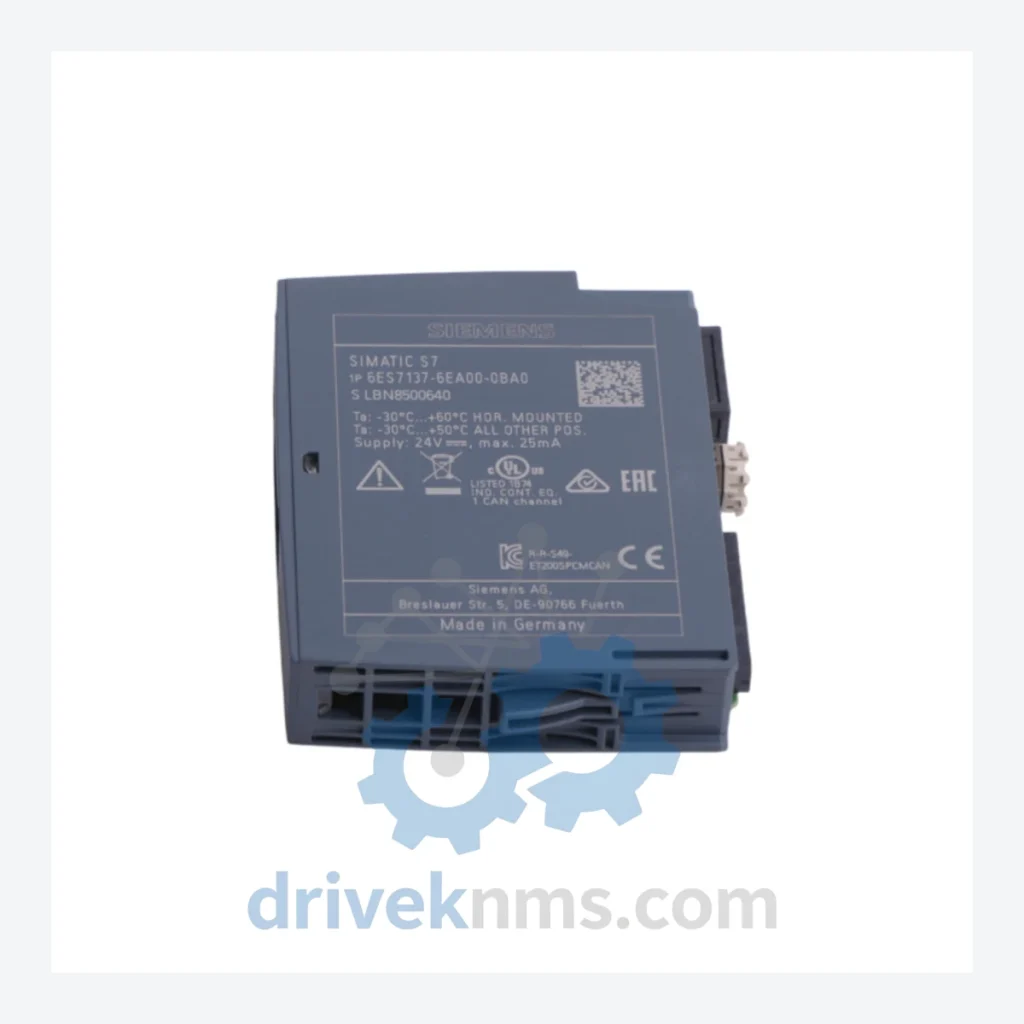
Product Overview
Commercial availability is handled through direct RFQ, model verification and export-oriented follow-up rather than public cart checkout.
Datasheet Preview
Use attached product manuals when available. If the manual is not public yet, request the full file directly through RFQ.
Commercial Path
Product pages on DRIVEKNMS are designed to verify model, brand and series first, then move the buyer into one clean quotation path.
Technical Dossier
The Siemens ET 200SP (SIMATIC ET 200SP) is a modular, scalable distributed I/O system designed for integration with SIMATIC S7-1500 and S7-1200 controllers via PROFINET or PROFIBUS. Since its introduction, the ET 200SP has established a dominant installed base across global heavy industry sectors including petrochemical refineries, nuclear power auxiliary systems, offshore platforms, and large-scale chemical processing plants. Its compact backplane design — with a base unit/module separation architecture — allows high-density I/O configurations in space-constrained control cabinets. The system supports up to 64 modules per station and is rated for operation in ambient temperatures from -30°C to +70°C depending on module variant, making it suitable for harsh industrial environments. The ET 200SP has progressively replaced the ET 200S in new installations and remains the current-generation standard for SIMATIC distributed I/O.
The ET 200SP was formally introduced by Siemens in 2013 as the successor to the ET 200S platform. The architectural shift addressed three primary limitations of the ET 200S: module width (ET 200SP base units are narrower), wiring effort (push-in terminal technology replaced screw terminals as standard), and system integration depth with TIA Portal engineering software.
Generation 1 (2013–2016): Initial release focused on standard digital and analog I/O modules with PROFINET interface modules (IM 155-6 PN). Firmware versions were limited in isochronous mode support.
Generation 2 (2016–2019): Introduction of high-feature (HF) module variants with extended diagnostics, motor starter modules (MSS), and the first communication modules including IO-Link master and AS-i modules. The 6ES7137-6EA00-0BA0 (IO-Link Master CM 4xIO-Link) was introduced in this phase.
Generation 3 (2019–present): Expansion into fail-safe (F) modules, OPC UA communication modules, HART analog modules, and energy measurement modules. TIA Portal V16+ introduced advanced module parameterization. Compatibility between generations is maintained at the backplane level, though firmware alignment is required for mixed configurations.
Legacy ET 200S modules (6ES7131-4xxx, 6ES7132-4xxx series) are not physically or electrically compatible with ET 200SP base units. Migration requires full module replacement but retains PROFINET topology.
Interface Modules (IM)
Communication Modules (CM)
Digital Input Modules (DI)
Digital Output Modules (DO)
Analog Input Modules (AI)
Analog Output Modules (AO)
Power / Server Modules
While the ET 200SP remains an active product line, early-generation modules — particularly first-release interface modules and initial CM variants — have transitioned to RFQ availability review status as Siemens consolidates firmware versions and hardware revisions. The 6ES7137-6EA00-0BA0 (hardware revision BA0) represents an earlier revision of the IO-Link master; current production ships as revision BA1 or later, which may introduce minor parameterization differences in TIA Portal.
ET 200SP modules present specific test requirements due to their integrated backplane bus communication (PROFINET/PROFIBUS at the IM level, internal backplane bus at 48 Mbit/s between modules) and the base unit/module interdependency. DriveKNMS applies the following test protocol to all ET 200SP inventory:
Continue The Model Path
Move from this exact model into the matching system hub, brand archive, model-family archive or lifecycle sourcing route before sending a final RFQ list.
Related Paths
Siemens 6ES7193-6BP20-0BB0 is listed for ET 200SP RFQ review. Confirm quantity, condition and destination before quotation.
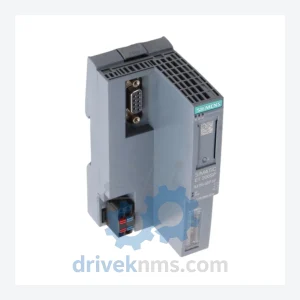
Siemens 6ES7155-6BU00-0CN0 is listed for ET 200SP RFQ review. Confirm quantity, condition and destination before quotation.
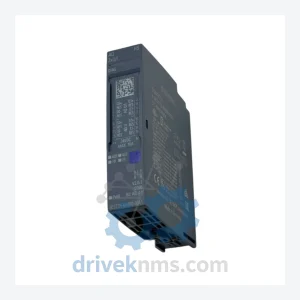
Siemens 6ES7135-6HB00-0DA1 is listed for ET 200SP RFQ review. Confirm quantity, condition and destination before quotation.