Technical Dossier
Product Details And Specifications
Siemens S7-300 SM 321 Series Technical Notes
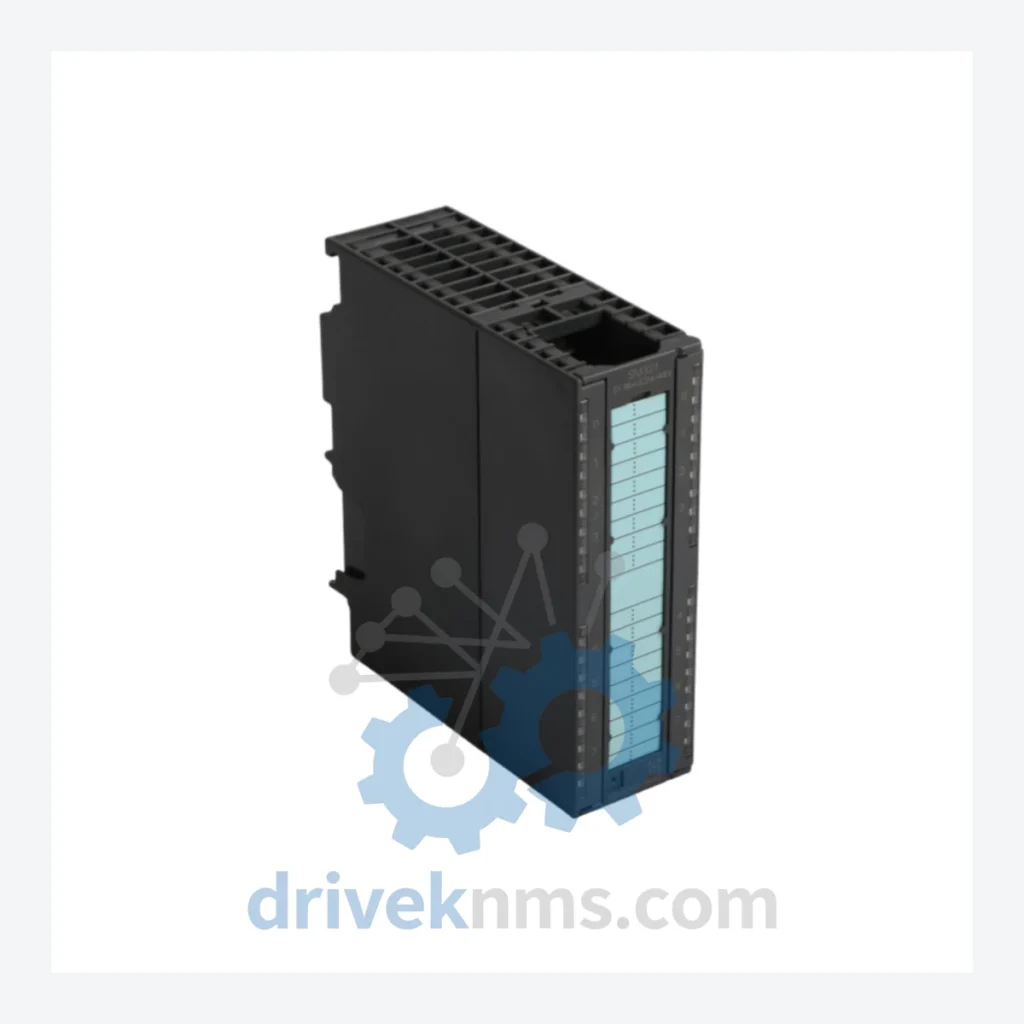
The Siemens SIMATIC S7-300 Signal Module 321 (SM 321) family represents one of the most widely deployed digital input module series in global heavy industry. Installed across petrochemical complexes, nuclear power auxiliary systems, offshore oil platforms, and continuous-process refineries, the SM 321 series has served as the primary discrete input interface layer for S7-300 PLCs since the mid-1990s. Its modular backplane architecture, deterministic scan cycle behavior, and compatibility with the S7-300 rack system (up to 8 signal modules per rack, expandable via IM 360/361 interface modules) made it the default specification for process engineers requiring IEC 61131-3 compliant I/O in safety-adjacent applications. The 6ES7321-1CH00-0AA0 specifically provides 16 digital inputs at 24 VDC, organized in two groups of 8, with optical isolation between field and backplane bus — a configuration that became a standard BOM line item in distributed control architectures across Asia-Pacific, Europe, and the Middle East.
The Evolution of SM 321 Architecture
The SM 321 series was introduced alongside the S7-300 platform in 1994 as a successor to the SIMATIC S5 digital input modules (e.g., 6ES5 430-series). Early variants such as the 6ES7321-1BH00-0AA0 (16DI, 24VDC) and 6ES7321-1BH01-0AA0 established the foundational electrical interface: 24 VDC nominal input voltage, IEC Type 1/Type 2 input characteristics, and passive backplane bus communication via the S7-300 P-bus. Subsequent revisions introduced higher channel density (32DI), AC input compatibility (120/230 VAC), and diagnostic interrupt capability. The introduction of the 6ES7321-7BH01-0AB0 with diagnostic interrupt support marked a shift toward condition-monitoring-aware I/O, enabling the CPU to receive hardware interrupts on wire-break or short-circuit faults without polling. Compatibility across generations is maintained at the rack and backplane level; however, firmware-dependent features (diagnostic interrupts, process interrupts) require CPU firmware ≥ V2.0 and corresponding STEP 7 hardware configuration updates. As the S7-300 platform entered its end-of-sale phase (Siemens announced discontinuation effective October 2023), the SM 321 series transitioned fully into the lifecycle maintenance and spare parts phase. Migration paths lead to the ET 200SP and S7-1500 platforms, but installed base replacement cycles in heavy industry typically span 15–25 years, sustaining demand for original SM 321 modules well into the 2030s.
SM 321 Full Catalog & Functionalities (SKU List)
Digital Input Modules — 24 VDC
- 6ES7321-1CH00-0AA0: 16DI, 24VDC, 2-wire sensor compatible, no diagnostic interrupt
- 6ES7321-1BH00-0AA0: 16DI, 24VDC, standard input, no diagnostic interrupt, legacy revision
- 6ES7321-1BH01-0AA0: 16DI, 24VDC, revised input filter timing, hardware revision B01
- 6ES7321-1BH02-0AA0: 16DI, 24VDC, current hardware revision, replaces BH00/BH01
- 6ES7321-1BH50-0AA0: 16DI, 24VDC, SIPLUS extended temperature range (-25°C to +60°C)
- 6ES7321-1EL00-0AA0: 32DI, 24VDC, high-density input, 40-pin front connector
- 6ES7321-1FF01-0AA0: 8DI, 24VDC, fast input response ≤0.1ms, interrupt-capable
- 6ES7321-1FF10-0AA0: 8DI, 24VDC, fast input, hardware revision 10
- 6ES7321-7BH01-0AB0: 16DI, 24VDC, diagnostic interrupt, wire-break detection
- 6ES7321-7RD00-0AB0: 8DI, 24VDC, redundant input module for fault-tolerant S7-300H systems
Digital Input Modules — AC Input (120/230 VAC)
- 6ES7321-1FH00-0AA0: 16DI, 120/230 VAC, optically isolated, standard AC input
- 6ES7321-1FH00-0AA0: 16DI, 120 VAC, single-ended, for legacy AC field devices
- 6ES7321-1CH20-0AA0: 16DI, 48VDC/AC, mixed voltage input, industrial field compatibility
High-Density & Special Function Modules
- 6ES7321-1BL00-0AA0: 32DI, 24VDC, standard density, 40-pin connector, no diagnostics
- 6ES7321-1BL80-0AA0: 32DI, 24VDC, SIPLUS conformal coating, marine/offshore rated
- 6ES7321-1CH10-0AA0: 16DI, 24VDC, hardware revision CH10, direct replacement for CH00
Quality Control for the SM 321 Range
Each SM 321 module processed by DriveKNMS undergoes a structured verification protocol before dispatch. Backplane bus connector integrity is inspected under magnification for pin deformation, oxidation, and mechanical wear — the P-bus edge connector on S7-300 modules is a known failure point in high-vibration environments. Functional testing is performed in a live S7-300 rack with a compatible CPU (315-2DP or 317-2DP) running a dedicated diagnostic routine that exercises all input channels individually, verifies optical isolation integrity, and confirms correct module identification via the backplane ID register. For modules with diagnostic interrupt capability (e.g., 6ES7321-7BH01-0AB0), interrupt response is validated against the CPU's OB40 interrupt handler. Input filter timing is verified against the module's published specification (standard: 3ms nominal). All tested modules are labeled with test date, technician ID, and firmware/hardware revision, and shipped with a DriveKNMS test certificate.