
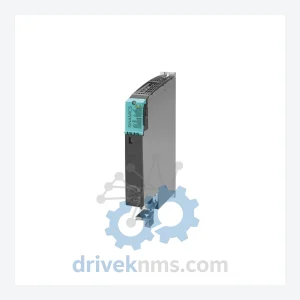
Siemens SINAMICS S120 Modules: 6SL3120-1TE21-8AD0 Single Motor Module
Siemens 6SL3120-1TE21-8AD0 is listed for SINAMICS RFQ review. Confirm quantity, condition and destination before quotation.
RFQ-ready industrial model
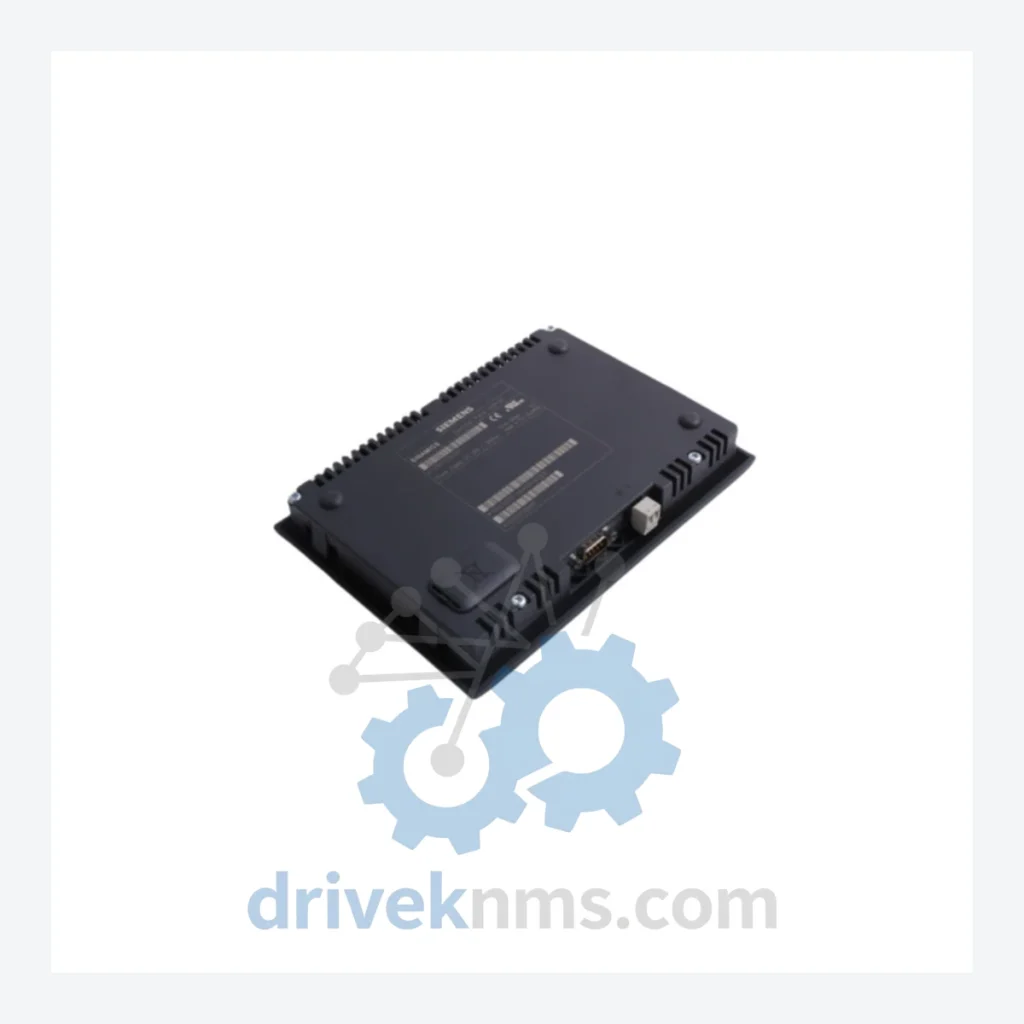
Model: 6SL3055-0AA00-4CA4
Product Overview
Commercial availability is handled through direct RFQ, model verification and export-oriented follow-up rather than public cart checkout.
Datasheet Preview
Use attached product manuals when available. If the manual is not public yet, request the full file directly through RFQ.
Commercial Path
Product pages on DRIVEKNMS are designed to verify model, brand and series first, then move the buyer into one clean quotation path.
Technical Dossier
The Siemens SINAMICS S120 drive system is one of the most widely deployed modular servo and vector drive platforms in global heavy industry. Installed across petrochemical complexes, nuclear power auxiliary systems, offshore platforms, steel rolling mills, and large-scale water treatment facilities, the S120 architecture provides a unified DC bus topology that allows multiple axes to share energy, reducing overall power consumption and cabinet footprint. Its modular design — separating the Control Unit (CU), Line Module (ALM/BLM/SLM), Motor Module (MM), and supplementary function modules — enables precise configuration for applications ranging from single-axis positioning to multi-axis coordinated motion with up to 6 drives on a single CU320-2.
The 6SL3055-0AA00-4CA4 is a SINAMICS S120 operator panel front (OPF) interface adapter, used to connect the BOP20 Basic Operator Panel or AOP30 Advanced Operator Panel to the Control Unit via the drive's front interface slot. It is a passive mechanical and electrical adapter component that enables local parameter access, fault diagnostics, and commissioning without a PC-based STARTER or TIA Portal connection.
The SINAMICS S120 platform was introduced by Siemens in the early 2000s as the successor to the SIMOVERT MASTERDRIVES MC (Motion Control) and SIMOVERT MASTERDRIVES VC (Vector Control) families. The transition represented a fundamental shift from standalone drive units to a fully integrated, bus-coupled modular system.
Generation 1 (2003–2008): Initial S120 releases used the CU320 Control Unit with DRIVE-CLiQ as the internal communication backbone — a proprietary serial protocol that replaced traditional resolver and encoder wiring with a single standardized cable carrying power, data, and ID chip information. Early firmware versions (below V2.x) had limited Safety Integrated functionality.
Generation 2 (2008–2015): The CU320-2 DP and CU320-2 PN replaced the original CU320, adding dual PROFIBUS / PROFINET interfaces, expanded Safety Integrated Level 2 (SIL2/PLe) functions, and support for the CBE20 Communication Board for additional Ethernet protocols. The S120 Combi (booksize compact) variant was introduced for space-constrained OEM applications.
Generation 3 (2015–present): Firmware V5.x and above introduced Advanced Positioning Control (APC), integrated vibration suppression, and compatibility with TIA Portal V14+. The CU310-2 single-axis variant expanded the S120 ecosystem into standalone axis applications. Legacy CU320 (first generation) units are now discontinued; Siemens recommends migration to CU320-2 with a firmware and parameter migration tool.
Compatibility note: DRIVE-CLiQ components from Generation 1 are electrically compatible with Generation 3 hardware but may require firmware alignment. Mixed-generation systems require careful version matrix verification before commissioning.
Control Units
Line Modules (Infeed)
Motor Modules (Axis Modules)
Operator Panels & Interface Adapters
Communication & Supplementary Modules
SINAMICS S120 modules present specific test challenges due to their DRIVE-CLiQ bus architecture and shared DC bus topology. Standard bench power-up is insufficient to validate module health. DriveKNMS applies the following test protocol to all S120 units:
Continue The Model Path
Move from this exact model into the matching system hub, brand archive, model-family archive or lifecycle sourcing route before sending a final RFQ list.
Related Paths
Siemens 6SL3120-1TE21-8AD0 is listed for SINAMICS RFQ review. Confirm quantity, condition and destination before quotation.
Siemens A5E36524726 is listed for SINAMICS RFQ review. Confirm quantity, condition and destination before quotation.
Siemens 6SL3210-1NE31-1UL0 is listed for SINAMICS RFQ review. Confirm quantity, condition and destination before quotation.