
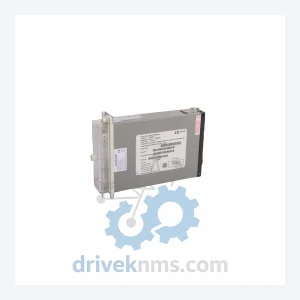
ALSTOM MVAJ105RA0802A Protection Relay – MiCOM Series
Alstom MVAJ105RA0802A is listed for MiCOM Series RFQ review. Confirm quantity, condition and destination before quotation.
RFQ-ready industrial model
Model: 80-224900-90
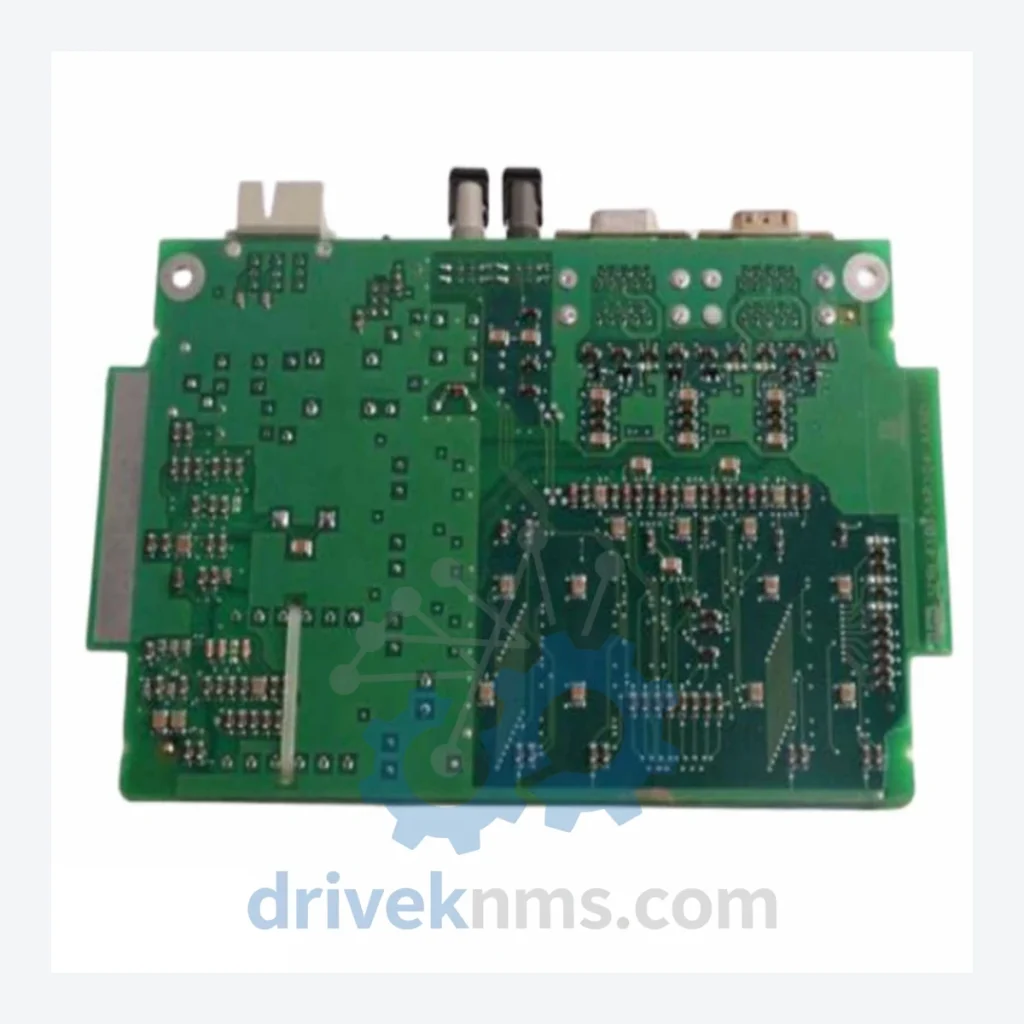
Product Overview
Commercial availability is handled through direct RFQ, model verification and export-oriented follow-up rather than public cart checkout.
Datasheet Preview
Use attached product manuals when available. If the manual is not public yet, request the full file directly through RFQ.
Commercial Path
Product pages on DRIVEKNMS are designed to verify model, brand and series first, then move the buyer into one clean quotation path.
Technical Dossier
When a Solidstate Controls (SSC) power supply module fails inside a critical-power or uninterruptible power supply (UPS) system, the downstream consequences are rarely limited to a single board replacement. SSC's legacy control architecture — deployed extensively across nuclear facilities, utilities, and heavy industrial plants — was engineered as a tightly integrated platform. Replacing one discontinued module with a modern equivalent frequently triggers a cascade of engineering reviews, firmware re-qualification, and in regulated environments, full safety re-certification. Conservative estimates place the total cost of a forced platform migration in the range of several hundred thousand to several million USD, depending on system complexity and regulatory jurisdiction.
The 80-224900-90 is one of the boards that sits at the center of that risk. DriveKNMS maintains RFQ-reviewed sourcing status of this module. Securing a tested spare today is the lowest-cost insurance policy available against an unplanned outage that forces your hand on a capital project your budget was not built to absorb.
RFQ support for obsolete parts: Send the model number, required quantity and destination so DriveKNMS can confirm sourcing options before quotation.
| Attribute | Detail |
|---|---|
| Manufacturer | Solidstate Controls (SSC) |
| Part Number | 80-224900-90 |
| Module Category | Power Supply / PLC Control Module |
| Country of Origin | United States |
| Discontinuation Status | Obsolete – no longer manufactured or supported by OEM |
| Electrical Parameters | Consult original SSC factory documentation or contact DriveKNMS for verified datasheet reference. Parameters are not published here to prevent misapplication in safety-critical installations. |
| Compatibility | Solidstate Controls legacy UPS and critical-power control platforms. Verify against your system's bill of materials before ordering. |
Solidstate Controls built its control and power-conditioning platforms for longevity. Many installations commissioned in the 1980s and 1990s remain in active service today — not because operators have avoided modernization, but because the cost and risk of replacing a functioning, certified system outweigh the theoretical benefits of newer technology. The 80-224900-90 module occupies a defined slot in that architecture. It is not a commodity component that can be substituted with a generic equivalent without engineering validation.
Facilities that have already secured verified spare units of the 80-224900-90 have, in practical terms, purchased 5 to 10 additional years of operational life for their existing platform. That is not a theoretical projection. It is the direct result of eliminating the single-point-of-failure that an unspared obsolete module represents. For plant managers operating under capital expenditure freezes or multi-year modernization roadmaps, a stocked spare is the mechanism that keeps the existing asset productive until the planned transition date — on your schedule, not the schedule imposed by an unplanned failure.
DriveKNMS applies a structured 5-step qualification process to every obsolete module before it is offered for sale. This process is designed specifically for the failure modes that accumulate in boards that have been in storage or service for extended periods.
Step 1 – Electrolytic Capacitor Assessment: Capacitor aging is the primary failure mechanism in legacy power supply boards. Each unit is inspected for capacitor bulging, electrolyte leakage, and ESR drift. Boards with degraded capacitors are either recapped with specification-matched components or removed from inventory.
Step 2 – Firmware Version Verification: Where applicable, firmware or EPROM versions are documented and cross-referenced against known-compatible revisions for the target system. Mismatched firmware versions are a common source of integration failures that are misdiagnosed as hardware faults.
Step 3 – Pin and Connector Inspection: All edge connectors and pin headers are examined under magnification for oxidation, corrosion, and mechanical deformation. Affected contacts are cleaned or the unit is rejected.
Step 4 – Functional Bench Test: Units are powered and tested against baseline operational parameters using period-appropriate test equipment where available.
Step 5 – Packaging and ESD Protection: Qualified units are sealed in anti-static packaging with desiccant and labeled with inspection date and technician ID for full traceability.
The 80-224900-90 is a direct form-fit-function replacement for the original SSC module. Installation does not require reprogramming of the host system, modification of existing wiring, or changes to system configuration files. This drop-in compatibility is the defining operational advantage of sourcing the correct obsolete part rather than pursuing a cross-reference to a modern substitute.
Avoiding engineering substitution eliminates the associated costs: no re-qualification testing, no updated as-built documentation, no change-control submissions in regulated facilities. The maintenance technician installs the board, the system resumes operation, and the capital budget remains intact. For facilities operating under ISO 55000 asset management frameworks or equivalent internal standards, this approach directly supports the objective of maximizing asset utilization at minimum lifecycle cost.
Long-term spare holding is a recognized strategy in industrial asset management. Purchasing two or three units of a confirmed-obsolete module — rather than a single replacement — provides a buffer against secondary failures and eliminates repeat sourcing risk as the available supply continues to contract.
Continue The Model Path
Move from this exact model into the matching system hub, brand archive, model-family archive or lifecycle sourcing route before sending a final RFQ list.
Related Paths
Alstom MVAJ105RA0802A is listed for MiCOM Series RFQ review. Confirm quantity, condition and destination before quotation.
Moore 16137-174 is listed for Servo Drives RFQ review. Confirm quantity, condition and destination before quotation.
Fuji Electric EP-3364B-CA-Z2 is listed for FRENIC Series RFQ review. Confirm quantity, condition and destination before quotation.