Technical Dossier
Product Details And Specifications
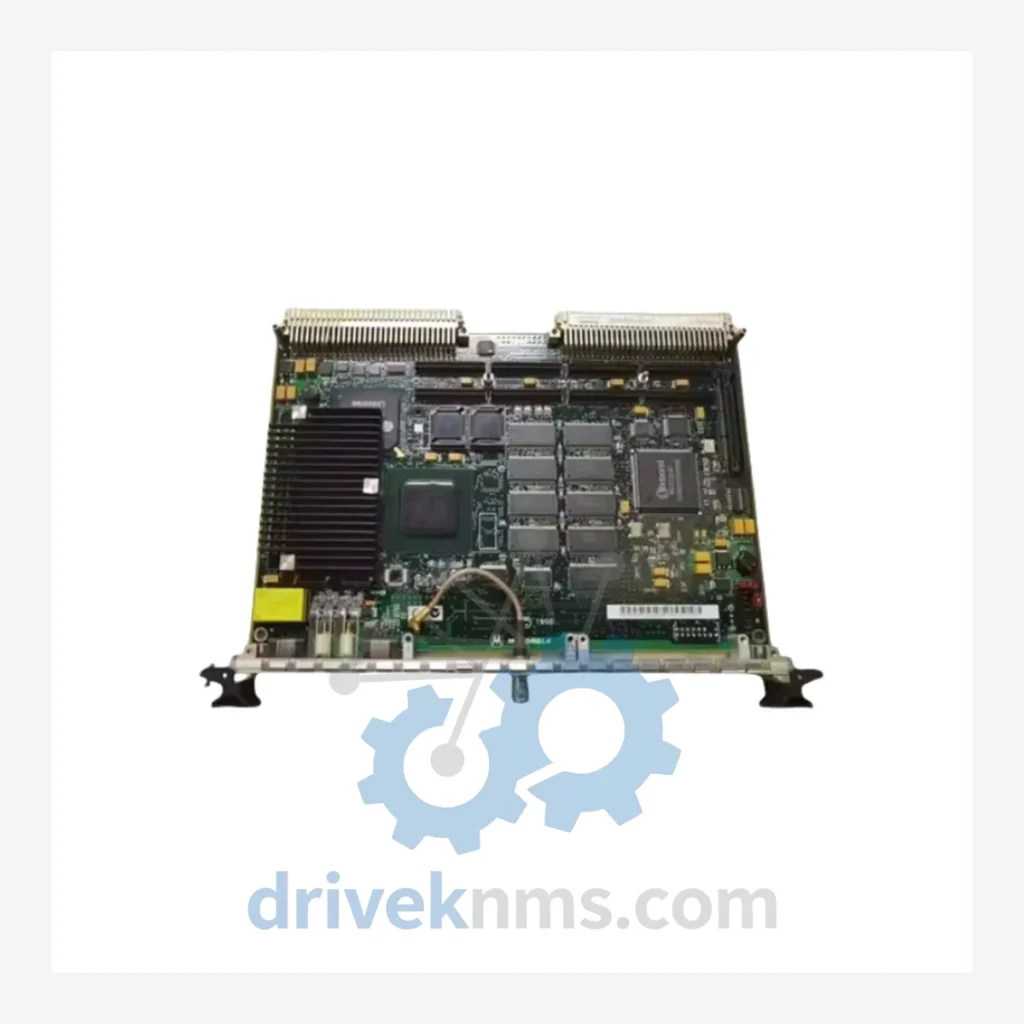
Tektronix PPC-2 760-6022-10 Control Board – Obsolete PPC Series Spare Part
When a Tektronix PPC-2 control board fails, the immediate instinct is to call the OEM — only to be told the part was discontinued years ago. At that point, the real cost calculation begins: not the cost of a spare part, but the cost of a full system migration. Replacing a legacy Tektronix-based test or control platform can run into hundreds of thousands of dollars in engineering hours, new hardware procurement, software recertification, and production downtime. DriveKNMS holds verified physical stock of the PPC-2 760-6022-10 / 160-0022 / 610-0967-01 control board — one of the most difficult-to-source boards in the Tektronix PPC series. This is not a listing built on speculation. If it is listed, it is in our warehouse.
Technical Specifications
| Parameter | Detail |
| Manufacturer | Tektronix |
| Part Number / SKU | PPC-2 760-6022-10 / 160-0022 / 610-0967-01 |
| Series | PPC (Programmable Power Controller) |
| Component Type | Control Board / PCB Assembly |
| OEM Discontinuation Status | Discontinued – No longer manufactured or supported by Tektronix |
| Country of Origin | United States |
| Typical System Compatibility | Tektronix PPC-2 series instrumentation and control platforms |
| Condition Available | New Old Stock (NOS) / Refurbished – Grade A |
Note: Electrical parameters such as voltage ratings and bus specifications are not published here to prevent misapplication. Contact our technical team for verified compatibility confirmation before ordering.
Solving the Discontinued Hardware Crisis
The Tektronix PPC-2 platform was deployed extensively in precision test environments, calibration labs, and automated production lines during its production era. Its control board — this specific assembly — manages the core logic and I/O coordination of the unit. There is no drop-in OEM replacement. Tektronix has not produced a backward-compatible successor for this board architecture.
For facilities still operating PPC-2 systems, the discontinuation of this board creates a binary choice: source the spare part from the secondary market, or absorb the full cost of system retirement. That retirement cost is rarely limited to hardware. It includes recalibration of dependent instruments, revalidation of test procedures, retraining of technicians, and in regulated industries, re-certification of the entire test bench. Conservative estimates place this total cost between $150,000 and $500,000 USD per affected station, depending on the complexity of the surrounding infrastructure.
Sourcing a verified spare board from DriveKNMS eliminates that decision entirely. One board. Existing infrastructure preserved. Production continuity maintained.
How to Extend Your Automation Asset Life by 5–10 Years Through Strategic Spare Parts Management
Factory managers facing system retirement pressure from finance or procurement departments often underestimate the leverage that a disciplined spare parts strategy provides. The following approach has been used by maintenance teams across industries to defer costly system replacements by a decade or more:
- Identify single-point-of-failure boards first. Control boards like the PPC-2 760-6022-10 are the most common cause of unplanned downtime. A single failure with no spare on hand forces emergency sourcing at premium prices — or forces the retirement conversation. Holding one verified spare eliminates this risk entirely.
- Audit your installed base before the OEM does. Tektronix and similar OEMs periodically issue end-of-support notices. By the time those notices arrive, secondary market stock is already depleted. Proactive procurement — before the announcement — secures parts at a fraction of the post-announcement price.
- Calculate the cost of downtime, not the cost of the part. A control board that costs a few thousand dollars to source today may prevent a production stoppage that costs ten times that per day. Present this math to finance teams when justifying spare parts budgets. It is not a maintenance expense — it is downtime insurance.
- Establish a vetted secondary market supplier relationship. Not all surplus inventory is equal. Boards sourced without provenance verification carry real risk of counterfeit or damaged components. A supplier with documented QA processes — incoming inspection, functional testing, and storage protocols — is the only acceptable source for safety-critical or production-critical spares.
- Consider a two-spare strategy for critical nodes. One spare covers the immediate failure. A second spare covers the failure that occurs during the repair window of the first. For systems running 24/7 operations, this is not overcaution — it is standard practice in high-availability environments.
Condition & Reliability Assurance
Obsolete boards sourced from the secondary market carry inherent risk if not properly evaluated. DriveKNMS applies a 5-step inspection protocol to every PPC-series board before it is offered for sale:
- Step 1 – Visual and Physical Inspection: Full board examination for mechanical damage, burn marks, cracked solder joints, and corrosion on connector pins and edge contacts.
- Step 2 – Electrolytic Capacitor Assessment: Electrolytic capacitors are the primary failure point in aged PCBs. Each capacitor is checked for bulging, leakage, and ESR deviation. Boards with suspect capacitors are either recapped or rejected.
- Step 3 – Firmware and Revision Verification: Where applicable, firmware version and board revision markings are documented and cross-referenced against known compatible revisions for the PPC-2 platform.
- Step 4 – Pin and Connector Integrity Check: All connector pins are inspected for oxidation, bending, and contact resistance. Corroded contacts are cleaned using appropriate methods; boards with structural pin damage are rejected.
- Step 5 – Functional Bench Test (where test fixtures are available): Boards are powered and tested against baseline operational parameters. Test results are logged and available upon request.
Boards that do not pass all five steps are not listed for sale. No exceptions.
Key Features for System Maintenance
- Drop-in replacement: The PPC-2 760-6022-10 / 160-0022 / 610-0967-01 board installs directly into the existing chassis with no mechanical modification required.
- No reprogramming required: The board retains the original hardware configuration. Existing system software and calibration data remain valid after board swap.
- No engineering redesign: Unlike a system migration, a board replacement requires only a qualified technician — not a systems integrator, not a software engineer, not a project manager.
- Immediate availability: Stock is held physically at our facility. Lead time is shipping time, not procurement time.
- Documented provenance: Each unit shipped includes documentation of its inspection status and, where available, its sourcing history.
FAQ
Q: What warranty applies to an obsolete part like this?
A: DriveKNMS provides a 90-day warranty against DOA (dead on arrival) and functional failure under normal operating conditions. Extended warranty terms are available for volume orders — contact us to discuss.
Q: How do I know the board is genuine and not counterfeit?
A: All boards are inspected against known-good reference units for markings, PCB layer construction, and component placement. Tektronix boards have well-documented physical characteristics that make counterfeiting detectable. Our inspection team is trained to identify non-genuine assemblies.
Q: Is this a new board or a refurbished unit?
A: We stock both New Old Stock (NOS) units — boards that were never installed — and Grade A refurbished units that have passed our full 5-step QA process. The condition of the specific unit available will be confirmed at the time of inquiry.
Q: Should I buy more than one unit?
A: For any system where this board is a single point of failure and no OEM replacement exists, holding at least one additional spare is a defensible maintenance decision. Secondary market stock for discontinued Tektronix boards is finite and does not replenish. Once current stock is exhausted, sourcing becomes significantly more difficult and expensive.
Q: Can you source other Tektronix PPC-series boards?
A: Yes. Contact us with your specific part number. We maintain an active sourcing network for Tektronix legacy hardware and can often locate boards not currently listed on our site.
© 2026 DriveKNMS. Status: DRAFT