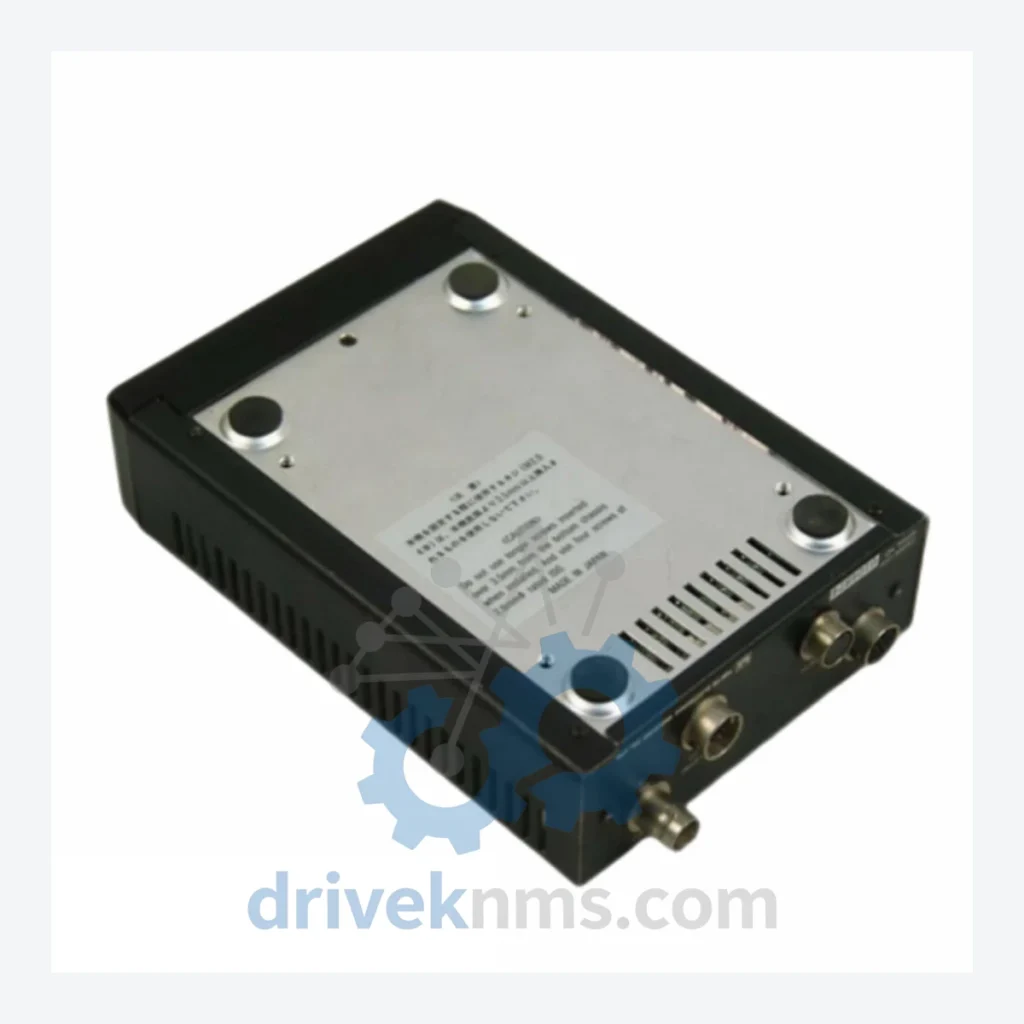
ALSTOM MVAJ105RA0802A Protection Relay – MiCOM Series
ALSTOM MVAJ105RA0802A Protection Relay: Supply Continuity Strategy for a Discontinued Critical Component The ALSTOM MVAJ105RA0802A is a numerical protection relay…
Model: CS3500C
Product Overview
Commercial availability is handled through direct RFQ, model verification and export-oriented follow-up rather than public cart checkout.
Datasheet Preview
Use attached product manuals when available. If the manual is not public yet, request the full file directly through RFQ.
Commercial Path
Product pages on DRIVEKNMS are designed to verify model, brand and series first, then move the buyer into one clean quotation path.
Technical Dossier
The TELI CS3500 series represents a distributed control system (DCS) platform deployed across heavy industrial sectors including petrochemical refineries, chemical processing plants, and power generation facilities. Its modular backplane architecture allows for high-density I/O integration within a standardized rack form factor, making it a long-term infrastructure choice for facilities requiring deterministic process control. The CS3500 platform has been installed in continuous-process environments where system uptime requirements exceed 99.9%, and where module-level replacement — rather than full system overhaul — is the standard maintenance protocol.
The CS3500 series was developed as a successor to earlier TELI DCS platforms, introducing a high-speed internal bus that reduced inter-module latency compared to legacy parallel-bus designs. Early revisions of the CS3500 used proprietary backplane connectors that are incompatible with later CS3500E and CS3500P variants — a critical consideration for facilities performing partial upgrades. The transition from CS3500 to CS3500E introduced enhanced EMI shielding and extended operating temperature ranges, addressing field failures observed in high-vibration environments such as compressor stations. The CS3500A and CS3500D variants introduced redundant CPU configurations, enabling hot-standby failover without process interruption. As of 2026, the CS3500 core platform is in the mature/end-of-active-production phase; TELI has transitioned primary development resources to next-generation platforms. However, the installed base remains substantial, and module-level spare parts continue to be sourced through authorized distributors and specialist suppliers such as DriveKNMS to support lifecycle extension programs.
The following SKUs represent verified components within the TELI CS3500 series, organized by functional category. Each module is independently replaceable within the CS3500 rack system.
CPU / Controller Modules
Analog Input (AI) Modules
Digital Input (DI) Modules
Analog Output (AO) Modules
Digital Output (DO) Modules
Communication & Network Modules
As the CS3500 series enters its lifecycle maintenance phase, procurement of specific module variants — particularly early-revision CPU boards and high-channel-count I/O modules — has become increasingly constrained through standard distribution channels. DriveKNMS maintains a dedicated inventory of CS3500 series components sourced from decommissioned systems, authorized surplus channels, and direct manufacturer relationships. For facilities operating under long-term service agreements that predate the CS3500's end-of-active-production announcement, DriveKNMS provides documented traceability records for each unit, including revision history and prior operational environment data. Requests for obsolete or low-availability SKUs — including early CS3500C revisions and CS3500A redundancy modules — are processed within 24 hours of inquiry submission.
The CS3500 series employs a multi-layer backplane bus architecture that requires module-specific functional validation beyond standard power-on testing. DriveKNMS applies the following test protocol to all CS3500 units prior to shipment: (1) Backplane continuity verification using CS3500-compatible rack test fixtures to confirm all bus lines are intact; (2) CPU module boot sequence validation, confirming firmware version compatibility with target system revision; (3) I/O channel-level functional test — each analog channel is stimulated across its full input range and output accuracy is measured against factory specification tolerances (±0.1% FS for AI modules, ±0.05% FS for AO modules); (4) Communication module loopback testing on all supported protocols (Modbus RTU, Modbus TCP, OPC-DA); (5) 48-hour burn-in at rated operating temperature to screen for early-life component failures. All units are shipped with a test report documenting pass/fail results for each test stage.