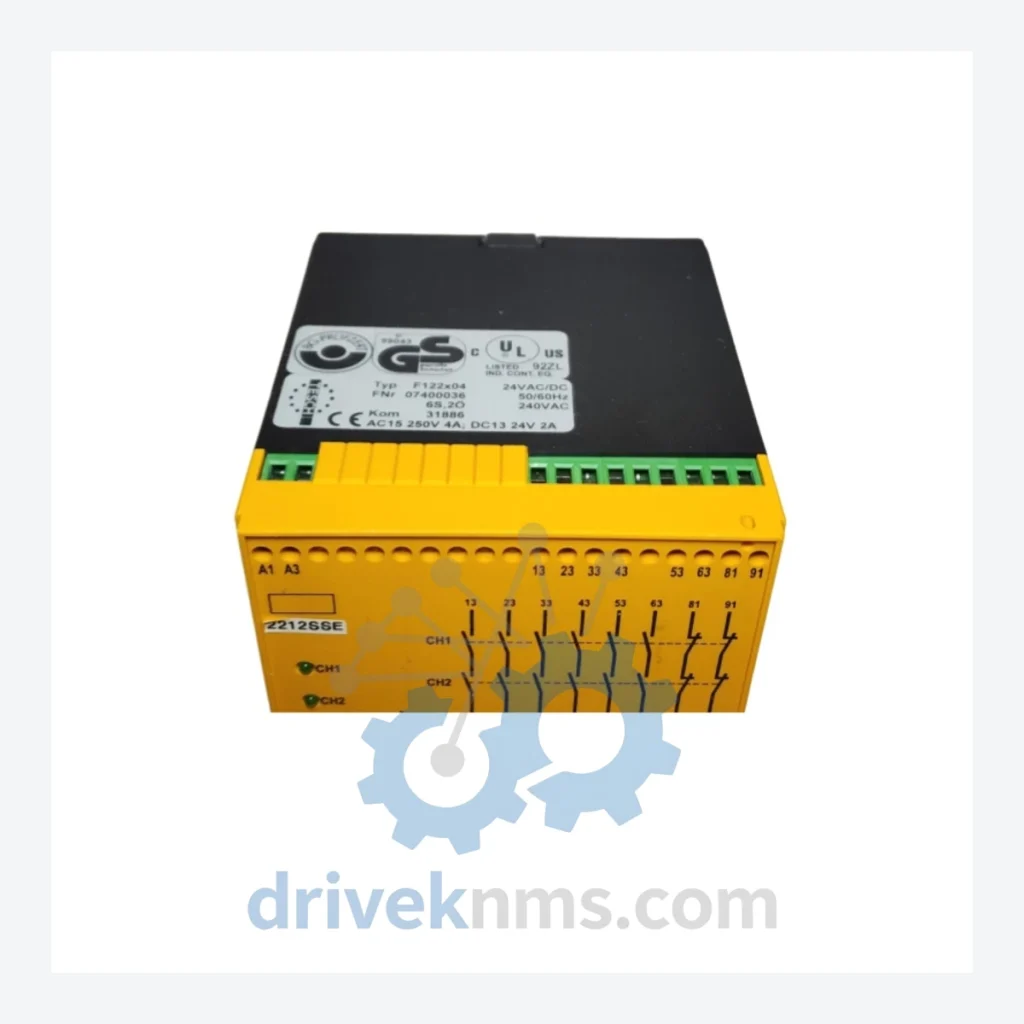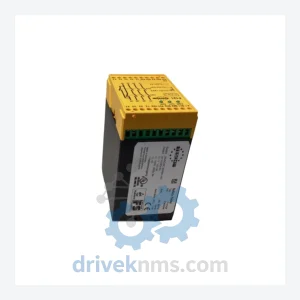
TESCH F123-A04 Safety Relay – Obsolete TESCH Spare Part

Model: F123¡Á04

Brand Tesch
Model F123¡Á04
RFQ-ready model route Obsolete and surplus sourcing Export follow-up by model list

Product Overview

Commercial availability is handled through direct RFQ, model verification and export-oriented follow-up rather than public cart checkout.

Datasheet Preview

Datasheet Preview

Use attached product manuals when available. If the manual is not public yet, request the full file directly through RFQ.

Request Full Manual

Commercial Path

Use This Page To Confirm The Model, Then Move To RFQ

Product pages on DRIVEKNMS are designed to verify model, brand and series first, then move the buyer into one clean quotation path.

Technical Dossier

Product Details And Specifications

TESCH F123-A04 Safety Relay – Obsolete TESCH Spare Part

RFQ support for obsolete parts: Send the model number, required quantity and destination so DriveKNMS can confirm sourcing options before quotation.

Technical Specifications

Note: Specific electrical parameters (supply voltage, output contacts, response time) are confirmed upon order inquiry to ensure accuracy. We do not publish unverified specifications.

Solving the Discontinued Hardware Crisis

TESCH safety relays of the F123 series were widely deployed throughout the 1990s and 2000s in European and Asian manufacturing facilities — particularly in press lines, robotic cells, and packaging machinery where EN 954-1 / ISO 13849 compliance was achieved through hardware-based safety logic rather than programmable safety controllers.

The OEM discontinued this series as the industry migrated toward configurable safety controllers (e.g., Pilz PNOZ, Sick Flexi Soft, Siemens SIRIUS 3SK). However, the installed base did not disappear. Thousands of machines worldwide still rely on TESCH F123-series relays as the certified safety backbone. Removing them means removing the machine's safety certification — a regulatory and financial liability no plant manager can absorb lightly.

How to extend your automation asset life by 5–10 years using critical spare parts:

  • Identify single-point-of-failure components in your safety circuit. The F123-A04 is typically one of them. A single unit held in bonded stores eliminates the risk of a multi-week production halt.
  • Conduct a shadow inventory audit. Map every TESCH relay on your floor against your current spare holdings. The gap between what you have and what you need is your financial exposure.
  • Negotiate a multi-unit reserve. Obsolete parts do not replenish. Purchasing 2–3 units now at current market price is structurally cheaper than sourcing under emergency conditions 18 months from now, when availability may be zero.
  • Document the safety circuit fully before any relay is replaced. Wiring diagrams, test records, and certification documentation must accompany the spare to maintain audit trail integrity.
  • Defer the upgrade cycle deliberately. A verified spare part extends the economic life of a certified machine by a full maintenance cycle — typically 3–5 years per unit — without triggering re-certification costs.

For plant managers facing board-level pressure to defer capital expenditure, a stocked F123-A04 is a defensible, low-cost strategy to protect production continuity without committing to a six-figure system overhaul.

Condition & Reliability Assurance

Obsolete safety components require a higher standard of incoming inspection than current-production parts. DriveKNMS applies a 5-step QA protocol to every F123-A04 unit before it is offered for sale:

  1. Electrolytic capacitor inspection: Aging capacitors are the primary failure mode in stored safety relays. Each unit is inspected for capacitor bulge, leakage, and ESR deviation. Units with degraded capacitors are either reconditioned or rejected.
  2. Firmware and hardware version verification: Where applicable, the hardware revision is confirmed against known-good reference units to ensure functional equivalence with the target application.
  3. Contact and terminal pin inspection: All relay output contacts and input terminals are inspected under magnification for oxidation, corrosion, and mechanical deformation. Affected pins are cleaned or the unit is rejected.
  4. Functional energization test: Each unit is powered and cycled through its switching sequence. Response time and contact integrity are verified against expected behavior.
  5. Packaging and ESD protection: Units are repackaged in anti-static bags with desiccant and labeled with inspection date and technician ID before dispatch review.

Key Features for System Maintenance

  • Drop-in replacement: The F123-A04 is a form-fit-function replacement for the original installation. No wiring modifications are required in a standard application.
  • No reprogramming required: Unlike configurable safety controllers, this hardware relay operates on fixed logic. Replacement restores function without software intervention.
  • Avoids engineering reconstruction costs: Substituting a modern safety controller requires safety function re-validation, updated risk assessment documentation, and in many jurisdictions, third-party certification. The F123-A04 eliminates all of that.
  • Maintains existing safety certification: Replacing like-for-like preserves the machine's existing CE marking and safety category rating without triggering re-assessment obligations.

Continue The Model Path

Use system, brand and series routes to compare related published models.

Move from this exact model into the matching system hub, brand archive, model-family archive or lifecycle sourcing route before sending a final RFQ list.

WhatsApp Prefilled Inquiry Email sale@driveknms.com Phone +86 18359293191 Top Back To Top