Technical Dossier
Product Details And Specifications
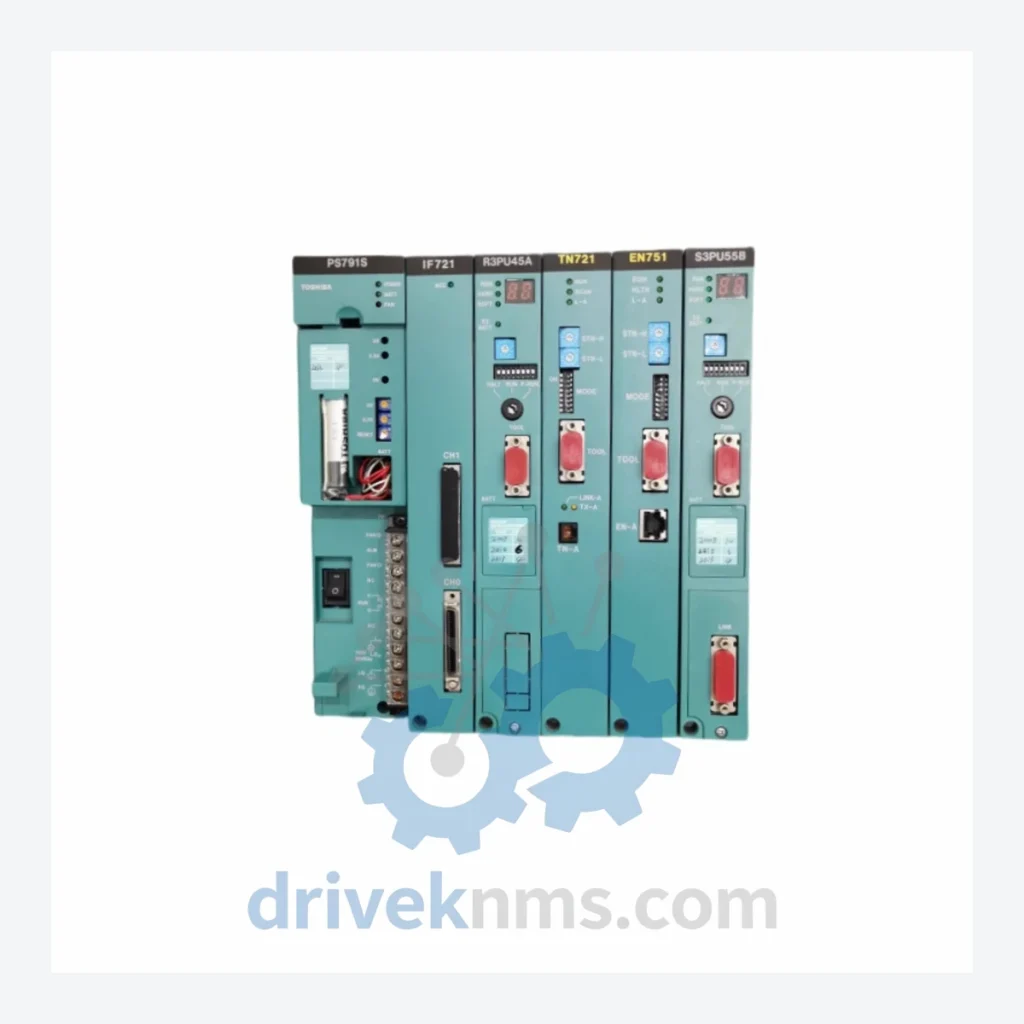
Toshiba EN751A GEN751AS PLC Control Module – Obsolete T Series Spare Part
RFQ support for obsolete parts: Send the model number, required quantity and destination so DriveKNMS can confirm sourcing options before quotation.
Technical Specifications
Note: Electrical parameters not listed here are not confirmed from verified datasheets. DriveKNMS does not publish unverified specifications. Contact us for application-specific technical consultation.
Solving the Discontinued Hardware Crisis
The Toshiba T Series PLC platform was widely deployed across process industries, discrete manufacturing, and utilities throughout the 1990s and early 2000s. The EN751A and GEN751AS modules served as core control elements within these systems, handling logic execution and I/O coordination that the entire production cell depended upon.
Q: How are RFQ terms confirmed?
A: Quantity, required condition, documentation needs, destination and sourcing route are confirmed during RFQ review before quotation.
For factories operating on 10–15 year asset depreciation cycles, the EN751A and GEN751AS represent a maintenance problem that can be solved for a fraction of the cost of system replacement. Sourcing a verified spare from DriveKNMS extends the operational life of the existing control system by 5–10 years, deferring capital expenditure until it is financially planned rather than crisis-driven.
Condition & Reliability Assurance
Obsolete hardware sourced from secondary markets carries real risk. DriveKNMS applies a structured 5-step QA process to every unit before dispatch review:
How to Extend Automation Asset Life by 5–10 Years Through Critical Spare Parts
1. Identify single-point-of-failure modules. In any legacy PLC system, certain modules — typically the CPU, communication, and power supply cards — have no redundancy and no modern equivalent. The EN751A and GEN751AS fall into this category for T Series installations. These are the modules that, if they fail without a spare on hand, force an immediate system replacement decision.
3. Implement a scheduled inspection cycle. Legacy PLC hardware does not fail randomly. Electrolytic capacitors have predictable service lives. A scheduled annual inspection of installed modules — checking for capacitor condition, connector integrity, and firmware status — allows proactive replacement before failure occurs.
4. Document system configuration before any module swap. Before replacing any control module, capture a full backup of the application program, I/O configuration, and any module-specific parameters. This is standard practice but frequently skipped under emergency conditions. A documented backup eliminates recovery risk.
Q: How is condition confirmed before quotation?
A: Available condition, photos, test records and documentation are checked according to the requested model and sourcing channel before a formal RFQ response.
Q: How do I know the unit is genuine and not counterfeit?
A: All Toshiba modules sourced by DriveKNMS are inspected for manufacturer markings, PCB construction, and component authenticity. We do not source from unverified brokers. Provenance documentation is available on request.
Q: Can you support multi-unit or repeat RFQ requests?
A: Yes. Send the model list, target quantity and destination so DRIVEKNMS can review sourcing options and quote the requirement as a project RFQ.
Q: What if my system requires a specific firmware revision?
A: Provide your system's current firmware version when inquiring. DriveKNMS will confirm compatibility before dispatch review.