
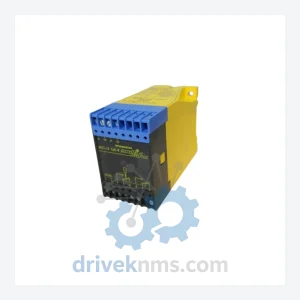
TURCK MS13 Series Switching Amplifiers MS13-22Ex0-R
Turck MS13-22Ex0-R is listed for Servo Drives RFQ review. Confirm quantity, condition and destination before quotation.
RFQ-ready industrial model
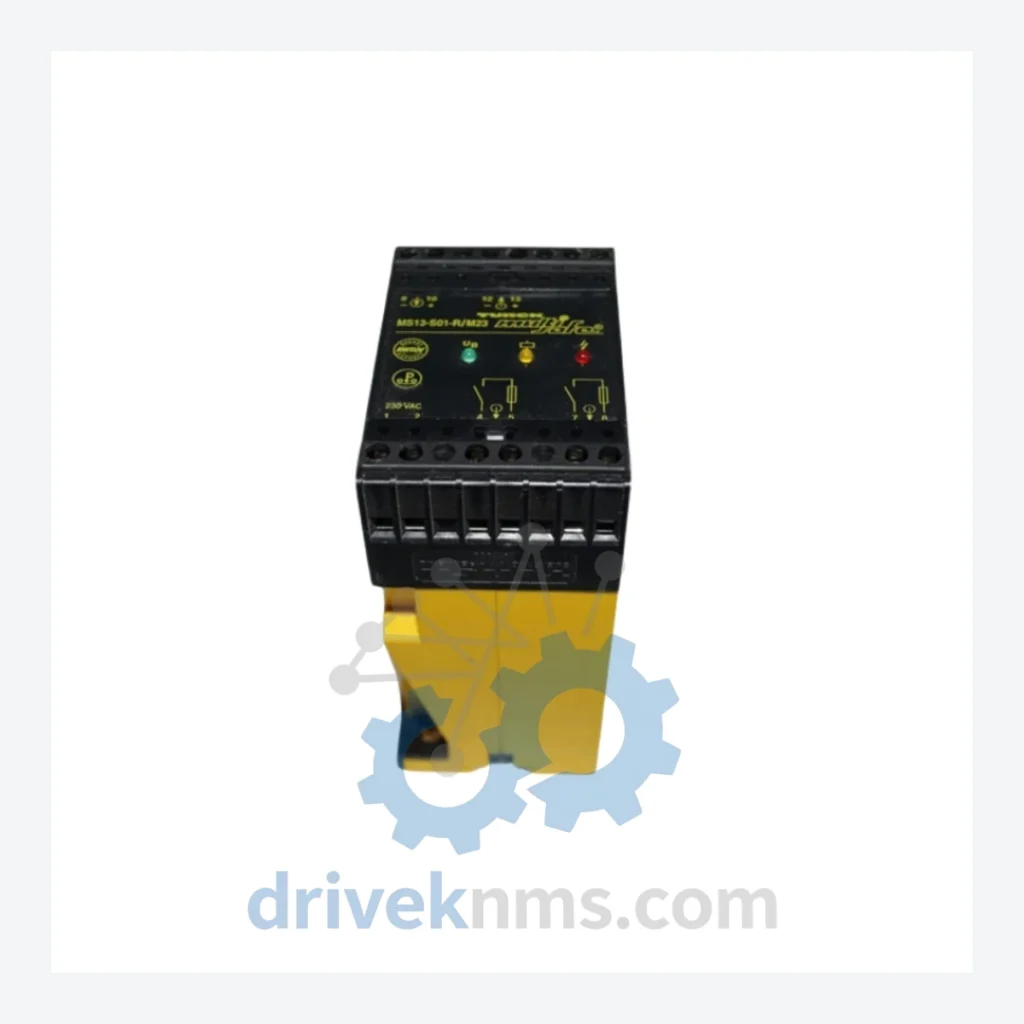
Model: MS13-S01-R/M23
Product Overview
Commercial availability is handled through direct RFQ, model verification and export-oriented follow-up rather than public cart checkout.
Datasheet Preview
Use attached product manuals when available. If the manual is not public yet, request the full file directly through RFQ.
Commercial Path
Product pages on DRIVEKNMS are designed to verify model, brand and series first, then move the buyer into one clean quotation path.
Technical Dossier
RFQ support for obsolete parts: Send the model number, required quantity and destination so DriveKNMS can confirm sourcing options before quotation.
Note: Electrical parameters such as supply voltage range, response time, and safety category rating are model-specific. Contact DriveKNMS for verified datasheet documentation prior to installation.
The TURCK MS13-S01-R/M23 was designed as a dedicated safety signal conditioning module — translating sensor inputs from safety-rated proximity switches and magnetic field sensors into relay-switched outputs that feed into machine safety circuits. In systems where this module sits between a safety sensor and a safety PLC input card, there is no generic substitute. The M23 connector pinout, relay output logic, and signal timing are matched to the surrounding hardware. Replacing it with a different-generation module requires rewiring, safety re-validation, and in many jurisdictions, a full machine safety re-certification under ISO 13849 or IEC 62061.
For plant managers operating equipment built in the 1990s through early 2000s — where the MS Series was a standard specification — the calculus is straightforward: a verified replacement module at a fraction of the cost of system redesign preserves both capital assets and production schedules. The MS13-S01-R/M23 is not a commodity part. It is a structural component of a safety architecture that was engineered to last decades, and with proper spare parts management, it can.
Facilities facing pressure to retire legacy safety systems often do so not because the systems have failed, but because replacement parts are no longer available through standard distribution channels. This is a procurement problem, not an engineering one. The following approach has allowed operations teams to defer costly system overhauls while maintaining full safety compliance:
1. Identify single-point-of-failure modules. Safety switching amplifiers like the MS13-S01-R/M23 are high-consequence components. A single failure can trigger a full line shutdown. Map every instance of this module across your facility before a failure occurs.
3. Source from verified secondary market suppliers. Not all surplus inventory is equal. Modules that have been stored improperly, subjected to humidity, or stripped from scrapped machines without inspection carry real risk. DriveKNMS applies a structured inspection protocol before any obsolete part ships.
4. Document firmware and configuration baselines. For modules with configurable parameters, capture the current operating configuration before any replacement. This eliminates re-commissioning uncertainty.
This approach consistently delivers 5–10 additional years of reliable operation from automation infrastructure that would otherwise face premature retirement.
Every MS13-S01-R/M23 unit shipped by DriveKNMS passes a five-stage inspection process developed specifically for obsolete industrial electronics:
Step 1 – Electrolytic Capacitor Assessment: Capacitor aging is the primary failure mode in electronics manufactured before 2005. Each unit is inspected for capacitor bulging, electrolyte leakage, and ESR deviation from specification.
Step 2 – Firmware Version Verification: Where applicable, the firmware or internal configuration state is verified against known-good baselines for the MS13-S01-R/M23 to confirm the unit has not been altered from factory specification.
Q: How are RFQ terms confirmed?
A: Quantity, required condition, documentation needs, destination and sourcing route are confirmed during RFQ review before quotation.
Step 4 – Functional Bench Test: Each unit is powered and tested for correct relay switching behavior under simulated input conditions before packaging.
The MS13-S01-R/M23 is a direct drop-in replacement for the original installed unit. No hardware modifications, no PLC reprogramming, and no changes to the safety circuit wiring are required. This is the defining advantage of sourcing an exact-match obsolete part versus pursuing a modern substitute:
Q: How is condition confirmed before quotation?
A: Available condition, photos, test records and documentation are checked according to the requested model and sourcing channel before a formal RFQ response.
Continue The Model Path
Move from this exact model into the matching system hub, brand archive, model-family archive or lifecycle sourcing route before sending a final RFQ list.
Related Paths
Turck MS13-22Ex0-R is listed for Servo Drives RFQ review. Confirm quantity, condition and destination before quotation.
Turck BIM-UNT-AP7X is listed for BIM-UNT-AP7X Series RFQ review. Confirm quantity, condition and destination before quotation.
Turck 6M-2/CS10922 is listed for Controller Cards RFQ review. Confirm quantity, condition and destination before quotation.