
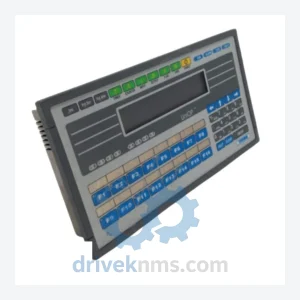
UniOP EK-04 6ZA983-7 HMI Operator Panel – EK Series
UniOP EK-04 6ZA983-7 is listed for EK Series RFQ review. Confirm quantity, condition and destination before quotation.
RFQ-ready industrial model
Model: EK-16N
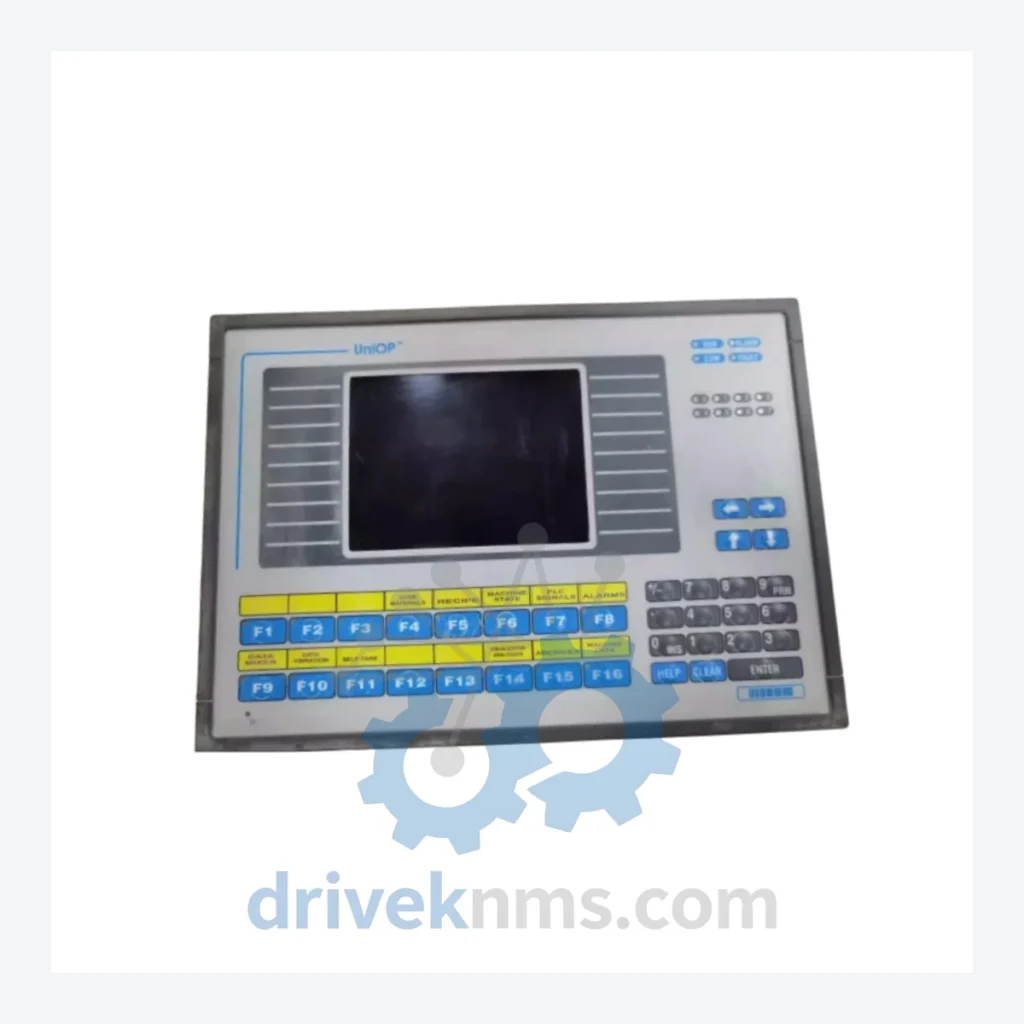
Product Overview
Commercial availability is handled through direct RFQ, model verification and export-oriented follow-up rather than public cart checkout.
Datasheet Preview
Use attached product manuals when available. If the manual is not public yet, request the full file directly through RFQ.
Commercial Path
Product pages on DRIVEKNMS are designed to verify model, brand and series first, then move the buyer into one clean quotation path.
Technical Dossier
The UNIOP EK Series represents one of the most widely deployed operator panel families in European and global heavy industry. Manufactured by UNIOP (historically associated with Elettronica Santerno and later the Gefran group), EK Series HMI terminals have accumulated significant installed base across chemical processing plants, nuclear auxiliary systems, oil refineries, paper mills, and continuous casting lines. Their ruggedized construction, deterministic serial communication protocols, and compatibility with a broad range of PLC backplanes — including Siemens S5/S7, Allen-Bradley, Modbus RTU, and proprietary UNIOP TP protocols — made them a standard specification item throughout the 1990s and 2000s. Many facilities operating EK Series panels today are in the mature or extended-lifecycle phase of their automation infrastructure, making reliable spare parts sourcing a critical operational requirement.
The UNIOP EK Series was introduced as a successor to earlier TP (Touch Panel) and EP (Operator Panel) product lines, consolidating display technology and communication interfaces into a unified hardware platform. Early EK units used STN monochrome LCD displays with resistive touch overlays and RS-232/RS-422 serial interfaces. Mid-generation models introduced backlit displays, expanded memory for recipe and alarm management, and multi-protocol communication cards. Later EK variants incorporated Ethernet connectivity options and CF card slots for project storage, bridging the gap between legacy serial HMI and modern networked operator stations.
Compatibility across EK generations is constrained by the communication card slot format and the project software version. UNIOP Designer software (versions 5.x through 8.x) governs project compatibility; projects compiled for early EK hardware cannot be directly transferred to later EK units without recompilation. This architectural boundary is a key consideration for facilities performing like-for-like replacements versus system upgrades. The EK Series entered the mature/end-of-life phase approximately 2015–2018, with UNIOP transitioning its active product line to the eTOP and eSMART families. Long-term maintenance support for EK Series is now exclusively dependent on the secondary market and specialist distributors.
The following SKUs represent verified models within the UNIOP EK Series, classified by display type, touch technology, and primary communication interface.
EK-16N: 5.7" STN monochrome LCD, resistive touch, RS-232/RS-422, 128KB project memory
EK-16C: 5.7" STN color LCD, resistive touch, RS-232/RS-422, 256KB project memory
EK-37N: 7.5" STN monochrome LCD, resistive touch, dual serial ports, expanded I/O mapping
EK-37C: 7.5" STN color LCD, resistive touch, dual serial ports, 512KB project memory
EK-57N: 10.4" STN monochrome LCD, resistive touch, RS-232/RS-422/RS-485, UNIOP TP protocol
EK-57C: 10.4" STN color LCD, resistive touch, multi-protocol communication card slot
EK-57T: 10.4" TFT color LCD, resistive touch, enhanced brightness, CF card slot
EK-77T: 12.1" TFT color LCD, resistive touch, Ethernet option, 2MB project memory
EK-97T: 15" TFT color LCD, resistive touch, Ethernet + serial, high-resolution graphics
EK-16NP: EK-16N variant with PROFIBUS DP communication card pre-installed
EK-37CP: EK-37C variant with PROFIBUS DP slave interface
EK-57TP: EK-57T with PROFIBUS DP + RS-422 dual interface
EK-77TE: EK-77T with integrated Ethernet TCP/IP and Modbus TCP support
EK-97TE: EK-97T with Ethernet TCP/IP, CF card, and USB host port
EK-16NM: EK-16N variant with Modbus RTU master/slave communication card
EK-57CM: EK-57C with Modbus RTU + RS-485 multi-drop network support
EK-77TF: EK-77T with fieldbus communication card (DeviceNet or CANopen option)
UNIOP EK Series units present specific test challenges due to their integrated backplane communication architecture and aging capacitive components. DriveKNMS applies the following test protocol to all EK Series units prior to dispatch: (1) Visual inspection of PCB, connector pins, and display surface for physical damage, corrosion, or prior repair evidence. (2) Power-on test at rated voltage (24VDC) with current draw measurement against OEM specification. (3) Display functional test: full-screen pixel mapping to identify dead zones, backlight uniformity check, and touch calibration verification across the full active area. (4) Communication port test: RS-232, RS-422, and RS-485 loopback tests at standard baud rates (9600 to 115200 bps). (5) For PROFIBUS-equipped units: DP slave address configuration and GSD file compatibility verification. (6) Project download test using UNIOP Designer software to confirm flash memory integrity and project execution. (7) Burn-in cycle: 4-hour continuous operation at ambient temperature with periodic touch input simulation. All test results are logged and retained for 24 months.
Continue The Model Path
Move from this exact model into the matching system hub, brand archive, model-family archive or lifecycle sourcing route before sending a final RFQ list.
Related Paths
UniOP EK-04 6ZA983-7 is listed for EK Series RFQ review. Confirm quantity, condition and destination before quotation.
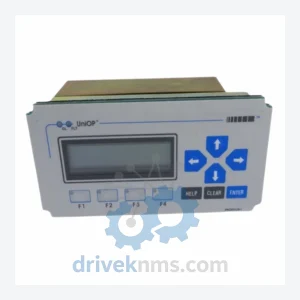
UniOP MD01R-02 0042 is listed for HMI Panels RFQ review. Confirm quantity, condition and destination before quotation.
UniOP ePCL400-9207-30-10-00-10-00-00-00-00 is listed for Operator Interface RFQ review. Confirm quantity, condition and destination before quotation.