Technical Dossier
Product Details And Specifications
VIBRO-METER CMC16 Series Technical Notes
The Evolution of CMC16 Architecture
VIBRO-METER introduced the CMC16 platform as part of its VM600 machinery protection and condition monitoring system. The VM600 rack accepts a range of function-specific cards, with the CMC16 serving as the primary signal conditioning and monitoring card for multi-channel vibration analysis. Early CMC16 variants were configured via hardware DIP switches and analog output trimming. Subsequent firmware revisions introduced digital configuration via the VM600 Rack Configuration Software (RCS), enabling parameter storage in non-volatile memory and remote diagnostics over RS-485. The platform's backplane uses a proprietary VM600 bus, which defines strict compatibility rules: CMC16 cards must be paired with compatible rack controllers (e.g., RLC16) and I/O modules (e.g., IOC4T, IOC4) within the same rack generation. Cross-generation mixing is not supported without hardware modification. As the VM600 system has entered its mature/end-of-active-production phase, Meggitt has transitioned new projects toward the VM600 MPC4 and the newer Meggitt Sensing Systems platforms. However, the installed base of CMC16 remains extensive, and long-term maintenance support—including spare card sourcing, firmware archiving, and calibration services—remains a primary requirement for plant operators committed to lifecycle extension rather than full system replacement.
CMC16 Full Catalog & Functionalities (SKU List)
The following SKUs represent verified, commonly referenced part numbers within the VIBRO-METER CMC16 and associated VM600 ecosystem. Each entry reflects a distinct hardware configuration or option code.
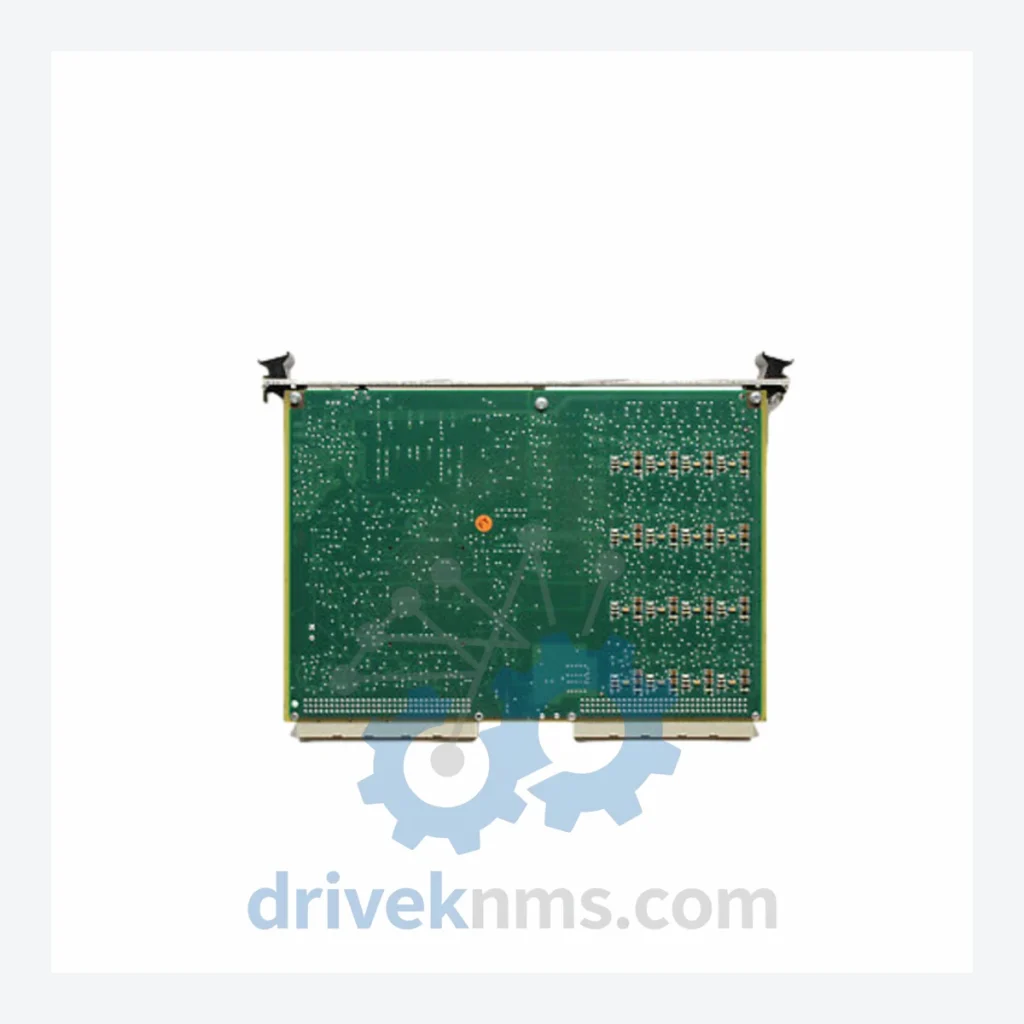
CMC16 200-530-025-014: 16-channel condition monitoring card, standard vibration input, VM600 rack — primary subject of this listing.
CMC16 200-530-025-000: Base CMC16 card, no optional I/O expansion, standard firmware revision.
CMC16 200-530-025-001: CMC16 variant with relay output option enabled for alarm/trip signaling.
CMC16 200-530-025-002: CMC16 with extended temperature range qualification for high-ambient installations.
CMC16 200-530-025-010: CMC16 configured for proximity probe (eddy current) input, shaft displacement monitoring.
CMC16 200-530-025-011: CMC16 proximity probe variant with ATEX/IECEx barrier interface option.
CMC16 200-530-025-020: CMC16 velocity transducer input configuration, seismic monitoring applications.
CMC16 200-530-025-030: CMC16 accelerometer input, IEPE/ICP-compatible signal conditioning.
CMC16 200-530-025-050: CMC16 with integrated Modbus RTU communication for legacy DCS integration.
CMC16 200-530-025-060: CMC16 with PROFIBUS DP interface for Siemens PCS 7 and equivalent DCS environments.
IOC4T 200-580-000-xxx: Terminal I/O card, 4-channel, pairs with CMC16 for field wiring termination in VM600 rack.
IOC4 200-581-000-xxx: I/O card with D-sub connector interface, alternative to IOC4T for panel-mount installations.
RLC16 200-510-000-xxx: Rack-level controller card for VM600, manages CMC16 communication and DCS interface.
AMC16 200-520-000-xxx: Analog monitoring card, 16-channel, used alongside CMC16 for 4–20 mA output loops.
TDC16 200-540-000-xxx: Tachometer/speed input card, provides shaft speed reference to CMC16 for order-tracking analysis.
PSU200 200-500-000-xxx: VM600 rack power supply unit, 24 VDC input, dual-redundant option available.
VM600 Rack 200-490-000-xxx: 19-inch rack chassis, 6U, accepts up to 16 function cards including CMC16 combinations.