
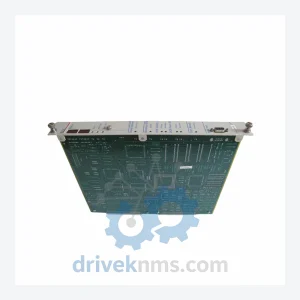
WESTINGHOUSE 4256A88G01 4256A88G04 PLC Controller – Ovation Series
Westinghouse 4256A88G01 4256A88G04 is listed for OVATION RFQ review. Confirm quantity, condition and destination before quotation.
RFQ-ready industrial model
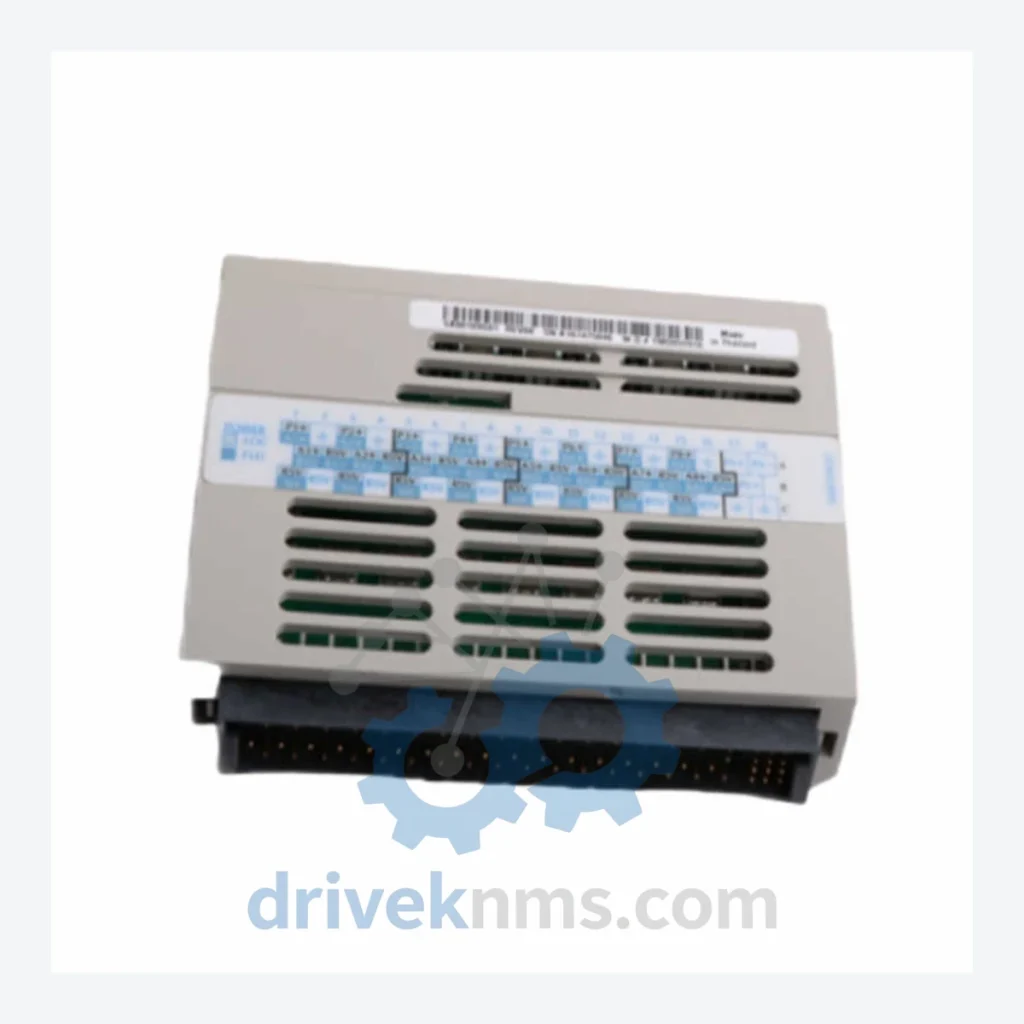
Model: 5X00109G01
Product Overview
Commercial availability is handled through direct RFQ, model verification and export-oriented follow-up rather than public cart checkout.
Datasheet Preview
Use attached product manuals when available. If the manual is not public yet, request the full file directly through RFQ.
Commercial Path
Product pages on DRIVEKNMS are designed to verify model, brand and series first, then move the buyer into one clean quotation path.
Technical Dossier
The Westinghouse Ovation Distributed Control System (DCS) is one of the most widely deployed process automation platforms in global heavy industry. Originally developed by Westinghouse Process Control and subsequently maintained under Emerson Electric following the 2000 acquisition, the Ovation platform holds a dominant installed base in nuclear power generation, fossil fuel power plants, chemical processing facilities, and oil refineries. Its modular 5X00-series and 1C31-series hardware architecture has been in continuous industrial service since the early 1990s, making it a critical infrastructure component at hundreds of facilities worldwide. The platform's redundancy architecture, deterministic I/O scanning, and plant-wide historian integration make it the reference standard for safety-critical process control environments.
The Ovation DCS architecture has progressed through three distinct hardware generations since its commercial introduction. The first generation (early 1990s) established the proprietary Ovation Network (OCN) bus topology, with dedicated controller nodes communicating over a dual-redundant coaxial backbone. I/O modules in this era used the 1C31-series form factor, characterized by a 32-point density per module and a parallel backplane interface.
The second generation (late 1990s–2005) introduced the 5X00-series module family, transitioning to a high-speed serial backplane and expanding the I/O density options. This generation added support for HART field device communication, redundant controller configurations (5X00070G01/G04 pairs), and expanded analog I/O resolution to 16-bit. The 5X00109G01 Input Module belongs to this generation, providing multi-channel analog input acquisition with configurable signal conditioning.
The third generation (2006–present) introduced Ethernet-based I/O drops, OPC-UA data publishing, and compatibility with modern cybersecurity frameworks (IEC 62443). Legacy 5X00 and 1C31 modules remain fully supported in third-generation drop assemblies via the Ovation Remote I/O (ORIO) interface, ensuring backward compatibility across mixed-generation installations. Plants operating first- and second-generation hardware face increasing obsolescence risk as Emerson has formally discontinued manufacturing for select 1C31-series modules, shifting support to long-term spare parts programs.
The following catalog covers verified Westinghouse Ovation module part numbers organized by functional category. Each entry reflects the module's primary role within an Ovation drop assembly.
Controllers & Processors
Analog Input Modules
Analog Output Modules
Digital Input Modules
Digital Output Modules
Communication & Network Adapters
Ovation modules present specific test challenges due to their proprietary backplane communication protocol and the absence of publicly available diagnostic firmware. DriveKNMS employs a dedicated Ovation test bench replicating a functional drop assembly, including a live controller node, power supply module, and backplane chassis, to validate module communication integrity prior to shipment.
Each module undergoes the following verification sequence: visual inspection for backplane connector pin condition and PCB contamination; powered functional test confirming module enumeration on the Ovation network; channel-level signal injection for I/O modules (analog channels tested at 0%, 50%, and 100% of rated input range; digital channels tested for correct state reporting); and thermal soak at operating temperature for a minimum of two hours to screen latent component failures. Modules that pass all stages are issued a DriveKNMS test certificate and shipped with ESD-protective packaging.
Continue The Model Path
Move from this exact model into the matching system hub, brand archive, model-family archive or lifecycle sourcing route before sending a final RFQ list.
Related Paths
Westinghouse 4256A88G01 4256A88G04 is listed for OVATION RFQ review. Confirm quantity, condition and destination before quotation.
Westinghouse 2840A21G01 is listed for OVATION RFQ review. Confirm quantity, condition and destination before quotation.
Emerson KC3010X1-BA1 12P6762X042 is listed for OVATION RFQ review. Confirm quantity, condition and destination before quotation.