
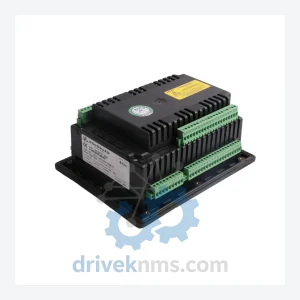
WOODWARD SA1509-24 Solenoid – Governor Control Series
Woodward SA1509-24 is listed for Governor Control Series RFQ review. Confirm quantity, condition and destination before quotation.
RFQ-ready industrial model
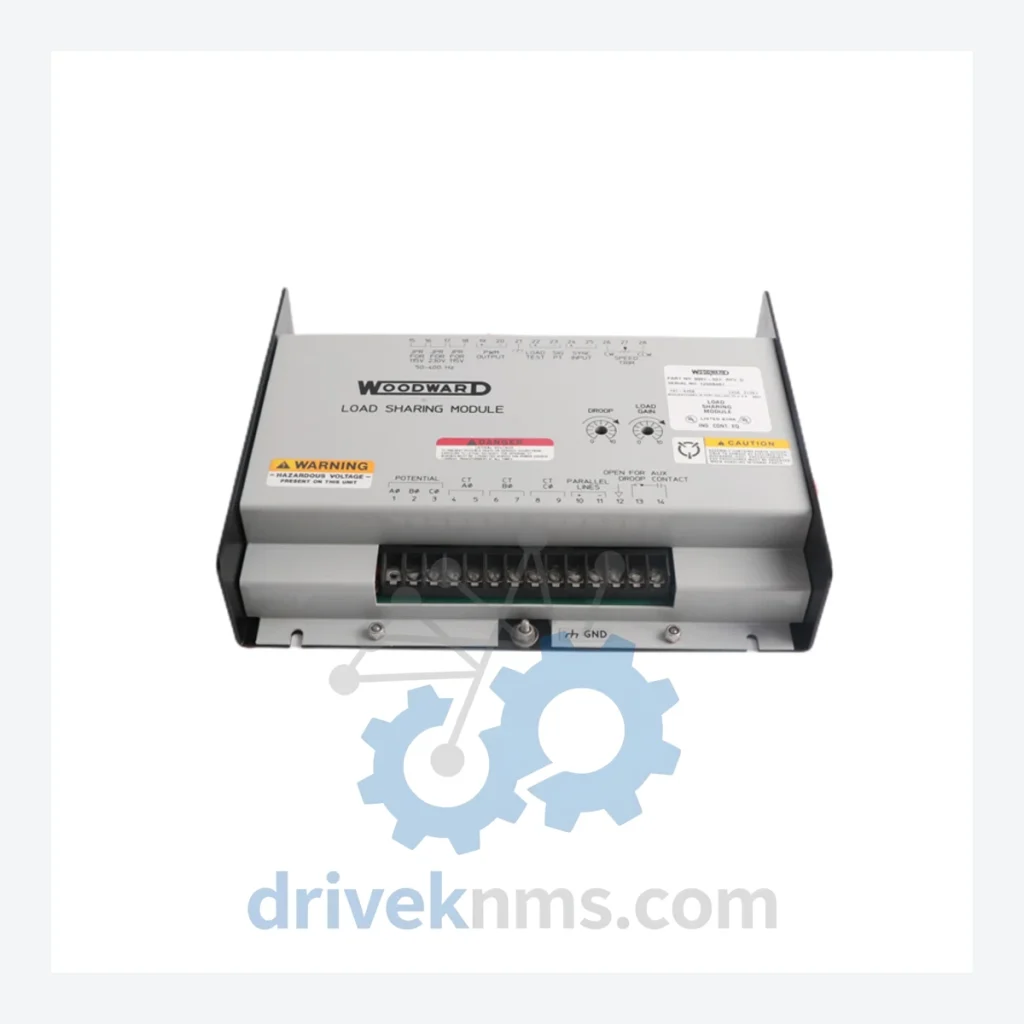
Model: 9907-027
Product Overview
Commercial availability is handled through direct RFQ, model verification and export-oriented follow-up rather than public cart checkout.
Datasheet Preview
Use attached product manuals when available. If the manual is not public yet, request the full file directly through RFQ.
Commercial Path
Product pages on DRIVEKNMS are designed to verify model, brand and series first, then move the buyer into one clean quotation path.
Technical Dossier
The WOODWARD 9900 Series represents one of the most widely deployed generator control and load-sharing platforms in global heavy industry. Installed across petrochemical refineries, nuclear power auxiliary systems, offshore platforms, and large-scale cogeneration facilities, the 9900 Series established the benchmark for isochronous load sharing and frequency regulation in paralleled generator sets. Its modular backplane architecture allows field-level replacement of discrete functional cards without full controller shutdown, a critical requirement in continuous-process environments where unplanned outages carry significant operational cost. The series remains active in thousands of installations worldwide, with a substantial installed base in facilities operating under 20- to 40-year asset lifecycles.
The WOODWARD 9900 Series was introduced as a successor to earlier analog governor platforms, transitioning load-sharing logic from discrete relay-based circuits to digitally supervised analog control loops. Early variants (circa late 1980s–1990s) used parallel backplane communication with dedicated point-to-point wiring between the sharing module and speed control cards. Mid-generation revisions introduced isolated analog bus structures, improving noise immunity in high-EMI generator room environments. Later production runs incorporated improved EEPROM-based calibration storage, reducing the need for manual potentiometer adjustment during commissioning.
Compatibility across sub-generations is constrained by backplane connector pinout revisions and firmware-dependent calibration protocols. Modules from early production batches are not always interchangeable with later revisions without recalibration. As the 9900 Series has entered its end-of-production phase, sourcing verified replacement modules with matching revision levels is essential for maintaining system integrity. WOODWARD's current product line has migrated toward the EasYgen and MFR series for new installations, but the 9900 platform remains the dominant control architecture in legacy fleet maintenance contracts.
The following SKUs represent verified, commonly sourced components within the WOODWARD 9900 Series. Each module performs a discrete function within the generator control backplane:
9907-027: Load-sharing module for paralleled generator sets; governs real power (kW) distribution between units operating in isochronous mode.
9907-018: Speed control module; provides primary governor output signal to fuel actuator or electronic throttle.
9907-020: Analog input/output interface module; conditions 4–20 mA and 0–10 V field signals for backplane processing.
9907-022: Digital input module; accepts discrete contact closures from switchgear, breaker auxiliary contacts, and protection relays.
9907-024: Digital output module; drives relay coils and solenoid actuators from backplane logic commands.
9907-026: Power supply module; converts site AC/DC input to regulated backplane voltages (+5 V, ±15 V).
9907-030: Communication adapter module; provides RS-232/RS-485 serial interface for SCADA and HMI integration.
9907-032: Reactive power (kVAR) sharing module; coordinates reactive load distribution between paralleled alternators.
9907-034: Voltage regulation interface module; interfaces with AVR (Automatic Voltage Regulator) for closed-loop terminal voltage control.
9907-036: Frequency bias module; applies external frequency offset signals for grid-parallel synchronization.
9907-038: Isochronous/droop selector module; configures governor response mode per unit operating state.
9907-040: Magnetic pickup signal conditioner; converts MPU speed sensor output to clean digital pulse train for governor processing.
9907-042: Actuator driver module; provides high-current output stage for electro-hydraulic and electro-pneumatic fuel actuators.
9907-044: Alarm and annunciator module; manages first-out fault sequencing and panel lamp driver outputs.
9907-046: Synchronizer module; performs automatic phase-angle and frequency matching prior to breaker close command.
9907-050: Redundancy switchover module; monitors primary control channel health and executes bumpless transfer to backup channel.
9907-052: Analog output expansion module; adds additional 4–20 mA output channels for remote metering and trending.
The 9900 Series backplane uses a passive analog bus with active module termination. Testing procedures for these modules require replication of the backplane voltage rails and bus loading conditions; standard bench power supply testing without bus simulation produces unreliable pass/fail results. DriveKNMS applies a dedicated 9900 Series test fixture that replicates the backplane electrical environment, including differential sharing bus loading, MPU signal injection, and actuator output load simulation. Each module undergoes: (1) static power-on verification of all regulated supply rails; (2) functional signal-path testing across all I/O channels at rated load; (3) thermal soak at operating temperature for a minimum of two hours; (4) final calibration verification against factory reference values where applicable. Modules that do not meet all acceptance criteria are quarantined and not offered for sale.
Continue The Model Path
Move from this exact model into the matching system hub, brand archive, model-family archive or lifecycle sourcing route before sending a final RFQ list.
Related Paths
Woodward SA1509-24 is listed for Governor Control Series RFQ review. Confirm quantity, condition and destination before quotation.
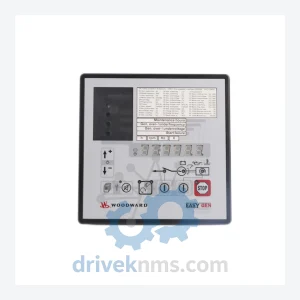
Woodward 8440-1750 EASYGEN-1500-55B is listed for EasyGen-1500 Series RFQ review. Confirm quantity, condition and destination before quotation.
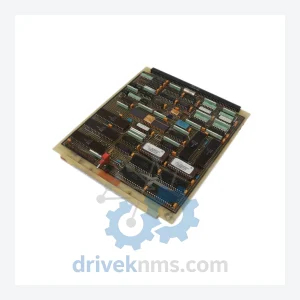
Woodward 5463-473 is listed for SIO Series RFQ review. Confirm quantity, condition and destination before quotation.