
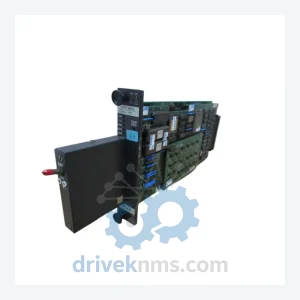
YOKOGAWA NP53*C Basic MFCU Processor Card – CENTUM VP/CS3000 DCS
Yokogawa NP53*C is listed for CENTUM VP RFQ review. Confirm quantity, condition and destination before quotation.
RFQ-ready industrial model
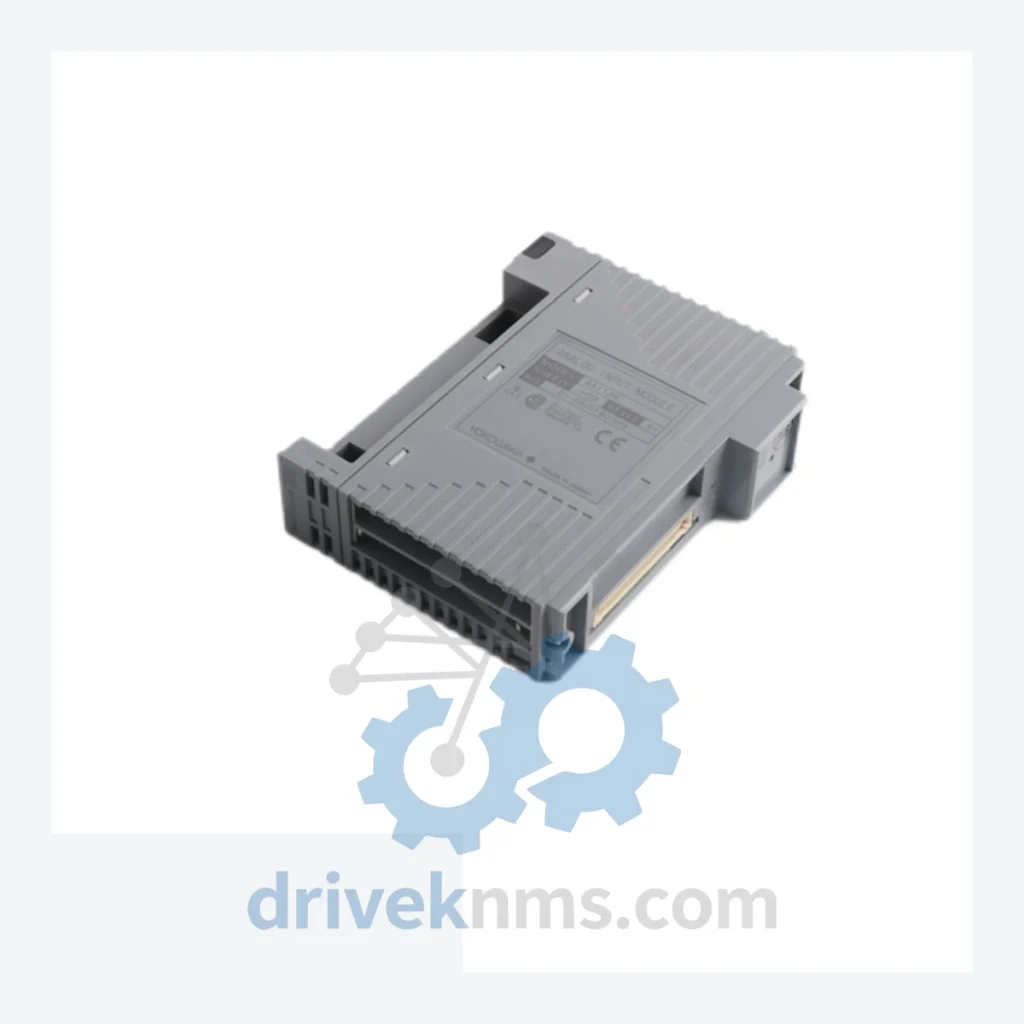
Model: AAI135-H03 S1
Product Overview
Commercial availability is handled through direct RFQ, model verification and export-oriented follow-up rather than public cart checkout.
Datasheet Preview
Use attached product manuals when available. If the manual is not public yet, request the full file directly through RFQ.
Commercial Path
Product pages on DRIVEKNMS are designed to verify model, brand and series first, then move the buyer into one clean quotation path.
Technical Dossier
The YOKOGAWA AAI135 series is a line of analog input modules designed for deployment within the CENTUM VP and CENTUM CS 3000 Distributed Control Systems (DCS). These modules occupy a critical position in continuous process industries including petrochemical refining, nuclear power generation, LNG terminals, pulp and paper manufacturing, and large-scale chemical plants. The AAI135 series handles 4–20 mA current loop signal acquisition with high-density channel configurations, enabling plant operators to consolidate field instrumentation wiring into compact I/O node assemblies. Installed base counts for CENTUM-based systems run into the tens of thousands of nodes globally, making the AAI135 one of the most widely deployed analog input module families in heavy industrial DCS infrastructure.
The AAI135 module family traces its lineage to the CENTUM CS 3000 platform introduced in the late 1990s, where YOKOGAWA standardized on a modular I/O architecture using field control units (FCU) and remote I/O nodes (RIO). Early AAI135 variants operated over the ER Bus (Enhanced Remote Bus), a proprietary high-speed serial backplane that allowed deterministic scan cycles suitable for regulatory control loops. As the platform evolved into CENTUM VP (introduced circa 2008), the AAI135 series was carried forward with backward-compatible mechanical and electrical interfaces, allowing existing CS 3000 installations to migrate incrementally without full I/O replacement.
The H-suffix variants (e.g., AAI135-H03) denote enhanced isolation and hazardous-area compatibility, meeting IEC 60079 requirements for use in Zone 2 classified environments when installed with appropriate barriers. The S1 suffix designates the standard single-channel-group configuration within the module's internal multiplexer architecture. Compatibility constraints exist between older FCU firmware revisions and newer AAI135 hardware revisions; engineers performing lifecycle upgrades must cross-reference the CENTUM VP Engineering Reference Manual (IM 33S01B30-01E) to confirm firmware-hardware pairing.
The following SKUs represent verified models within the YOKOGAWA AAI135 and closely related AAI analog input module family deployed across CENTUM CS 3000 and CENTUM VP platforms. Each entry reflects a distinct hardware configuration or approval variant:
AAI135-H03 S1: 16-ch analog input, 4–20 mA, standard isolation, CENTUM VP/CS3000 RIO node compatible.
AAI135-H03 S2: 16-ch analog input, 4–20 mA, enhanced EMC shielding variant for high-noise environments.
AAI135-H00 S1: 16-ch analog input, non-isolated version for non-hazardous area general process loops.
AAI135-H00 S2: 16-ch analog input, non-isolated, extended temperature range (-20°C to +70°C ambient).
AAI141-H03 S1: 8-ch analog input, 4–20 mA with HART pass-through, single-ended configuration.
AAI141-H03 S2: 8-ch analog input with HART, dual-redundant power feed option.
AAI143-H03 S1: 8-ch analog input, thermocouple/mV input, cold junction compensation integrated.
AAI143-H03 S2: 8-ch thermocouple input, extended range for Type K/J/T/E/R/S/B/N sensors.
AAI835-H03 S1: 16-ch analog input, FOUNDATION Fieldbus H1 segment interface variant.
AAI835-H03 S2: 16-ch analog input, FF-H1 with redundant segment coupler support.
AAI841-H03 S1: 8-ch analog input, PROFIBUS PA interface, for PA-segment field devices.
AAI543-H03 S1: 32-ch high-density analog input, multiplexed scan, for non-critical monitoring loops.
AAI543-H03 S2: 32-ch high-density analog input, extended diagnostics and channel-level fault reporting.
AAI135-S03 S1: SIL-rated analog input module, IEC 61511 compliant, for safety instrumented system (SIS) integration.
AAI135-S03 S2: SIL-rated, dual-channel voting configuration for 1oo2 safety logic architectures.
AAI135-H53 S1: Intrinsically safe analog input, ATEX/IECEx certified, for Zone 0/1 field device connection.
YOKOGAWA officially transitioned the CENTUM CS 3000 platform to end-of-active-support status, with the CENTUM VP platform itself now in mature lifecycle phase. Many AAI135 variants are no longer available through standard distribution channels. DriveKNMS maintains a dedicated inventory of new-surplus, refurbished, and tested-serviceable AAI135 modules sourced from decommissioned plant assets, authorized liquidations, and long-term storage facilities.
The AAI135 module integrates a multi-layer backplane bus interface that requires verification beyond simple power-on testing. DriveKNMS applies a structured test protocol for all AAI135 units prior to shipment:
Backplane Bus Integrity Test: Each module is seated in a CENTUM-compatible test rack and subjected to ER Bus communication verification, confirming correct node address assignment and cyclic data exchange at rated scan rates. Channel-Level Signal Accuracy Test: All 16 analog input channels are stimulated with calibrated 4–20 mA current sources at 0%, 25%, 50%, 75%, and 100% of span. Measured values are compared against YOKOGAWA's published accuracy specification (±0.1% of span typical). Isolation Resistance Test: For H03-suffix modules, channel-to-channel and channel-to-chassis isolation resistance is verified at 500 VDC per IEC 61010-1 requirements. Thermal Cycling Verification: Modules flagged as long-term storage units undergo a 24-hour thermal soak at rated operating temperature before final functional test. Firmware Revision Logging: Hardware revision markings and internal firmware identifiers are recorded and included in the shipment documentation to support the customer's engineering change management process.
Continue The Model Path
Move from this exact model into the matching system hub, brand archive, model-family archive or lifecycle sourcing route before sending a final RFQ list.
Related Paths
Yokogawa NP53*C is listed for CENTUM VP RFQ review. Confirm quantity, condition and destination before quotation.
Yokogawa AIP502 is listed for Net Coupler Module RFQ review. Confirm quantity, condition and destination before quotation.
Yokogawa NP53*A is listed for Controller Cards RFQ review. Confirm quantity, condition and destination before quotation.