
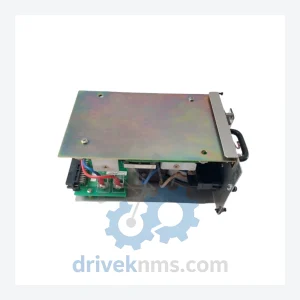
Yokogawa PW502 Power Supply Module – CENTUM Series
Yokogawa PW502 is listed for CENTUM Series RFQ review. Confirm quantity, condition and destination before quotation.
RFQ-ready industrial model
Model: AIP171 S3
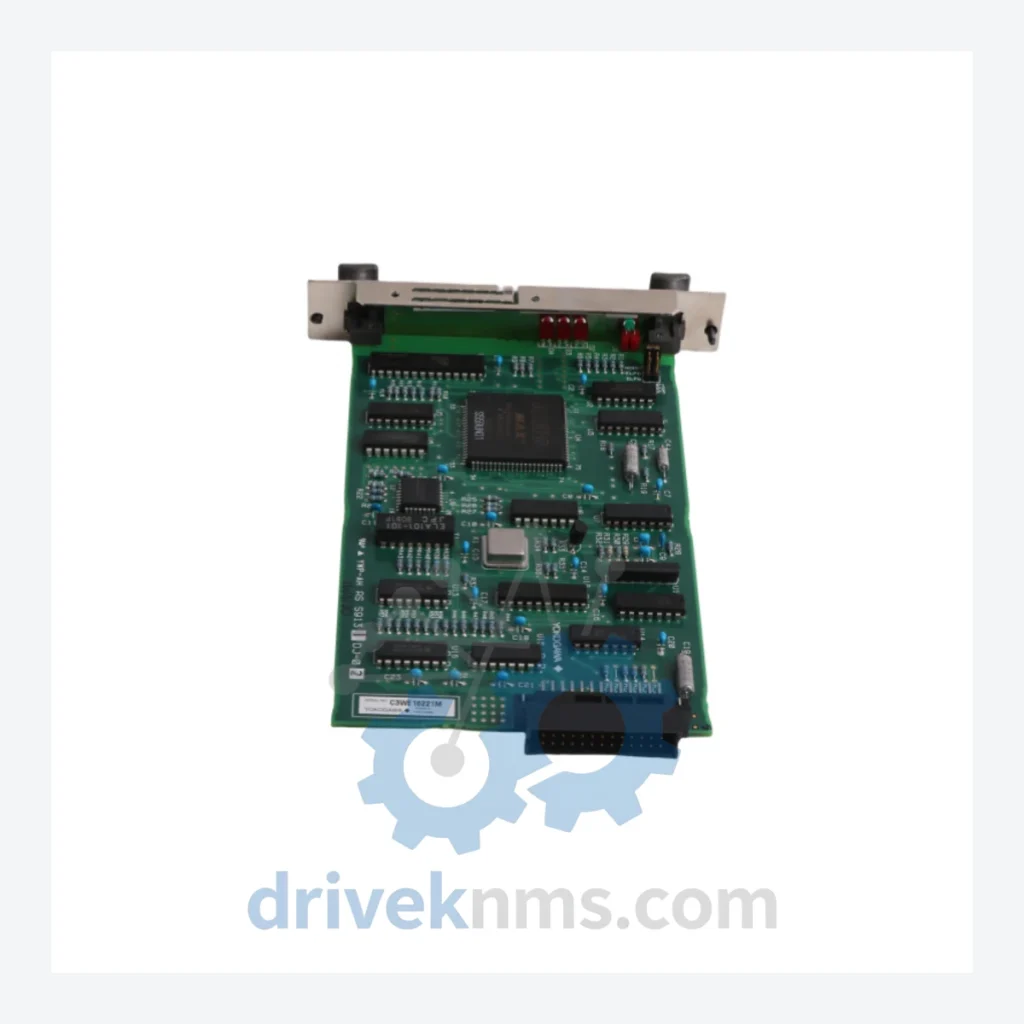
Product Overview
Commercial availability is handled through direct RFQ, model verification and export-oriented follow-up rather than public cart checkout.
Datasheet Preview
Use attached product manuals when available. If the manual is not public yet, request the full file directly through RFQ.
Commercial Path
Product pages on DRIVEKNMS are designed to verify model, brand and series first, then move the buyer into one clean quotation path.
Technical Dossier
The harder reality for plant managers is that Yokogawa has discontinued the AIP171 S3. New production has ceased. The path of least resistance — calling the OEM — leads to a forced migration proposal: replace the entire CENTUM VP or CS 3000 node, re-engineer the I/O mapping, re-validate the control logic, and retrain operators. Engineering firms quote these projects at USD $500,000 to several million dollars, with 12–24 month timelines. For a facility running a stable, well-understood process, that cost is not a maintenance decision — it is a capital project that competes for budget against expansion and safety upgrades.
DriveKNMS reviews sourcing status and documentation for this model during RFQ handling before quotation.
RFQ support for obsolete parts: Send the model number, required quantity and destination so DriveKNMS can confirm sourcing options before quotation.
| Parameter | Detail |
|---|---|
| Part Number | AIP171 S3 |
| Manufacturer | Yokogawa Electric Corporation |
| Series | CENTUM (CS 3000 / VP compatible) |
| Function | Field Bus Repeater / Signal Regenerator |
| Country of Origin | Japan |
| OEM Status | Discontinued – No longer manufactured |
| Compatible Systems | Yokogawa CENTUM CS 3000, CENTUM VP (legacy bus architecture) |
| Condition Available | New surplus / Professionally refurbished (see QA section) |
Note: Electrical parameters such as bus voltage, signal levels, and power consumption are architecture-dependent and vary by system configuration. Confirmed specifications are provided upon request with system details.
The Yokogawa CENTUM platform — particularly CS 3000 and earlier VP installations — remains operational in refineries, chemical plants, and power generation facilities across Asia, the Middle East, and Eastern Europe. Many of these systems were commissioned in the 1990s and 2000s and have accumulated decades of tuned control logic, alarm rationalization, and operator familiarity. The institutional knowledge embedded in these systems has real economic value that does not appear on any balance sheet — until a forced migration destroys it.
The strategic response is straightforward: treat the AIP171 S3 as a long-life capital spare, not a consumable. Facilities that maintain two to three units on-site convert a potential multi-week outage into a two-hour swap. The cost of holding that inventory is a fraction of a single day of lost production.
For plant managers facing internal pressure to justify continued operation of legacy DCS infrastructure, the arithmetic is direct. A verified spare parts inventory — covering bus repeaters, power supply modules, and communication cards — can extend the productive life of a CENTUM installation by 5 to 10 years at a cost that is typically less than 2% of the replacement project budget. That is not a maintenance expense. It is asset protection.
Discontinued hardware sourced from the secondary market carries real risk. DriveKNMS applies a structured 5-step inspection protocol before any AIP171 S3 unit is offered for sale:
Step 1 – Visual and Mechanical Inspection: Board-level examination for physical damage, corrosion, pin deformation, and evidence of prior field failure or repair.
Step 2 – Electrolytic Capacitor Assessment: Aged electrolytic capacitors are the primary failure mode in legacy bus hardware. Each unit is evaluated for capacitor condition; units with suspect components are either recapped with equivalent-spec parts or rejected from inventory.
Step 3 – Firmware and Revision Verification: Hardware revision and firmware version are documented and cross-referenced against known compatibility matrices for CS 3000 and CENTUM VP bus architectures.
Step 4 – Pin and Connector Integrity Check: Backplane connector pins are inspected for oxidation, micro-fractures, and contact resistance. Corroded contacts are treated or the unit is rejected.
Step 5 – Functional Verification: Where test infrastructure permits, units undergo powered functional checks. Test results and unit condition grade are documented and provided with shipment.
Each unit ships with a condition report. No unit is described as new unless it is confirmed new-in-box surplus with intact OEM packaging.
The AIP171 S3 is a direct hardware replacement for the same part number within the CENTUM bus architecture. Installation does not require controller reconfiguration, I/O remapping, or control logic modification. The replacement procedure follows standard Yokogawa hot-swap or cold-swap protocols depending on system configuration — no third-party engineering engagement is required for the swap itself.
This drop-in compatibility is the core economic argument for spare parts-based maintenance over system migration. A qualified instrument technician can restore bus communication in under two hours. The alternative — a migration project — requires months of engineering, validation, and commissioning time, plus the operational risk of transitioning a live process to new control hardware.
Can you source other discontinued Yokogawa CENTUM modules?
Yes. DriveKNMS maintains inventory across the CENTUM CS 3000 and VP module range. Contact us with your full BOM or specific part numbers for availability and pricing.
Continue The Model Path
Move from this exact model into the matching system hub, brand archive, model-family archive or lifecycle sourcing route before sending a final RFQ list.
Related Paths
Yokogawa PW502 is listed for CENTUM Series RFQ review. Confirm quantity, condition and destination before quotation.
Yokogawa SAI143-H33/PRP is listed for CENTUM Series RFQ review. Confirm quantity, condition and destination before quotation.
Yokogawa S9345FA is listed for CENTUM Series RFQ review. Confirm quantity, condition and destination before quotation.