Products / Yokogawa / S1 Bus Coupler Module
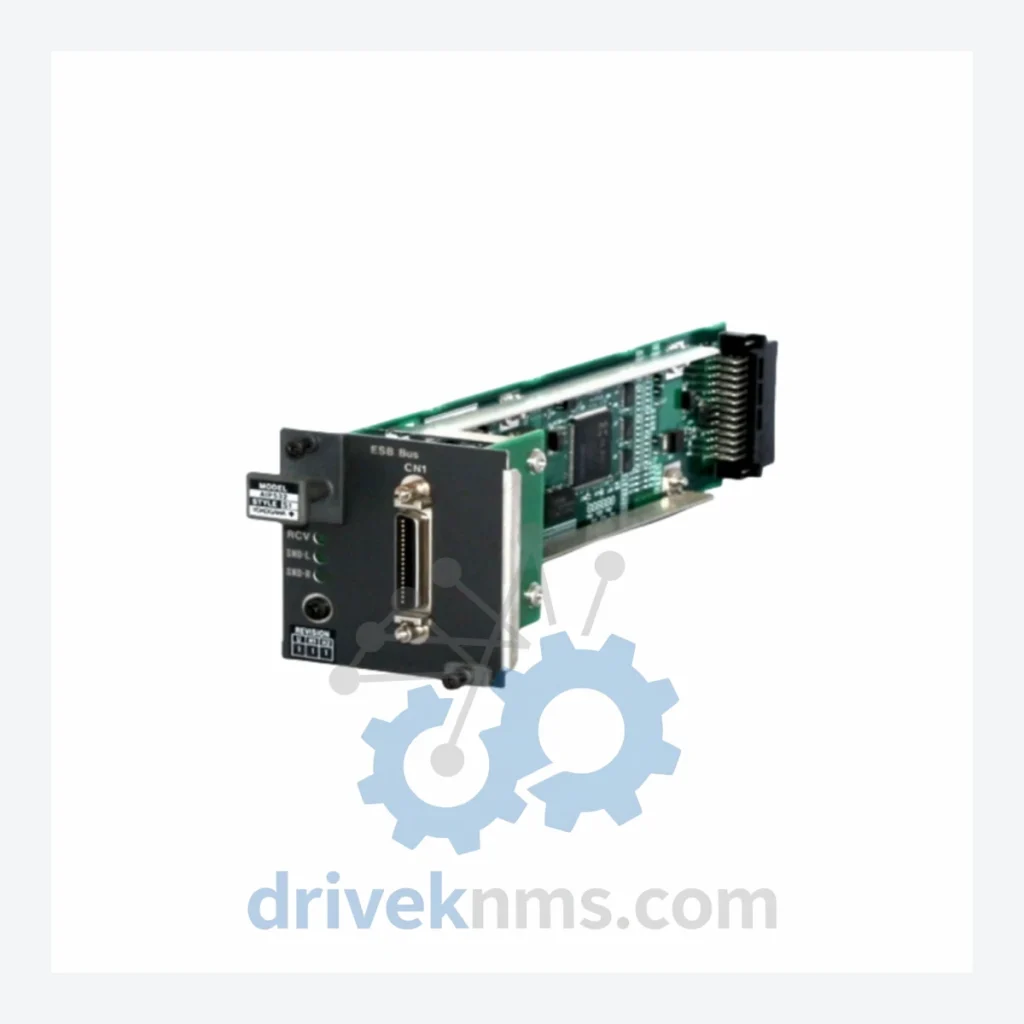
Yokogawa S1 Bus Coupler Module

Yokogawa AIP532-S1 Bus Coupler Module – Obsolete CENTUM Series Spare Part

Model: AIP532-S1

Brand Yokogawa
Series S1 Bus Coupler Module
Model AIP532-S1
RFQ-ready model route Obsolete and surplus sourcing Export follow-up by model list

Product Overview

Commercial availability is handled through direct RFQ, model verification and export-oriented follow-up rather than public cart checkout.

Datasheet Preview

Datasheet Preview

Use attached product manuals when available. If the manual is not public yet, request the full file directly through RFQ.

Request Full Manual

Commercial Path

Use This Page To Confirm The Model, Then Move To RFQ

Product pages on DRIVEKNMS are designed to verify model, brand and series first, then move the buyer into one clean quotation path.

Technical Dossier

Product Details And Specifications

Yokogawa AIP532-S1 Bus Coupler Module – Obsolete CENTUM Series Spare Part

When a Bus Coupler Module fails in a Yokogawa CENTUM-based distributed control system, the consequences extend far beyond a single line stoppage. A forced migration to a current-generation DCS platform — including engineering redesign, I/O rewiring, operator retraining, and production downtime — routinely costs manufacturing facilities between $500,000 and $3,000,000 USD per project. The AIP532-S1 is a discontinued component with no direct modern equivalent that preserves backward compatibility. DriveKNMS maintains verified physical stock of this module, sourced through controlled industrial asset recovery channels, specifically to serve facilities that cannot afford — or are not yet ready for — a full system overhaul.

Technical Specifications

Parameter Detail
Manufacturer Yokogawa Electric Corporation
Part Number AIP532-S1
Module Type Bus Coupler Module
Compatible System Yokogawa CENTUM Series DCS
Country of Origin Japan
Discontinuation Status Confirmed Obsolete – No longer manufactured or supported by OEM
Electrical Parameters Refer to original Yokogawa CENTUM system documentation; parameters not independently verified and will not be stated to avoid misapplication risk

Solving the Discontinued Hardware Crisis

The Yokogawa CENTUM platform — spanning CENTUM CS, CENTUM CS 1000, and CENTUM CS 3000 — represents decades of installed base across petrochemical, power generation, pulp and paper, and pharmaceutical facilities worldwide. The AIP532-S1 Bus Coupler Module serves as a critical communication bridge within these architectures. Its failure does not merely interrupt a subprocess; it can render entire field device networks unreachable by the supervisory layer, triggering plant-wide safe-state shutdowns.

Yokogawa's official end-of-life policy for legacy CENTUM hardware means that OEM replacement channels are closed. Facilities operating these systems face a binary choice: source the component through specialist industrial distributors, or commit to a capital-intensive migration project that competes for budget against core production investments. For plant managers and maintenance engineers responsible for asset integrity, the AIP532-S1 represents a low-cost insurance policy against a high-consequence failure event. A single unit in strategic spares inventory can protect years of uninterrupted operation.

DriveKNMS operates specifically within this gap — sourcing, verifying, and supplying discontinued Yokogawa components to facilities that require operational continuity without the disruption of platform replacement.

Condition & Reliability Assurance

Discontinued hardware carries inherent aging risks that new-production components do not. Our 5-step QA protocol addresses the failure modes most commonly observed in legacy bus coupler modules:

  • Step 1 – Electrolytic Capacitor Inspection: Capacitors are the primary age-related failure point in power supply and signal conditioning circuits. Each unit undergoes visual and ESR (Equivalent Series Resistance) testing to identify degraded or pre-failure capacitors before shipment.
  • Step 2 – Firmware Version Verification: Where applicable, embedded firmware revisions are documented and cross-referenced against known compatibility matrices for the target CENTUM system version.
  • Step 3 – Pin and Connector Corrosion Audit: All edge connectors, backplane pins, and field terminals are inspected under magnification for oxidation, mechanical deformation, or contamination that would impair signal integrity.
  • Step 4 – Functional Bench Test: Units are powered and subjected to communication protocol verification under controlled conditions prior to packaging.
  • Step 5 – Anti-Static Packaging and Climate-Controlled Storage: Verified units are stored in ESD-safe packaging within a humidity-controlled environment until dispatch.

Key Features for System Maintenance

  • Drop-in Replacement: The AIP532-S1 installs directly into the existing CENTUM backplane slot without mechanical modification.
  • No Reprogramming Required: Configuration data resides in the DCS engineering station, not the module itself. Replacement does not require re-engineering of control logic or field device addressing.
  • Zero Engineering Reconstruction Cost: Unlike a platform migration, a like-for-like module swap eliminates consultant fees, system integrator mobilization costs, and the extended commissioning periods associated with new hardware qualification.
  • Immediate Operational Restoration: For facilities operating under production pressure, the ability to restore a failed bus coupler within hours — rather than managing a multi-month migration project — has direct, measurable financial value.

Extending Legacy Asset Life: A Maintenance Strategy for Plant Management

Industrial automation assets represent capital investments that depreciate slowly but fail unpredictably. A Yokogawa CENTUM DCS installation that cost $2–5 million USD at commissioning retains substantial functional value long after OEM support ends — provided that critical spare components remain available. The following strategy has been applied successfully by maintenance teams to extend legacy DCS operational life by 5–10 years beyond OEM end-of-support dates:

  • Critical Spares Mapping: Identify the 10–15 module types within your CENTUM architecture that have no modern equivalent and whose failure would cause a plant-wide shutdown. The AIP532-S1 is a strong candidate for this list in any system where it is installed.
  • Minimum Viable Inventory (MVI) Policy: Maintain a minimum of two units of each critical module type on-site. The cost of holding spare inventory is a fraction of the cost of a single unplanned outage.
  • Supplier Qualification: Establish a relationship with a verified specialist supplier — not a general electronics broker — who can demonstrate physical stock, QA processes, and technical knowledge of the specific platform. Counterfeit and misrepresented legacy components are a documented risk in the secondary market.
  • Lifecycle Documentation: Maintain a living document that tracks the condition, firmware version, and test date of all critical spares. This supports both maintenance planning and insurance/audit requirements.
  • Phased Migration Planning: Use the operational window created by strategic spares procurement to plan a controlled, budgeted migration on your schedule — not in response to an emergency failure.

FAQ

Q: What warranty applies to discontinued modules?
A: DriveKNMS provides a 90-day functional warranty on all QA-verified units. This covers failure under normal operating conditions consistent with the original OEM specification. Warranty claims are handled directly by our technical team.

Q: How do I confirm the unit is genuine and not counterfeit?
A: All units sourced by DriveKNMS are acquired through traceable industrial asset recovery channels — decommissioned facilities, verified surplus dealers, and controlled OEM excess stock. We do not source from anonymous brokers. Physical inspection documentation is available upon request for high-value orders.

Q: Should I purchase more than one unit?
A: For any facility where the AIP532-S1 is installed in a production-critical role, holding a minimum of two units is the standard recommendation. Given that OEM production has ceased, current market availability is finite. Procurement decisions made today directly determine your options during a future failure event.

Q: Can you source other discontinued Yokogawa CENTUM components?
A: Yes. DriveKNMS maintains an active sourcing network for legacy Yokogawa hardware across the CENTUM CS, CS 1000, CS 3000, and VP product lines. Submit your full BOM or part number list for a sourcing assessment.

WhatsApp Prefilled Inquiry Email [email protected] Phone +86 18359293191 Top Back To Top