
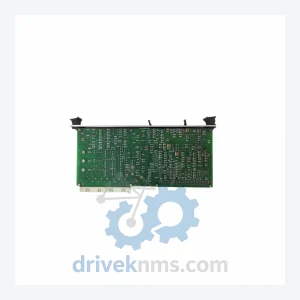
Yokogawa K9634DA-01 TCD Card Modules
Yokogawa K9634DA Series: Comprehensive Module Range and Technical Overview The Yokogawa K9634DA series TCD (Thermocouple/mV Input) cards are field-proven I/O…
Model: ANB10D-415/CU2N/NDEL
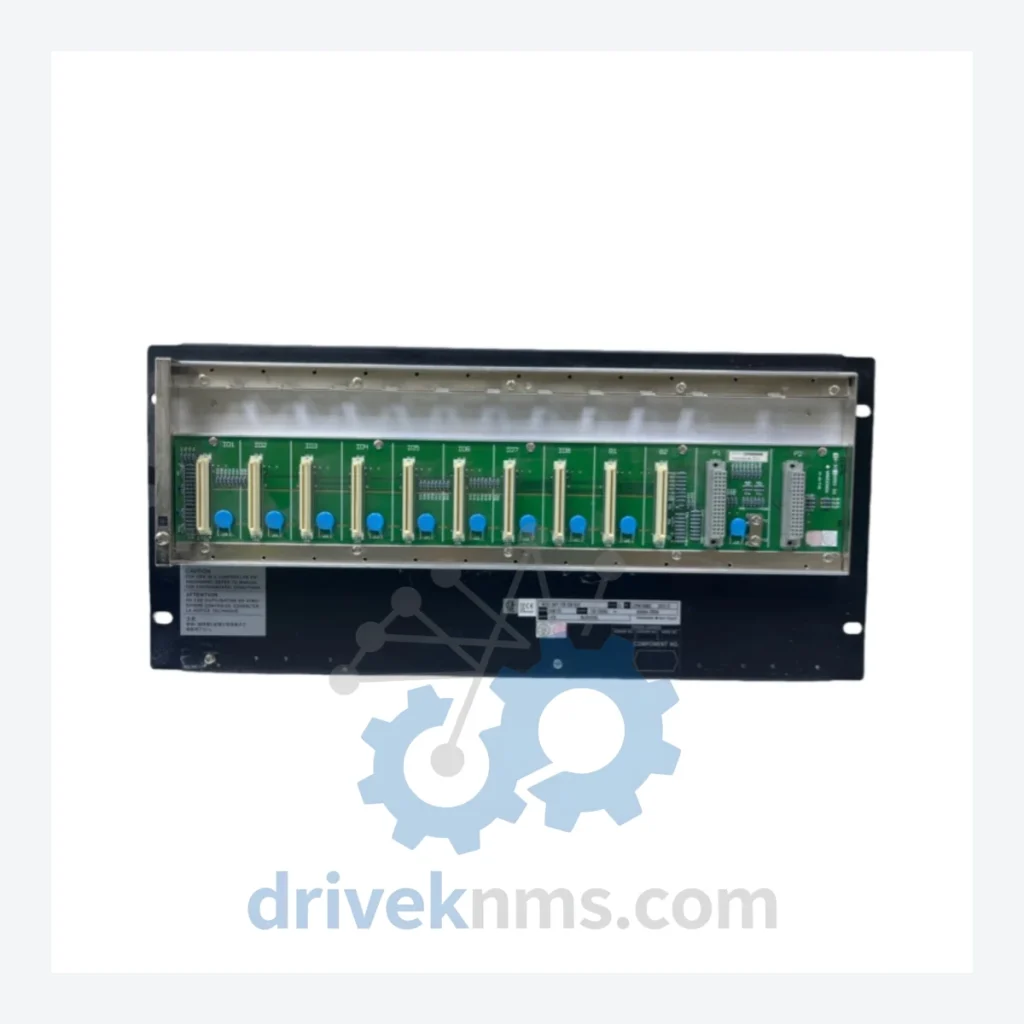
Product Overview
Commercial availability is handled through direct RFQ, model verification and export-oriented follow-up rather than public cart checkout.
Datasheet Preview
Use attached product manuals when available. If the manual is not public yet, request the full file directly through RFQ.
Commercial Path
Product pages on DRIVEKNMS are designed to verify model, brand and series first, then move the buyer into one clean quotation path.
Technical Dossier
When a Yokogawa ANB10D-415/CU2N/NDEL fails in a live CENTUM CS3000 or CS1000 environment, the clock starts immediately. This module serves as the communication backbone between field control stations and the ESB (Enhanced Signal Bus) network. Without it, the entire field bus segment goes dark — not a single I/O point responds. The cost of a full DCS migration to replace one discontinued node unit routinely exceeds USD $2–5 million when engineering, re-commissioning, and production downtime are factored in. DriveKNMS holds verified physical stock of this unit. That inventory is finite and will not be replenished from the manufacturer.
| Parameter | Detail |
|---|---|
| Manufacturer | Yokogawa Electric Corporation |
| Part Number | ANB10D-415/CU2N/NDEL |
| Series | CENTUM CS / CS3000 |
| Module Type | ESB Bus Node Unit |
| Bus Interface | ESB (Enhanced Signal Bus) |
| Country of Origin | Japan |
| Discontinuation Status | Officially discontinued by Yokogawa; no longer manufactured or supported under standard service contracts |
| Compatible Systems | Yokogawa CENTUM CS, CENTUM CS3000 R3 |
Note: Electrical parameters beyond the above are not published here to avoid inaccuracy. Verified datasheets are available upon request for qualified buyers.
The Yokogawa CENTUM CS3000 platform was the dominant DCS architecture across refining, petrochemical, and power generation facilities throughout the 1990s and 2000s. Tens of thousands of installations remain in active production service globally. Yokogawa has progressively discontinued hardware support for the CS3000 line, with the ANB10D-415 series among the modules no longer available through authorized distribution channels.
The ESB Bus Node Unit is not a peripheral component — it is the physical and logical junction point that allows field control stations to communicate across the ESB network. A single failed unit can isolate an entire process segment. In facilities where the CENTUM CS3000 architecture is deeply embedded in safety instrumented systems and advanced process control loops, replacing the DCS is not a weekend project. It is a multi-year capital program requiring regulatory re-approval, extensive re-engineering, and a planned production shutdown.
For plant managers and reliability engineers operating under capital expenditure constraints, the calculus is straightforward: sourcing a verified replacement ANB10D-415/CU2N/NDEL at a fraction of the cost of a system migration is not a compromise — it is sound asset management. Facilities that maintain a strategic inventory of critical discontinued modules routinely extend the productive life of their DCS infrastructure by 5 to 10 years beyond the manufacturer's end-of-support date. The key is sourcing from suppliers who can verify unit condition and firmware integrity, not from grey-market channels where provenance is unknown.
Every ANB10D-415/CU2N/NDEL unit processed by DriveKNMS passes a structured 5-stage inspection protocol before it is offered for sale. This protocol was developed specifically for discontinued industrial control hardware where field failure carries process safety implications.
Stage 1 – Visual and Mechanical Inspection: Full board-level examination for physical damage, connector pin corrosion, and PCB delamination. Units with compromised backplane connectors are rejected at this stage.
Stage 2 – Electrolytic Capacitor Assessment: Aging electrolytic capacitors are the primary failure mode in legacy DCS hardware. Each unit is inspected for capacitor bulging, electrolyte leakage, and ESR deviation. Units showing capacitor degradation are either reconditioned with OEM-equivalent components or removed from inventory.
Stage 3 – Firmware Version Verification: The firmware revision is read and documented. Compatibility with the target CS3000 R3 environment is confirmed before shipment. Firmware version records are included in the shipment documentation.
Stage 4 – Functional Power-On Test: The unit is powered and bus communication is verified under controlled bench conditions. Units that fail to initialize or produce bus errors are quarantined.
Stage 5 – Final Documentation and Packaging: Passing units are individually bagged in anti-static packaging, labeled with inspection date and technician ID, and shipped with a condition report. No unit leaves without a traceable inspection record.
The ANB10D-415/CU2N/NDEL is a direct hardware replacement for the same part number within the CENTUM CS3000 architecture. There is no firmware re-flashing required for standard slot replacement. The unit is recognized by the system upon insertion without modification to the existing HIS or EWS configuration — no re-engineering of the control database, no re-commissioning of field devices, no changes to the safety system logic.
This drop-in replacement capability is the core economic argument for maintaining a spare parts strategy rather than pursuing a system migration. A migration project for a mid-size refinery DCS typically requires 18–36 months of engineering, a planned turnaround window, and capital expenditure in the range of several million dollars. A verified replacement module, installed by a qualified Yokogawa-trained technician, restores full system function within hours. The engineering cost differential is not marginal — it is an order of magnitude.
For facilities managing multiple CENTUM CS3000 installations, DriveKNMS recommends establishing a minimum buffer stock of one ANB10D-415 unit per ESB segment. Given the declining availability of this part in the secondary market, procurement decisions made today directly determine operational resilience over the next decade.
Q: What warranty applies to a discontinued unit?
A: DriveKNMS provides a 90-day functional warranty on all inspected units. The warranty covers failure under normal operating conditions and is supported by our inspection documentation. Extended coverage arrangements are available for volume orders — contact us to discuss.
Q: How do I know the unit is genuine and not counterfeit?
A: All units are sourced from decommissioned Yokogawa CENTUM CS3000 installations or verified surplus channels. Each unit carries original Yokogawa labeling and serial number. Our inspection report documents the serial number, firmware version, and inspection outcome. We do not source from anonymous grey-market aggregators.
Q: Should I purchase more than one unit?
A: For any facility where the ANB10D-415 is a single point of failure on an active ESB segment, holding at least one cold spare is a minimum prudent position. For facilities with multiple ESB segments or where production continuity is critical, a buffer of two to three units is a defensible maintenance strategy. Availability of this part in the secondary market will continue to decline as installed base units age out of service.
Q: Can you source additional units if I need more than you have in stock?
A: We maintain active sourcing networks for discontinued Yokogawa hardware. Contact us with your quantity requirement and timeline, and we will advise on availability.
Related Paths
Yokogawa K9634DA Series: Comprehensive Module Range and Technical Overview The Yokogawa K9634DA series TCD (Thermocouple/mV Input) cards are field-proven I/O…
Yokogawa UT350-01 Digital Indicating Controller – Obsolete UT Series Spare Part When a Yokogawa UT350-01 fails on the plant floor,…
YOKOGAWA K9403 Series: Comprehensive Module Range and Technical Overview The YOKOGAWA K9403 series Field Indication Device (FID) cards are deployed…